Categories
Climate Action COP29 Covid19 Digital Marketing E+commerce Federica Fragapane GLOBAL CITIZEN 45'MEDIA IMF Information MEDIOQ world health organization

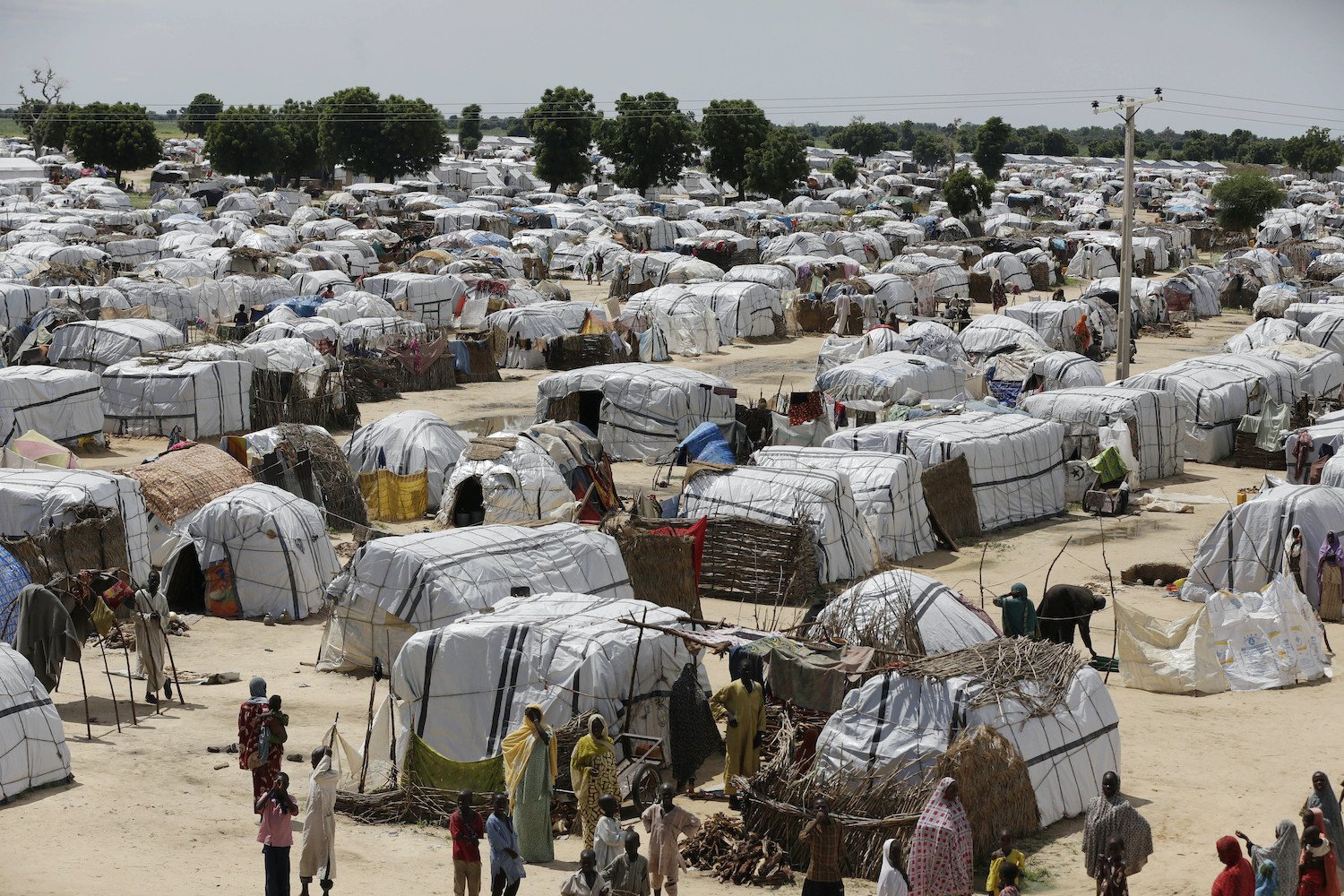
The Climate Crisis is Here So It’s Time to Rethink How We Finance the Future

Climate change will cost $1.3 trillion per year by 2035.

Here’s how we can pay for it.

For decades, climate change has been one of the world’s most urgent, existential shared challenges a crisis mandating the world’s 193 countries band together to reign in carbon emissions and, to put it frankly, save the planet.

But there’s one big, glaring problem: Paying for the climate crisis is expensive, and no one wants to cover the bill.

Climate change is accelerating, and so are its costs.

If we don’t fix international accounting fast, we risk both financial and climatic devastation.

Last November, the UN climate change conference COP29 ended with wealthy nations pledging to mobilize at least $300 billion a year to support Global South countries with climate change and support a clean energy transition, with the ultimate goal of reaching at least $1.3 trillion annually by 2035.

Getting there won’t be easy.

And that’s exactly why we need a plan of action.

Enter Global Citizen’s vision for a fair climate finance roadmap.

Submitted to the United Nations Framework Convention on Climate Change (UNFCCC), the “Baku to Belém Roadmap” is a bold, practical guide to finance that lays out exactly how countries can shape policies and budgets to free up that $1.3 trillion and ensure the money reaches those who need it most.

So how does it work? Let’s break it down.

A Broken System
Today, traditional sources of funding (like foreign aid and concessional loans) aren’t cutting it.

Global South countries, especially those most vulnerable to climate change, simply don’t have the means to invest in social welfare and climate resiliency all at once.

Why? The global financial system is outdated.

Built over 80 years ago, it wasn’t designed to address today’s challenges.

To find $1.3 trillion, we need a clear timeline, strong accountability measures, new sources of funding, and ambitious NDCs (Nationally Determined Contributions, or plans each country creates to reduce emissions and prioritize strengthening climate resilience).

Because it’s not just about increasing the total pot of money it’s about figuring out where that money should go to have the most impact.

Who Pays the Price;

Climate finance has historically been very unfairly distributed.

Paradoxically, the countries and communities that suffer the most from climate disasters receive the least support.

Here’s how money gets tangled up in the current system:

It’s Too Complicated: Many report that the process is overly complex and technical.

Countries in the Global South face miles of red tape just to access essential climate funding from global institutions.

Getting money from major lenders like the Green Climate Fund can take years, delaying lifesaving projects as approval pipelines slowly chug along.

It’s Too Risk-Averse: Investors tend to chase safe bets.

That leaves vital but low-return adaptation projects, like early disaster warning systems or climate proof infrastructure, underfunded by the private sector.

It’s Too Unfair: Loans dominate climate finance.

Yet countries hit hardest by climate change often have poor credit ratings, meaning they pay the highest interest rates which exacerbate vicious debt cycles.

Worse, global crises like COVID-19 and humanitarian disasters have left many countries drowning in debt, making it harder than ever to invest in climate-proofing a safer future.

The Fix: A New Vision for Global Finance
So what’s the solution?

We don’t just need more money we need a plan for better systems.

To truly address climate and development challenges, we need to expand and diversify funding sources, introduce regular monitoring benchmarks, and create greater transparency.

If we do all that, hitting $1.3 trillion a year by 2035 is possible.

To that end, we at Global Citizen believe the world must:

1. Fix the Global Lending System. Approval processes must be faster, simpler, and support climate-impacted nations first and foremost.

Specifically, multilateral development banks (MDBs) like the World Bank and International Monetary Fund (IMF) need to:

Lend more and faster, especially in times of crisis.

They can scale up “direct access modalities” (where local financial institutions receive money directly from lenders rather than a middle man).

Major funders like the Adaptation Fund and the Green Climate Fund have made some strides, but we need to see more progress.

Get creative with their money. Business as usual isn’t enough.

We’ll need to embrace innovative financing models, such as blended finance (mixing public and private money) and insurance to attract investment where it’s needed most.

Focus on grants and low-interest loans, especially for climate adaptation efforts.

Expand debt-relief tools like climate debt swaps, where loans are forgiven in exchange for investing in local adaptation projects.

2. Shift the Power Imbalance and Enforce Accountability.

Climate finance is controlled by the wealthiest nations. It’s time to change that.

Empower vulnerable nations by giving them a greater voice in decision-making.

Create stronger oversight.

An independent body (such as the UNFCCC Standing Committee on Finance) could play a referee role, track whether commitments are being met, and prevent misreporting.

3. Champion Community and Indigenous Leadership.

Local actors know local environments best, including how to adapt them to changing climates.

But they’re rarely the focus of climate finance.

Prioritize local action and adaptation projects by channeling money directly to  on-the-ground community organizations, and making sure they’re at the heart of both steering and implementing climate action.

Protect vital ecosystems, such as the Amazon.

Indigenous-led conservation is known to help protect biodiversity and fight climate change.

Governments need to back them up with robust policy and financial support.

4. Power a Just Energy Transition.

We need widespread renewable energy access that benefits everyone, including local workers and communities.

Phase out fossil fuels. Retire outdated coal plants and redirect fossil fuel subsidies (which cost the world $7 trillion annually) to climate finance instead.

Scale up Just Energy Transition Partnerships (JETPs).

These renewable infrastructure programs have been successfully piloted in South Africa and Indonesia.

More countries should follow suit.

Join international treaties, such as the Beyond Oil and Gas Alliance and the Fossil Fuel Non-Proliferation Treaty, which provide clear roadmaps for countries to pursue just energy transitions.


5. Roll Out New Solidarity Financing Tools.

We can put solidarity into practice by introducing taxes that benefit everyone, which we predict could generate more than $100 billion a year alone.

These might include:

Tax high-emissions, luxury goods, such as international airline tickets or maritime shipping fuel.

Make polluters pay by taxing high-polluting industries, such as fossil fuel company profits, and channel that money towards climate funds like the Loss & Damage Fund.

6. Expand Targeted Climate Finance Initiatives.

We need to turbocharge new models in climate finance instead of relying on traditional, outdated ones.

Back proven initiatives that protect the planet. Luckily, there’s a number with established track records of success, such as REDD+, the Amazon Fund, and the Brazilian Podáali Fund.

Reform the MDBs. Initiatives like the G20 Dialogues and Bridgetown Initiative are encouraging MDBs to ramp up their climate lending.

They can also build up their financial toolkit by expanding the use of SDRs (Special Drawing Rights) and debt-pause clauses, offering indebted countries lifelines during crises.

Why We Can’t Wait
Global finance can feel technical and distant.

But it impacts all of us and with just five years left to meet the SDGs, the clock is ticking.

The $1.3 trillion goal should be considered the floor of global ambition, not the ceiling.

Countries need to be ambitious and look for extra money to boost climate spending everywhere and anywhere they can.

The concrete steps outlined in this financial roadmap offer both governments and the private sector ways to scale up financing fast, while also knocking down existing barriers for emerging economies. 

We have the tools, and we know what to do. Now we just need the political will to get it done.

Because if we can change how money flows, we can change everything.

Categories
AI Bill Gates Breaking News China Daily Climate Action Covid19 Data Exchange Rate Digital Marketing E+commerce ECOSYSTEM Exchange Global Modernization. IMF MTN technology Telecommunications UN wordpressmedia

A DIABOLIC TREATISE AGAINST THE HOUSE OF #MTN :

Where Gold Is Tarnished and Trust is Taxed


I. Prologue of Perfidy MTN, once heralded as the golden child of telecommunications in Africa, now stands accused in the court of public accountability.

Cloaked in branding brilliance and armed with influencer backed deception, they market connectivity but deliver captivity.

Their creed is not connection, but consumption of wallets, of trust, of digital dignity.

II. The Great Data Mirage
How does 1GB vanish like mist in the Harmattan sun? MTN claims usage; we claim daylight robbery.

Background Data Drain: Users report hemorrhaging megabytes even while idle ghost apps, or ghost billing?

Stealthy Auto Renewals:

A cunning trapdoor packages renew without prompt, often seconds before expiry, charging the user even if balance is insufficient, plunging them into silent debt.

Night Data Shell Game: Night plans supposedly valid from midnight till dawn but access throttled or denied until 2am.

Fraud disguised as fair use.

“I’ve just subscribed for the 33th time after first subscribing #9000 for 45GB 30Days plan in the same month👹”

Another Concerned User Layers Issue As A Classified Fraud;


III. The Unholy Tariffs Data pricing on MTN is not just high; it’s high handed.

Biased Bandwidth Economics: MTN Nigeria’s average price per gigabyte towers above what #MTN charges in South Africa or #Ghana.

Same brand, same servers different rates?

That’s regional exploitation, not localization.

Punitive PAYG Billing: Accidentally fall out of a bundle and your airtime vanishes in seconds with no warning.

Billing at “standard rates” is code for sanctioned theft.

IV. The Customer Care Masquerade
You dial 180 and enter purgatory.

Bots Before Humans: Conversations go in loops.

You’re passed from chatbot to cold line like a hot potato in a dead zone


“We’ll escalate this issue” becomes a mantra of delay problems disappearing into a black hole of broken promises.

Agents Without Authority: Even when you reach a rep, they lack the mandate to reverse charges or correct wrongs.

You’re stuck in bureaucratic limbo.

V. Network Tyranny They boast

“Everywhere you go” but what they deliver is “Nowhere you flow.”

InsiderNotes


Intentional Throttling? Peak hours see speeds drop to a crawl.

Meanwhile, premium users whisper tales of smoother streams.

Are we witnessing a class system in the cloud?

Selective Congestion: Some apps (read: high bandwidth or competitor friendly ones) mysteriously lag.

Others tied to MTN partners? Lightning-fast.

VI. The Final Accusation: Digital Colonialism This isn’t just about poor service.

It’s about gatekeeping access in the digital economy.


“MTN’s grip on infrastructure gives it a monopoly on our online lives”

A Concerned User Complains Bitterly;


They shape what’s fast, what’s slow, what’s possible while raking in billions from the very economies they throttle.

This is more than profit seeking; it’s a subtle form of control of a 21st-century telecom tyranny masquerading as connectivity.

VII. Epilogue: The People’s Verdict
We do not seek pity, only parity.

We demand transparency, fairness, and a fundamental reset of digital ethics.

Until then, let the people rise switch providers, expose shady practices, and rewire the narrative.

This treatise shall be carved not in stone but in tweets, blogs, and viral threads.

@MTN must be held accountable.

The signal is clear: Enough is enough.

Categories
3d Adult AI Bill Gates Breaking News China Daily Climate Action Digital Marketing E+commerce ECOSYSTEM Ethnophilosophical Exchange FOSSIL FUEL GLOBAL CITIZEN 45'MEDIA Global Modernization. IMF Information insidernotes MEDIOQ Newly Released News Letters UN wordpressmedia

The ‘America First’ Case for U.S. Engagement in Africa

U.S. Secretary of State Marco Rubio delivers remarks alongside Democratic Republic of the Congo Foreign Minister Thérèse Kayikwamba Wagner (L) and Rwandan Foreign Minister Olivier Nduhungirehe during a Declaration of Principles signing ceremony at the State Department in Washington on April 25. Kevin Dietsch/Getty Images

Of the three Gulf states that U.S. President Donald Trump visited last week, the United Arab Emirates struck some of the most spectacular deals.

Pledges between the two countries amounted to more than $200 billion, and following restrictions under former President Joe Biden the UAE will enjoy expanded access to advanced U.S. artificial intelligence chips.

Lifting these controls is a dangerous error, Alasdair Phillips Robins and Sam Winter Levy warn: Without them, the United States is

“placing the most important technology of the 21st century at the whims of autocratic regimes with sophisticated surveillance systems [and] expanding ties to China.”

InsiderNotes

The nexus between China and the UAE is especially apparent in Africa, where Emirati businesses are making green energy investments using Chinese technology and minerals.

The United States, meanwhile, looks set to retreat from the continent, with cuts to the U.S. Agency for International Development and Trump’s tariffs pushing African nations to form new alliances.

Through the transactional lens that Trump is fond of,

Africa is not likely to be judged by its long-term potential or the future strategic risks of disengagement,”

InsiderNotes

Curtis Bell and Christopher Faulkner, of the U.S. Naval War College, write.

But the authors argue that U.S. Africa policy can still prioritize tangible returns through investments that build enduring partnerships, not through quick exits or one-sided gains.

Trump will have the chance to follow that advice as he meets with South African President Cyril Ramaphosa in Washington on May 21.

South Africa is the United States’ largest trading partner in a region that is an important strategic gateway into Africa, yet Ramaphosa and Trump have not gotten off to a good start.

In fact, the diplomaticrelationship between the United States and South Africa has reached its lowest point since the latter’s transition to democracy in 1994, Imraan Buccus, a senior research associate at South Africa’s Auwal Socio Economic Research Institute, writes.

Much of the blame can be attributed to a Feb. 7 executive order awarding refugee status to Afrikaners that South Africa’s foreign ministry described as based on a “campaign of misinformation and propaganda.”

Ramaphosa has said that his country would not be “bullied” by Trump, but as he looks to reset relations and strike a much needed trade deal, the stakes for his meeting at the White House this week are high.

Categories
Adult AI Digital Marketing E+commerce ECOSYSTEM Entertainment GLOBAL CITIZEN 45'MEDIA Global Modernization. IMF MEDIOQ wordpressmedia

Obi Cubana Shares His Own Idea & Motivation

Woke up this beautiful Monday morning thinking about how beautiful life would have been IF everyone understood and respected each other;


IF everyone understands that everything about life is a fleeting illusion that will all pass  someday;


IF everyone rather than compete dangerously, would collaborate massively;


IF everyone who put so much energy in running others down, would rather focus on self development;


IF everyone could actually be in their best behaviour’s

Obi Cubana


IF this, IF that….!


But then I realised that all these are all part of the complete circle of life….


What to do….?
We move!💪💃😂
Beautiful Monday friends and family ♥️

Categories
AI Bill Gates Breaking News China Daily Climate Action Digital Marketing E+commerce ECOSYSTEM GLOBAL CITIZEN 45'MEDIA Global Modernization. Information insidernotes UN Women Empowerment wordpressmedia world health organization

Very Serious Demand a ceasefire by all parties to end civilian suffering:

A mother crying out for help Israel’s genocide against Palestinians must stop and the siege on Gaza must end. Ceasefire Now!

I am a mother from Beit Lahia, and being a mother during genocide is to fight, every minute, every second to maintain your family when nothing is available.

InsiderNotes

Everything here is a struggle: “Getting clean water is a battle; securing food is a battle; getting fresh vegetables or fruits is a dream, but I am a lucky mother because my children are still alive.”

I look at my children and feel guilty because they have been denied their childhood, they were forced into the cruel world of adulthood, of war: no schools, no playgrounds, no daily walks by the sea. I hear bombs and wish I could wrap them with my own body, wish that my love, larger than the universe could protect them, shelter them. 

Let’s stand with this mother, and all the mothers in #Gaza, by showing our support for their right to protect their children and demanding Israel to stop the genocide and lift its total siege.

I don’t know if we will survive this round of bombardment, I do not know if the world will remember that one day people lived in a small place called Gaza, which had the most beautiful coastline in the world.

Here lived people who wanted to live, they had so many dreams, they wanted to raise their children under normal circumstances but never got the chance to do so. 

All I know is that if we do not make it;

we will leave knowing that we did everything in our power and beyond to protect our children

Beit Lahia is the capital of strawberries and flowers; it is now a city of rubble, smoke, and stench of death.

But please remember us by our strawberries and poppies and remember the names and faces of our martyred children

Categories
3d Adult AI Bill Gates Breaking News China Daily Climate Action Digital Marketing E+commerce ECOSYSTEM Global Modernization. IMF Information MEDIOQ Women Empowerment

Inside: Imo State Government House

45'MEDIA Weekend Roundup:

A host of ceremonies and events both local and international, has been on going since the elected Governor’s Wife Chioma Uzodimma has fundalized the necessity and importance for women to be involved in the politics of the nation.

This weekend inside Imo government house we’ve variety of occasions that you might like to bibe with as you seek relaxation and family time, (for what is family without distribution of information?), so we’ve got you covered.

Share with them as we’ve got avalanche of ceremonies and events to spice up your weekend!

First let’s start with the most recent;

Following the successful seminar Organization of Islamic Cooperation (OIC) High-Level Cancer Awareness Program, Her Excellency Senator Oluremi Tinubu CON, the First Lady of Nigeria, graciously hosted a special dinner at the Congress Hall, Transcorp Hilton, Abuja, in honour of visiting First Ladies and other dignitaries.

During the event, the Minister of State for Health and Social Welfare, Hon. Dr. Tunji Alausa, delivered a welcoming address.

Guests were treated to captivating live band performances during the event, adding to the festive atmosphere of the evening.

In their remarks, the visiting First Ladies commended the First Lady, HE Sen. Oluremi Tinubu for her nurturing persona and role as a mentor to them, expressing their admiration and gratitude towards her.

It was an enriching experience to have esteemed guests such as the wife of the Vice President of Nigeria HE Hajiya Nana Shettima, First Ladies of Turkey, Sierra Leone, Gambia, Mauritius, Mozambique, Uganda, members of the Nigeria Governors’ Spouses Forum, wives of government functionaries as well as top Government officials in attendance.


It was an absolute delight to join First Ladies from across Africa in Abuja on May 16, 2024 for the crucial Regional Seminar on Cancer Awareness, hosted by HE Senator Oluremi Tinubu CON, the First Lady of Nigeria.

The seminar, themed “Innovative Approaches to Cancer Prevention and Early Detection,” aimed to address the devastating impact of cancer, particularly breast and cervical cancer among women.

In her opening address, The First Lady emphasized the critical need for early detection and treatment, citing alarming statistics that highlight the urgent necessity for action.

With 127,763 new cancer cases and 79,542 deaths reported in a single year, the imperative for collective action has never been clearer.

The seminar provided a platform for First Ladies to share insights and experiences in cancer management.

Notable speakers, including the First Lady of Turkey, Emine Erdogan, advocated for holistic approaches such as dietary improvements and leveraging medicinal resources.

A significant highlight of the event was the unveiling of the Abuja Declaration, where attending First Ladies committed to prioritizing cancer prevention and treatment efforts.

Key resolutions included improved funding, intensified advocacy, and enhanced collaboration among member states.

The Declaration, signed by HE Sen. Oluremi Tinubu, CON and her counterparts, marks a crucial step forward in Africa’s fight against cancer.

Together, we can create a cancer-aware and supportive community for all, promoting a future where cancer is no longer a life-threatening disease.

#ChiomaUzodimma
Chief Barr. (Mrs.) Chioma Uzodimma
First Lady of Imo State, Founder of GoodHope Flourish Foundation, and Secretary of Renewed Hope Initiative

Categories
3d Adult AI Bill Gates Breaking News China Daily Climate Action Covid19 Currency Digital Marketing E+commerce ECOSYSTEM Entertainment Ethnophilosophical etnophilosofical Exchange FOSSIL FUEL gamers GLOBAL CITIZEN 45'MEDIA Global Modernization. hd horoscope IMF Information insidernotes kitchen MEDIOQ Modern Art Movies music music lyrics Netflix technology Teen

Africa’s Internet Shutdowns: Where, Why, and How Do They Happen?

45’MEDIA Continue Reading:

A Global Citizen from Nigeria, Jeremiah, reminisced on how the $Twitter crackdown impacted the community:

“The sudden ban of Twitter, now referred to as X, several years ago sent shockwaves through communities, significantly affecting not only individuals’ ability to connect and share but also disrupting businesses and revenue streams dependent on the platform.” 

He added: “It highlighted the interconnectedness of individuals and businesses in the digital realm, where disruptions to online platforms can have far-reaching consequences on livelihoods.” 

Eventually the Economic Community Of West African States (ECOWAS) court found the government in violation of freedom of expression, and ordered the country to never ban the website again.

In 2024 Senegal is experiencing Nigeria’s history, as civil society organizations are taking the Senegalese government to the ECOWAS court regarding internet shutdowns that took place in June, July, and August 2023 as presidential elections were meant to be en route and popular opposition leader (and fierce critic of President Macky Sall) Ousmane Sonk was criminally charged and held in custody.

The country saw another internet blackout in Feb. 2024 around the time of the country’s elections.

The blackouts not only limited the right to access information and the freedom of expression of everyday citizens, but it also limited the work of journalists on the ground.

The government went so far as to suspend the license of a broadcaster during the election period in Feb. 2024.

Speaking to Global Citizen on the internet blackout in Senegal, the African head of the International Federation of Journalists, Louis Thomasi said: “Political interference is really putting a dent in qualitative journalism.

If you look at what’s happening in Africa all over, it is now a norm that during election periods, the internet will be cut off.

Even yesterday again [13 Feb. 2024] in Dakar, in Senegal, the internet was cut off.”

“It’s a deliberate attempt to suppress freedom of expression and media freedom in general,”

Louis Thomasi/African head of the International Federation of Journalists

Internet shutdowns and crimes against humanity

We’ve already mentioned that there’s an ongoing war in Sudan and the country has had its internet cut off several times in the face of the civil war.

Sudanese Global Citizen, Mazen, explains what having online access means to them: “Nowadays, the Internet means life.

It makes you aware and connected with the world.”

Internet blackouts in the country have heavily impacted people’s lives, but their impacts are a lot worse than you can imagine.

The loss of the internet has also meant that conflict-related atrocities can continue without being reported.

Advocacy organization, Access Now, has consistently kept tabs on the violent impacts of shutdowns in Sudan.

The organization noted that in 2021, the day before a pro-democracy protest was to take place, the internet was cut off along with phone and SMS services.

The protest continued regardless.

With citizens having no ability to transmit information inside or outside of Sudan, authorities took the opportunity to crack down physically on protesters.

At least 17 people were killed, and 250 people were injured as a result. 

“The internet blackouts are doing their job and providing cover for the military’s violent takeover and hijacking of a possible democratic future for Sudan,”

Marwa Fatfta, MENA Policy Manager at Access Now, said of the situation.

What can we do? 

“I have experienced natural disasters such as earthquakes, social unrest causing violent protests, terrorist attacks, all sorts of events that caused or forced involuntary internet shutdowns,”

“The one thing I missed the most in any of those instances was critical services and the ability to connect with my loved ones. This is what the internet means to me.”

Rwandan Global Citizen Gabriel

It’s futile to deny the importance of online access to people across the continent.

However, for as long as the internet exists, there will be ways to exploit it for the use of harm towards everyday citizens in African countries, and around the world.

Since 2011, the United Nations has called for universal internet access as a human right, however, this has not been implemented across countries despite the growing call for it

Right now what Global Citizens can do is remain informed about internet shutdowns and their impacts on communities, and spread the word about them so that their impacts do not go unnoticed and underreported.

You can also follow organizations like Access Now, the Internet Society Foundation, and the Keep it on Coalition (hosted by Access Now) to stay informed.

Categories
3d Adult AI Bill Gates Breaking News China Daily Climate Action Covid19 Currency Digital Marketing E+commerce ECOSYSTEM Entertainment Ethnophilosophical Exchange GLOBAL CITIZEN 45'MEDIA Global Modernization. IMF Information insidernotes MEDIOQ Modern Art technology Teen Travel UN wordpressmedia

Africa’s Internet Shutdowns: Where, Why, and How Do They Happen?

45’MEDIA Breaking News

As Sudan experiences a civil war where one of the most severe hunger crises of 2023 (and 2024 so far) is ongoing, access to humanitarian aid is both dire and scarce, and innocent lives are being scraped off the planet every day authorities added insult to injury by shutting the internet down when citizens needed it most. 

It was mid-February 2024, almost a year into the ongoing violence, when Sudan’s internet would be disrupted for around 10 days.

While the current civil war has been ongoing for over a year, violence and conflict have clung to Sudan’s back on and off for years, and throughout, internet shutdowns have been the norm.

A humanitarian aid worker in the country explained the most recent shutdown’s impact on their work on the ground, saying:

“Because of the internet shutdown, we are unable to communicate with our volunteers, we are unable to buy food, medicine and deliver these services to those in need.

Most of our soup kitchens in the greater Khartoum are cut off and therefore not working.” 

A civilian expressed: “Due to war, using online banking apps for transactions has gained popularity given the lack of liquidity.

Now, however, we are almost starving because of this shutdown, as we can’t even buy food and medicine.

All my interactions, including business and online courses, have come to a stop too.”

Whether or not access to the internet should be considered a human right is no longer up for debate: it should be.

The internet has become a vital part of the engine that propels the world forward, and to block someone’s access to it is to block someone’s access to their already existing human rights. 

Access to education, food, employment, health, and humanitarian aid, are all within the Universal Declaration of Human Rights and because the internet has overwhelmingly become the means by which we access these rights, it should suffice that access to the internet itself should be a human right.

Global Citizen

We go deeper into this argument here.

So when an entire region or nation has been denied the right to access the internet due to political agendas that are not always in the best interest of the people, we should be worried as a global society. 

Internet shutdowns have increasingly become the norm across the African continent, and as uprisings and protests erupt, elections are scheduled and rescheduled, and wars and conflicts continue, it has become both a weapon and a currency.

Internet shutdowns across the African continent are not only frustrating, but they are increasingly harmful.

Here’s what more you should know:

What are internet shutdowns?

We’re not talking about an outage here.

An outage is when an error or accident occurs and the internet goes off as a result, for instance in times of extreme weather where infrastructure is destroyed, or in the case of maintenance repairs.

A shutdown, on the other hand, is the deliberate turning off of the internet to control a population or the information flow surrounding a situation, and is often orchestrated by some form of authority.

One of the most prominent internet crackdowns in recent history was that of the Arab Spring pro-democracy protests.

Global Citizen

Egypt’s authorities at the time caught on to the fact that demonstrators were using the internet to mobilize and multiply the protest movement, and so they shut off the internet directly impacting access to an open civic space for the right to protest and speak freely.

While it wasn’t the first internet shutdown in history, because of the magnitude of the Arab Spring protests, the world opened its eyes to how internet shutdowns can be weaponized.

A similar thing happened in the last African monarchy-state, eSwatini, in 2021, when pro-democracy and anti-police brutality protests erupted, the state shut down the internet citing “security reasons”, depriving children of their education, businesses of their income, and citizens alike of their free speech. 

If it’s still not clear why these shutdowns are a bad thing, a Global Citizen from Ghana, who wished to stay anonymous, broke it down for us: “The internet means Information, which means power in the hands of the people.

The reason governments like to impose restrictions is so the information flow can be stagnant, robbing people of their power to be seen and heard.”

How do governments shut down the internet?

There are two ways that governments can turn off access to the internet.

They can either rely on what’s called a routing disruption, which is to stop the transmission of information altogether, meaning people using the internet can’t connect to it, and information being sent will not find its destination.

This is largely what we’ve seen across the continent, particularly in the case of Sudan and eSwatini.

Global Citizen

The second is called packet filtering, where parts of the internet or specific sites are shut down, or specific content is targeted, for instance, Nigeria blocking access to Twitter in 2021.

What impact is it having on people’s lives? 

Civic space and West African court cases

After making the mistake of breaking Twitter’s “abusive behavior” regulations, former Nigerian President, Muhammadu Buhari’s Tweet was deleted by the social media platform.

In retaliation (or what the government referred to as protecting the state from “undermining Nigeria’s corporate existence”) the government banned Twitter for the entire country.

A ban that would last for seven months.

This move also came mere months after the end of the #EndSARS protests, in which protesters used Twitter as a tool to organize and mobilize their movement. 

At the time, Human Rights Watch and other organizations raised alarm about the impact of freedom of expression and an open civic space, however, these calls were ignored by Buhari’s government.

What’s more is that any use of Twitter, including by journalists and media houses, was deemed “unpatriotic”, and could result in persecution.

We’ll continue the rest of the discussion in our next blog, subscribe to be the first to be notified when it drops.

Categories
3d Adult AI Bill Gates China Daily Climate Action Covid19 Currency Digital Marketing E+commerce ECOSYSTEM Global Modernization. IMF Information insidernotes UN

Amnesty International Has Been Responding since Day One

45’MEDIA (BreakingNews)

Exactly six months ago, a new wave of devastation and profound suffering began.

Israeli civilians were targeted and at least 1,139 were killed by Hamas and Palestinian armed groups with hostages being taken and 132 remaining in captivity today.

Palestinians in the Occupied Palestinian Territories came under retaliatory attack and continue to face daily horrors more than 32,000 civilians have been killed in Gaza, and over 2.3 million remain at risk of genocide and famine.

Families are waking up every morning without their loved ones, and with uncertainty for their own lives.

I remain heartbroken — and determined to help.

I know you share my sense of moral responsibility.

While the U.S. government and the international community have failed to put an end to the staggering scale of death and devastation, Amnesty International has been responding since day one:

  • Our call for a permanent ceasefire, unimpeded humanitarian access to Gaza, and the release of remaining civilian hostages has mobilized more than 1 million signatures from 167 countries1;
  • Our investigations have exposed numerous human rights violations and war crimes by all parties — including unlawful attacks by Israeli forces in which U.S.-made weapons were identified2;
  • Our experts are meeting with U.S. leaders and lawmakers, who are referencing and uplifting our research on the national stage3;
  • For over six decades4, we have been documenting how Israeli forces have committed grave human rights violations against Palestinians with impunity.

Amnesty is on the ground ensuring violations do not go unchecked all thanks to dedicated people like you  and we need your help to continue our lifesaving work.

We rely on compassionate supporters like you to fund our ongoing crisis response and pursue justice. This is your chance to make a difference and be one of the 600 people we need to sustain our efforts.

Your gift today will be doubled to expose injustice, end atrocities, and protect victims of the hostilities in Gaza, Israel, and around the world.

Tristan: this crisis is devastating but we must not give into despair or assume someone else will come to the rescue.

Behind the stories you read about Israeli and Palestinian civilians being killed in ruthless attacks, we are there, collecting evidence and interviewing survivors so we can seek justice.

Behind the historic number of Palestinians being displaced, we are there, documenting their plight so we can show people in power why a permanent ceasefire is so urgently needed.

And behind Amnesty, there’s YOU. With your help, we can ramp up efforts to protect human rights and demand accountability for the human rights crimes being committed around the world.

Your support will mean more investigations to uncover war crimes, more pressure for a ceasefire, humanitarian access, and hostage release, and more action to shine a light on injustice.

We have no intention of slowing any of this work. Help us maintain the resources needed to continue responding.

Thank you for powering our movement,

Paul O’Brien
Executive Director
Amnesty International USA

P.S. Not ready to make a donation? Use our simple tool to send a message to your members of Congress calling for an immediate ceasefire, which would help put an end to unlawful attacks, allow for lifesaving humanitarian aid, and negotiate the release of hostages.

Categories
3d Adult AI Bill Gates China Daily Climate Action Covid19 Digital Marketing E+commerce ECOSYSTEM FOSSIL FUEL GLOBAL CITIZEN 45'MEDIA Global Modernization. IMF MEDIOQ UN world health organization

BreakingNews: Plastics vs. Planet! (Earthday Theme 2024)

45’MEDIA (team onboard)

As Earth Day approaches, it’s crucial to reflect on the environmental challenges we face and the actions we can take to protect our beautiful planet.

This year the Earth Day theme is Planet vs. Plastics, looking at the impact both on our health and the environment.

FossilFuel🚫

In this special Earth Day edition, we delve into the three main reasons why plastic is harming our planet and share actionable steps we can all take to make a difference.

  1. The production of plastic is heavily reliant on fossil fuels
  2. Most plastics can take hundreds of years to decompose in landfills
  3. Plastic pollution poses a severe threat to nature, especially in our waterways.
Global Citizen

So, what can we do about it?

It can often feel like we don’t have a lot of control over the amount of plastic in the world, and that governments or companies should be the ones making the changes. 

But change needs to come from everyone.

We all have an area of influence and control over our own decisions when it comes to things like shopping, or our homes.

And laws are changing! In March at the UN Environment Assembly, #175 nations agreed to develop a legally binding agreement on plastic pollution by the end of this year.

This hugely important resolution addresses the full lifecycle of plastic, including its production, design and disposal.

CustomerRights

Plus, lots of companies are making changes to the amount of plastic in their products, due to increasing public demand. So don’t underestimate what a difference consumer pressure can make!

Things we can do today


Step 1 – Reduce
We’ve all heard the phrase ‘reduce, re-use, recycle’, but these are not all of equal importance.

The most important thing we can do is REDUCE the amount of plastic we use.

This could be not using single-use water bottles, choosing food items with less packaging when we shop, or buying plastic alternatives such as plastic-free bathroom products.

If we reduce what we use, we reduce the demand for products containing plastics.


Step 2 – Re-use
The second-best thing we can do is to RE-USE the plastic we do have.

Whether this is carrier bags, bottles or plastic containers.

It could also be wearing our clothes for longer.

Synthetic fibres in clothing account for 10% of all plastic usage.  


Step 3 – Recycle
Finally, when we must buy or use plastic, we should RECYCLE it.

The reason this is the 3rd step is because, whilst recycling is preferable to incineration or landfill, plastic cannot be recycled forever (unlike metal).

So, recycling delays, rather than avoids, landfill.

 What happens to our plastic waste?

When we act together, we can accomplish things that seem impossible to achieve alone.

Categories
3d Adult AI Bill Gates Breaking News China Daily Climate Action Covid19 Currency Digital Marketing E+commerce ECOSYSTEM Entertainment Global Modernization.

Greece Has Legalized Same-Sex Marriage; Key Milestone in Fight Against Homophobia & Transphobia?

45'MEDIA

Reacting to today’s passing of a bill in Greece recognizing same-sex marriage and, as a result, allowing same-sex couples to adopt, Amnesty International Greece’s Campaigns Coordinator, Despina Paraskeva-Veloudogianni, said:

“This law represents an important milestone in the fight against homophobia and transphobia and a hard-won victory for those who have led that fight”

INSIDER

It gives same-sex couples and their children the visibility and rights that they have long been denied.

While the law will bring very significant changes, it stops short of allowing full equality for non-biological parents and does not recognize identities beyond the gender binary.

“Greece has today become the 21st European country to introduce same-sex marriage”

INSIDER

It fails to facilitate access to assisted reproductive technology for same-sex couples, single men, transgender and intersex persons.

It also fails to amend a provision that prevents changing the name and gender of a transgender person in their children’s birth certificate.

The Greek authorities must not only take steps to ensure the swift and effective implementation of the new legislation but should also introduce further legislative changes to guarantee full equality for LGBTQI+ people and families.

Background

The law was adopted with a majority following an intense debate in Parliament and beyond and against a backdrop of very public homophobic and transphobic speech.

254 MPs voted and out of those 176 voted in favour of the law.

Despite repeated calls by civil society groups advocating for LGBTQI+ persons’ rights, the failure of the authorities to introduce certain amendments on the “presumption of paternity”, civil partnerships, medically assisted reproduction and legislation on legal gender recognition perpetuates multiple forms of discrimination against LGBTQI+ persons.

Love & Desire pushes Julian to become a mastermind planner on how to eat your cake and have it back, but, nemesis like swirl sweeps back and front. Watch this interesting movie “You Got Served” a RJ Picture TV Production. Ft Bryan Emmanuel/Frank Tana/Ugo Onebunne and many others.
Don't Forget To #FollowShareLikeComment
FB@TRISTANJAMESJR/LIKEHOJBLOG
IG@TRISTANJAMESJR/LIKEHOJB45
LINKEDIN@TRISTANJAMESJR
X@LIKEHOJB45
WHATSAPP@09068311978
Categories
3d Adult AI Bill Gates Breaking News China Daily Climate Action Covid19 Digital Marketing E+commerce ECOSYSTEM Entertainment Exchange Global Modernization. IMF Information MEDIOQ Modern Art technology UN wordpressmedia

The Secret iPhone Setting Every Owner Should Know

Tristan James Jr. 45’MEDIA

A new way to launch apps and certain iOS features is hidden right behind your screen.

Quickly: Try to turn on your iPhone’s flashlight. If it took you longer than two seconds, you’re probably missing out on one of the iPhone’s best hidden features.

Though the iPhone’s Settings menus harbor many hidden gems, including one that can protect it from thieves, they’re so numerous and buried you’d be forgiven for mostly ignoring them.

Still, those who wish to turn their phone into the fastest flasher in the West needn’t look too hard.

  • Open Settings, scroll down to “Accessibility,” find “Touch,”
  • Scroll all the way down and tap “Back Tap.”
  • You’ll see two options: “Double Tap” and “Triple Tap.”

Each lets you tell your phone to do something when you tap its back twice or three times.

I use the trick for my flashlight, so I can quickly find things in the dark closet under my stairs, but you can customize the taps to do tasks like launch the camera, take a screenshot or mute your ringer.

If you have found uses for Siri beyond reeling off the population of Belgium, you can tap for the voice assistant too. 

INSIDERNOTES

You can do even more powerful things with the help of Apple’s “Shortcuts” app.

It lets you create custom automations that you can trigger with the taps.

Open the app, tap the plus arrow to create a new shortcut, then add as many steps as you want.

When you return to your “Back Tap” settings, you’ll see all your saved automations as options. 

“My favorite customization allows me to use Shazam, the app that helps identify any song you encounter while walking around, by just triple tapping the back of my phone”

a trick that lets you turn the back of your phone into an app launchpad

I’ve also made one that just starts playing the most recent episode of my favorite podcast and one that tells me the next event I have scheduled in my calendar.

Really, the possibilities are endless.

One small limit: Since you can only tap two ways, you can only use this feature to do two things.

And whatever you build, make sure you practice getting the tap to work before trying it in the wild.

Ensuring it consistently triggers requires finesse.

If you don’t have a case on your phone (you animal!) you can likely get it to work with just a gentle touch.

Those with thick cases might need to tap harder I’ve found it helps to use your fingernail.

Don’t Forget To #FollowShareLikeComment

FB@TRISTANJAMESJR/LIKEHOJBLOG
IG@TRISTANJAMESJR/LIKEHOJB45
LINKEDIN@TRISTANJAMESJR
X@LIKEHOJB45/LIKEHOJB
WHATSAPP@09068311978
Categories
3d AI Bill Gates Breaking News China Daily Climate Action Covid19 Currency Digital Marketing E+commerce ECOSYSTEM Entertainment Exchange Global Modernization. IMF Information insidernotes MEDIOQ Modern Art music Netflix poetry recipe technology wordpressmedia

How I Became A Professional Content Creator (D.O.P Akpa Jeremiah)

Tristan James Jr. (45’MEDIA)

A young man by the name AKPA JEREMIAH has disclosed how the economic hardship in his country turned him into Professional Content creator.

Initially, he was into graphics and cinematography, directing sessions of shootings and coverages.

When asked of how he had made the decision on budging from what seemed like a stagnation into a whole new life and to this exquisite experience through a fostering career he said

“No one except God knows what we have sacrificed together for the sake of success in life”

Akpa Jeremiah

Mr. Akpa Jeremiah also stated that all went alright until he felt something like a weight was behind dragging him backward and that made him really felt stagnated despite all his competency.

It’s probably not fair to characterize what happened to him as life handing him a lemon.

“However, the one good thing about being stuck in bed is that you’ve got plenty of time on your hands”

Tristan James Jr.

He went further stressing that;

"It is unfortunate that we have not gotten there even after our sincere services but we still believe in God and the future is bright."


And when asked about his financial status quo as to whether it was part (played a huge role) of his ambitions that made him go scrambling and a pursuer of many odigie on humanitarian efforts turned into a career.

That has been the order of work in today’s world people thriving so hard tryna bring in a good value and endless decisionmaking assistance sprouting to the societal life, and it should’ve been easier that way.

“We decided not to do Ev!| To make money rather we work hard with sincererity” He continues…

JTF

How it all started

I started content creation in the earliest dwindles of 2020 without any help or advice or encouragement either.

Since then, I have struggled and faced many challenges along the line (with few of non lesser successes) and, God has never failed me and I have never given up on anything that patches the tires of mine running wheels.

“I have not made money from my Contents but consistently working hard and believing I will get there soon”

INSIDERNOTES

The digital world today, has generated a common value and leverage to the masses who had nothing to borrow for.

We tried to delve more deeper as to what had birthed this sensational urge to succeed in to a different field.

“What inspired me to start content creation is that I found out it is the easiest way I could express my feelings/rights to the world and equally teach them”

Akpa Jeremiah quoted;

And also exposing how people think, react, behave, and some of the things that could happen in the future or have already happened in the past.

You just had a total of 150K viewers and above now on YouTube being one of the greatest medium for developers especially in this erring age, how does it feel like knowing that you’re on the right path to achieving success?

YouTube Achievements for Akpa Jeremiah

On YouTube after just a short while of beginning this journey.

Well, let me start first by thanking each and everyone of you who is supporting me in one way or the other.

Often the road towards achieving success are filled with many obstacles hindrances and distractions but, one must be ready to overcome those columns of difficulties ignoring their lustful appetites of failures which are seen as distractions and staying focused.

I appreciate your comments, likes, views & shares, it all makes sense and is the reason that am here where I’m today.

I wouldn’t have gotten here if it weren’t for you people, I cannot do this without you, and also, don’t give up on me and please continue to support and share my Contents.

UMB


God bless you all forever amen!

Contact Us via Social Media;
Prime:Comedy, Modelling & DOP
Youtube:@Akpa Jeremiah
Facebook:@Akpa Jeremiah
IG:@Akpa_Jeremiah1
WhatsApp:@+2348116765809
Categories
AI Bill Gates Breaking News China Daily Climate Action Covid19 Currency Digital Marketing E+commerce ECOSYSTEM FOSSIL FUEL IMF MEDIOQ Modern Art technology wordpressmedia

Highlighting The Business Opportunity Of ‘DEI’ Initiatives

Tristan James Jr. 45’MEDIA (CEO)

Right now, diversity, equity, and inclusion (DEI) initiatives are under growing scrutiny.

Some companies are pulling back from DEI initiatives amid nervousness around shareholder activism and possible investor or customer pushback.  

The So What

Highlighting the benefits of DEI to an organization’s performance and the wellbeing of employees is the best way to address this negativity, according to Nadjia Yousif, BCG’s Chief Diversity Officer.   

“This isn’t about taking sides, but rather making the most of the opportunities to enhance business and societal value. DEI raises standards for everyone by improving innovation, performance, and the workplace experience across the board.” 

INSIDERNOTES

DEI initiatives can boost financial performance, according to BCG research based on data from more than 27,000 employees in 16 countries.  

  • Attracting talent. In a world where companies are reporting significant talent gaps, it makes sense to recruit from a more diverse pool. BCG research shows that almost one-third of people from underrepresented groups choose not to apply for or accept a position in companies that do not have inclusive work cultures.  
  • Reducing attrition. Leadership that prioritizes inclusion in the workplace can slash attrition risk by 50%. That’s because employees who witness or experience discrimination, bias, or disrespect are nearly 1.4 times more likely to quit their job
  • Increasing motivation. When employees believe that DEI programming is a corporate leadership priority, the number of all employees who are happy increases by 31 percentage points, while the number of those who feel motivated increases by nearly 25 percentage points.

Companies with above+average diversity on their management teams also report innovation revenue 19% points higher than companies with below+average leadership diversity.   

“Diversity in business is not about hitting quotas, it’s about assembling the best teams with different backgrounds and perspectives. Just think about developing products or services, for example. A broad range of backgrounds and views will fuel innovation and be better attuned to the diversity of your customer base,”

Yousif

Now What

Measure the leading indicators of diversity and inclusion, not just the outcomes. 

Approach DEI as any other business initiative, with KPIs that are measurable and have a set timeframe.

Review the success of different initiatives and learn from what works.

Keep track of your recruiting statistics, and ensure there is equity in pay, promotion, and retention.

It’s also important to measure employee inclusion to ensure underrepresented groups feel included in the workplace keeping in mind that this leads to higher levels of motivation, ambition, and retention. 

Communicate what works–and what doesn’t.

Be transparent when communicating the impact of DEI initiatives to staff, the board of directors and/or shareholders.

Be open about areas where it’s taking longer to make progress, and where there’s been success. Using data to demonstrate the impact of DEI initiatives on company performance is the best way to address criticism.   

Lead from the front. Senior leaders should openly and publicly commit to the importance of DEI as well as equipping direct managers with the tools to practice empathetic leadership.

This creates psychologically safe team environments where every individual can thrive.

Companies also need a clear feedback loop and escalation mechanism to quickly address any instances of discrimination, bias, and harassment that can undermine progress.

Influence your network.

Companies can influence a wider ecosystem beyond their own workforce.

They can expand supplier diversity, for example, and improve the customer experience (and revenues) through more inclusive product design or marketing materials that avoid stereotypes.

By embedding the importance of DEI into all aspects of a company’s operations, organizations can drive broader societal change often an element of organizational purpose statements. 

“DEI isn’t a nice to have for companies. In an increasingly complex and competitive market, business leaders need to access and nurture the best talent, regardless of gender, race, ethnicity, sexual identity, or disability status. But it’s not just a business imperative, there’s also a moral imperative to ensure all human beings have a chance to flourish and thrive,”

Our World

Beyond the impact we can drive through our client work, we use our expertise, partnerships, and networks to catalyze change, amplifying commitments within industry and investing in diverse communities and customer segments.

Don’t Forget To #FollowShareLikeComment

FB@TRISTANJAMESJR/LIKEHOJBLOG
IG@TRISTANJAMESJR/LIKEHOJB45
LINKEDIN@TRISTANJAMESJR
X@TEEJAE45/LIKEHOJB
WHATSAPP@09068311978
Categories
3d Adult AI Bill Gates Breaking News China Daily Climate Action Covid19 Currency Digital Marketing E+commerce Ethnophilosophical FOSSIL FUEL GLOBAL CITIZEN 45'MEDIA Global Modernization. IMF Information insidernotes MEDIOQ recipe technology Teen UN wordpressmedia world health organization

Dangote Refinery Finally Begins Oil Production

Tristan James Jr

The world’s single train refinery, the Dangote Refinery, has made an essential move by issuing tenders to sell its first two fuel cargoes for export in Nigeria.

The development is an essential step for the newly launched refinery, which has generated a buzz in the industry.

A Reuters report quotes three sources saying that the first cargo of 94,000 metric tons of sulphur straight run fuel oil, which Dangote has awarded to Nigeria, is due to load at the end of this week. Before 25th February 2024.

The second tender is for about 70,000 tons of naphtha, which three other sources told Reuters, with the tender started on February 05, 2024.

The development comes after reports emerged that the refinery was preparing to deliver its first fuel cargoes to the domestic market in early weeks today.

“Significant oil marketers in Nigeria had registered with Dangote Refinery to lift and distribute petroleum products from the $20 billion facility”

INSIDERNOTES

The Petroleum Products Outlets Owners Association of Nigeria said that PETROAN has been in talks with the refinery management holding on a conclusion to supply products from the facility as soon as possible.

The report outlined the seven significant marketers, including 11 Plc, Conoil Plc, AA Rano, Ardova Plc, MRS Oil Nigeria Plc, OVH Energy Marketing Limited, Total Nigeria Plc and NNPC Retail.

Adeola Yusuf, Energy Policy expert and Lead of Platforms Africa said the development is good and did say that the move will affect local pricing positive.

In another report the Port Harcourt refinery is set to begin operations after receiving 745,000 barrels of crude oil from #Shell Petroleum Development Company Limited.

The crude oil supply is the first to be made in the past few years due to the poor state of the plant, which called for rehabilitation and testing to ensure readiness for sustainable operations.

Port Harcourt refinery begins production after years of neglect Shell stated that the recommencement of crude oil supply from the BOGT to Port Harcourt Refinery is a significant achievement and a game changer for the industry and Nigeria.

The intensive preparations, partnerships, and dedication of both teams involved were responsible for overcoming challenges and ensuring safe and efficient supply operations.

According to Shell, the move will support the government’s plan of a steady supply of petroleum products to the downstream market and other associated benefits to Nigeria’s economy like the #150naira sale back from October, 7th, 2023.

FG gives oil firms in Nigeria strict orders on Dangote, other refineries as reported that the Nigerian Upstream Petroleum Regulatory Commission (NUPRC) has ordered oil companies in Nigeria to supply about 934,000 barrels of crude oil daily to local refineries for the next seven months beginning from January, 1st, 2024.

The initiative is part of Nigeria’s efforts to ensure regular supply to local refiners for domestic consumption.

About 12 local refineries are expected to begin production in the coming weeks, including the 960,000 capacity Dangote refinery and Nigeria’s four refineries in Port Harcourt, 2 in Warri, and 3 in Kaduna.

The economic hardship in Nigeria has proven on over time that “while the seething nectar we drink inn harms no one else but ourselves” every institution from every sector is detrimental to this scourgerous failure.

Don't Forget To #FollowShareLikeComment
Categories
3d Adult AI Bill Gates Breaking News China Daily Climate Action Covid19 Digital Marketing E+commerce Ethnophilosophical GLOBAL CITIZEN 45'MEDIA Global Modernization. IMF MEDIOQ Modern Art UN

3 Types of Overthinking & How to Overcome Them

TRISTAN JAMES JR.

There’s no shortage of situations to overthink in today’s work world.

Whether it’s fretting over the implications of a new market trend, agonizing about the tone of an email to a major client, or losing sleep over an employee’s reaction to feedback, the opportunities for leaders to get trapped in their own heads are endless.

As we have access to more information and higher demands than ever before, it’s no surprise that half to nearly three quarters of adults confess to thinking too much.

After coaching professionals at some of the world’s top companies for over a decade, I’ve observed a common pattern:

Some people who appear outwardly successful tend to overcomplicate everything, layering unnecessary complexity into their decisions, and deliberating far longer than needed.

This tendency is particularly pronounced among a group I refer to as Sensitive Strivers those who are hardwired to process the world around them more deeply and are often their own toughest critics.

Constantly churning thoughts can be exhausting, and if left unchecked, overthinking can contribute to anxiety and burnout.

There’s far-reaching consequences for organizations, too. When individuals or entire teams habitually overthink, it creates a bottleneck. Decision-making slows, opportunities are missed, and a culture of risk-aversion can take hold, stifling business growth.

Clearly, there’s a pressing need for more effective solutions to overcome overthinking in the workplace.

But to truly tackle this issue, it’s important to first acknowledge and understand that there are actually three forms of overthinking: rumination, future tripping, and overanalyzing.

Armed with this knowledge, it’s possible to develop targeted strategies that lead to meaningful and lasting change for workers and the organizations that employ them.

Here’s how to spot and handle each of the three types of overthinking. 

Rumination 

Rumination is best described as a mental loop where you dwell on past events, particularly negative or distressing ones.

Those who ruminate are often caught in a whirlpool of regret, guilt, and “woulda, shoulda, coulda” scenarios.

They review what went wrong, often blaming themselves.

A key aspect of rumination is its orientation towards the past and getting stuck there.

Signs to watch out for:

  • You fixate on negative feedback. 
  • You often bring up past failures, setbacks, or slip-ups in conversation with others.
  • You’re overly cautious, perhaps double or triple-checking your work, because you want to avoid mistakes.

How to address it:  

Counterintuitively, it can be helpful to schedule “worry time.”

Instead of letting rumination overrun your entire day, confine it to a manageable slot usually no more than 15 to 30 minutes.

Choose a time of day that works for you (just not right before bed) and pick a specific place for your worry time.

It could be a particular chair, room, or even a spot in a park.

Divide your worries into two categories: those you can control and those you cannot.

For worries within your control, brainstorm possible actions or solutions.

For example, if you’re worried about meeting a deadline, your action steps could include saying no to another commitment.

Each time an uncontrollable worry arises, try visualization.

Imagine placing the worry in a balloon and releasing it into the sky.

By setting aside a designated time to address these thoughts, you’re not in a constant battle to push them away. You’re simply postponing them to a more convenient time.

If rumination crops up outside your designated worry time, gently remind yourself, “Not now, I’ll tackle this later,” which helps bring greater awareness and control to your thought patterns.

Future tripping

Instead of being trapped in the past, those who are future tripping are concerned about what lies ahead.

While some degree of anticipation is beneficial, future tripping can escalate to the point where it holds you back.

The uncertainty of what might happen, the potential for failure, and the fear of the unknown can make it a challenging form of overthinking. 

Signs to watch out for:

  • You spend excessive energy planning for every possible scenario to feel prepared for any eventuality. 
  • You find it hard to celebrate your successes because you’re always thinking about what’s next.
  • You often feel restless or agitated, driven by thoughts of outstanding to-do items.

How to address it: 

Use your ability to look forward to your advantage.

Mentally projecting yourself into the future, beyond the point of your current worries.

For example, Caelin, a marketing manager, is overwhelmed with the launch of a new product.

The deadline is tight, expectations are high, and his team is under significant pressure.

He’s concerned about the campaign strategy, the team’s workload, and potential customer reactions.

Caelin finds a quiet conference room during his lunch break.

He closes his eyes and pictures himself five years from now. He’s in a more senior role, reflecting on his career path.

From this future perspective, Caelin realizes that the product launch was just one of many projects he handled. He’s able to put it in perspective.

While it’s important, it’s not a defining moment of his career.

He recalls how some aspects didn’t go as planned, but also how the team adapted and learned from the experience.

This strategy, known as temporal distancing, can reduce the immediacy and intensity of your concerns, helping you focus on the present with a calmer, more balanced mindset.

You can also choose to practice “selective ignorance” by reducing your exposure to unnecessary stressors.

Be intentional about the information you consume, especially from news sources and social media.

Identify triggers that escalate your future-tripping, such as updates about constant market fluctuations and industry predictions or constantly checking KPI dashboards or financial accounts.

If certain updates or data do not impact your day to day work or decision-making, they might not be necessary.

Prioritize information that you can act upon.

Overanalyzing

While rumination and future tripping are bound by time one looking back and the other looking forward overanalyzing is centered on depth.

It involves diving incredibly deep into a topic, thought, or situation, often to the point of excess.

While this can sometimes lead to profound insights, more often than not, it results in getting bogged down in details that might not be particularly relevant. 

Signs to watch out for:

  • You procrastinate or delay taking action to research further. 
  • You frequently seek out others’ approval or confirmation, because you lack confidence in your own analysis. 
  • You have difficulty distinguishing between high-priority and low-priority tasks, leading to a backlog of decisions. 

How to address it:

Instead of striving for the perfect choice, aim for one that is “good enough” with an approach known as satisficing.

Once a decision meets your established criteria and is satisfactory, you should go ahead with it, even if a potentially better option might exist.

Compare this to maximizers, who examine every option and keep searching for better alternatives, deals, or outcomes to their own detriment.

Of the two decision making types, maximizers are more prone to overanalyzing, less likely to feel happy with the results of their decisions, and more likely to negatively compare themselves to others.

Key decision criteria principles, guidelines, or requirements help you prioritize the most important variables weighing into a decision.

Your decision criteria can be professional or personal.

For example, let’s say you’re trapped in analysis paralysis around whether or not to offer a new feature for your product or service.

Your decision criteria could include: cost, profitability, effort, risk level, or impact.

Now let’s say, you’re trying to make a personal decision, like whether to move for a new job.

You might consider criteria like how well the role fits your strengths, the salary, or whether the role aligns with your future aspirations.

Select three criteria at most, with one that outranks the others.

If you’re in a group decision making situation, have everyone brainstorm and agree on the criteria together.

It’s important to remember that the goal is not to eliminate all deep thinking, but rather to prevent it from spiraling into the unproductive kind.

Identifying the type of overthinking you or your team is dealing with is the first step in breaking free from its grasp and more crucial than ever when the demand for quick yet thoughtful decision-making is high.

Melody Wilding, LMSW is an executive coach and author of Trust Yourself: Stop Overthinking and Channel Your Emotions for Success at Work. Get a free copy of Chapter One here.

Don’t Forget To #FollowShareLikeComment

FB@TRISTANJAMESJR/LIKEHOJBLOG
IG@TRISTANJAMESJR/LIKEHOJB45
LINKEDIN@TRISTANJAMESJR
X@TEEJAE45/LIKEHOJB
WHATSAPP@09068311978

Categories
3d Adult AI Bill Gates Breaking News China Daily Climate Action Covid19 Digital Marketing E+commerce Ethnophilosophical GLOBAL CITIZEN 45'MEDIA Global Modernization. IMF MEDIOQ Modern Art UN

3 Types of Overthinking & How to Overcome Them

TRISTAN JAMES JR.

There’s no shortage of situations to overthink in today’s work world.

Whether it’s fretting over the implications of a new market trend, agonizing about the tone of an email to a major client, or losing sleep over an employee’s reaction to feedback, the opportunities for leaders to get trapped in their own heads are endless.

As we have access to more information and higher demands than ever before, it’s no surprise that half to nearly three quarters of adults confess to thinking too much.

After coaching professionals at some of the world’s top companies for over a decade, I’ve observed a common pattern:

Some people who appear outwardly successful tend to overcomplicate everything, layering unnecessary complexity into their decisions, and deliberating far longer than needed.

This tendency is particularly pronounced among a group I refer to as Sensitive Strivers those who are hardwired to process the world around them more deeply and are often their own toughest critics.

Constantly churning thoughts can be exhausting, and if left unchecked, overthinking can contribute to anxiety and burnout.

There’s far-reaching consequences for organizations, too. When individuals or entire teams habitually overthink, it creates a bottleneck. Decision-making slows, opportunities are missed, and a culture of risk-aversion can take hold, stifling business growth.

Clearly, there’s a pressing need for more effective solutions to overcome overthinking in the workplace.

But to truly tackle this issue, it’s important to first acknowledge and understand that there are actually three forms of overthinking: rumination, future tripping, and overanalyzing.

Armed with this knowledge, it’s possible to develop targeted strategies that lead to meaningful and lasting change for workers and the organizations that employ them.

Here’s how to spot and handle each of the three types of overthinking. 

Rumination 

Rumination is best described as a mental loop where you dwell on past events, particularly negative or distressing ones.

Those who ruminate are often caught in a whirlpool of regret, guilt, and “woulda, shoulda, coulda” scenarios.

They review what went wrong, often blaming themselves.

A key aspect of rumination is its orientation towards the past and getting stuck there.

Signs to watch out for:

  • You fixate on negative feedback. 
  • You often bring up past failures, setbacks, or slip-ups in conversation with others.
  • You’re overly cautious, perhaps double or triple-checking your work, because you want to avoid mistakes.

How to address it:  

Counterintuitively, it can be helpful to schedule “worry time.”

Instead of letting rumination overrun your entire day, confine it to a manageable slot usually no more than 15 to 30 minutes.

Choose a time of day that works for you (just not right before bed) and pick a specific place for your worry time.

It could be a particular chair, room, or even a spot in a park.

Divide your worries into two categories: those you can control and those you cannot.

For worries within your control, brainstorm possible actions or solutions.

For example, if you’re worried about meeting a deadline, your action steps could include saying no to another commitment.

Each time an uncontrollable worry arises, try visualization.

Imagine placing the worry in a balloon and releasing it into the sky.

By setting aside a designated time to address these thoughts, you’re not in a constant battle to push them away. You’re simply postponing them to a more convenient time.

If rumination crops up outside your designated worry time, gently remind yourself, “Not now, I’ll tackle this later,” which helps bring greater awareness and control to your thought patterns.

Future tripping

Instead of being trapped in the past, those who are future tripping are concerned about what lies ahead.

While some degree of anticipation is beneficial, future tripping can escalate to the point where it holds you back.

The uncertainty of what might happen, the potential for failure, and the fear of the unknown can make it a challenging form of overthinking. 

Signs to watch out for:

  • You spend excessive energy planning for every possible scenario to feel prepared for any eventuality. 
  • You find it hard to celebrate your successes because you’re always thinking about what’s next.
  • You often feel restless or agitated, driven by thoughts of outstanding to-do items.

How to address it: 

Use your ability to look forward to your advantage.

Mentally projecting yourself into the future, beyond the point of your current worries.

For example, Caelin, a marketing manager, is overwhelmed with the launch of a new product.

The deadline is tight, expectations are high, and his team is under significant pressure.

He’s concerned about the campaign strategy, the team’s workload, and potential customer reactions.

Caelin finds a quiet conference room during his lunch break.

He closes his eyes and pictures himself five years from now. He’s in a more senior role, reflecting on his career path.

From this future perspective, Caelin realizes that the product launch was just one of many projects he handled. He’s able to put it in perspective.

While it’s important, it’s not a defining moment of his career.

He recalls how some aspects didn’t go as planned, but also how the team adapted and learned from the experience.

This strategy, known as temporal distancing, can reduce the immediacy and intensity of your concerns, helping you focus on the present with a calmer, more balanced mindset.

You can also choose to practice “selective ignorance” by reducing your exposure to unnecessary stressors.

Be intentional about the information you consume, especially from news sources and social media.

Identify triggers that escalate your future-tripping, such as updates about constant market fluctuations and industry predictions or constantly checking KPI dashboards or financial accounts.

If certain updates or data do not impact your day to day work or decision-making, they might not be necessary.

Prioritize information that you can act upon.

Overanalyzing

While rumination and future tripping are bound by time one looking back and the other looking forward overanalyzing is centered on depth.

It involves diving incredibly deep into a topic, thought, or situation, often to the point of excess.

While this can sometimes lead to profound insights, more often than not, it results in getting bogged down in details that might not be particularly relevant. 

Signs to watch out for:

  • You procrastinate or delay taking action to research further. 
  • You frequently seek out others’ approval or confirmation, because you lack confidence in your own analysis. 
  • You have difficulty distinguishing between high-priority and low-priority tasks, leading to a backlog of decisions. 

How to address it:

Instead of striving for the perfect choice, aim for one that is “good enough” with an approach known as satisficing.

Once a decision meets your established criteria and is satisfactory, you should go ahead with it, even if a potentially better option might exist.

Compare this to maximizers, who examine every option and keep searching for better alternatives, deals, or outcomes to their own detriment.

Of the two decision making types, maximizers are more prone to overanalyzing, less likely to feel happy with the results of their decisions, and more likely to negatively compare themselves to others.

Key decision criteria principles, guidelines, or requirements help you prioritize the most important variables weighing into a decision.

Your decision criteria can be professional or personal.

For example, let’s say you’re trapped in analysis paralysis around whether or not to offer a new feature for your product or service.

Your decision criteria could include: cost, profitability, effort, risk level, or impact.

Now let’s say, you’re trying to make a personal decision, like whether to move for a new job.

You might consider criteria like how well the role fits your strengths, the salary, or whether the role aligns with your future aspirations.

Select three criteria at most, with one that outranks the others.

If you’re in a group decision making situation, have everyone brainstorm and agree on the criteria together.

It’s important to remember that the goal is not to eliminate all deep thinking, but rather to prevent it from spiraling into the unproductive kind.

Identifying the type of overthinking you or your team is dealing with is the first step in breaking free from its grasp and more crucial than ever when the demand for quick yet thoughtful decision-making is high.

Melody Wilding, LMSW is an executive coach and author of Trust Yourself: Stop Overthinking and Channel Your Emotions for Success at Work. Get a free copy of Chapter One here.

Don’t Forget To #FollowShareLikeComment

FB@TRISTANJAMESJR/LIKEHOJBLOG
IG@TRISTANJAMESJR/LIKEHOJB45
LINKEDIN@TRISTANJAMESJR
X@TEEJAE45/LIKEHOJB
WHATSAPP@09068311978

Categories
3d Adult AI Bill Gates Breaking News China Daily Climate Action Covid19 Digital Marketing E+commerce GLOBAL CITIZEN 45'MEDIA Global Modernization. IMF MEDIOQ Modern Art technology UN wordpressmedia world health organization

9 Pivotal Historic Moments in the Fight for Women’s Bodily Autonomy

GLOBAL CITIZEN 45'MEDIA.

It’s been an uphill battle over centuries for women to have the right to say and do as they please, and to make decisions over their own bodies, lives, and futures.

When it comes to gender equality, one thing the whole world can agree on is that we’ve not yet achieved it and not one country in the world has reached the milestone of viewing and treating women equally, and acknowledging them as autonomous beings who have a say over their decisions, movements, and bodies. 

Few things in this world have been fought over as extensively as women’s bodies.

You’d think by now, in 2023, women would be free to make choices over their bodies and their futures; that we’d have reached a collective understanding that all human beings have the right to do what they want with their own bodies.

Alas, we’re not there yet instead, women’s sexual and reproductive health, their safety, and their rights are at risk the world over.

But to map out our journey to an equitable future, it’s important to know how far we’ve come.

Here are some of the most pivotal moments in recent history that have shaped the fight for women’s bodily autonomy.

1960

The first oral contraceptive is invented and approved by the US’s FDA.

This was a huge win after women had fought for it for decades, and scientists had to work around laws that prohibited contraceptive research at the time.

“The ability for women to control their reproductive cycle ushered in a transformation in women’s engagement in society, the economy, and politics in the US”

INSIDERNOTES

1969

The United Nations Population Fund (UNFPA) is created.

The UN’s sexual and reproductive health agency has been hard at work for 50 years building knowledge, awareness, and capacity on the importance of bodily autonomy, reproductive health and family planning, and to promote strategies and solutions for developing countries that are based on gender equality and human rights.

1984

The US institutes the “global gag rule”.

A.k.a. the Mexico City Policy, this dangerous policy prevents US aid and support for international organizations and partners whose work involves abortion.

These organizations are often prohibited from sourcing funding elsewhere for this purpose.

Between 1984 and 2022, the rule has been enacted and reversed by Republican and Democratic administrations respectively.

1993-1995

World leaders met at pivotal human rights conferences during this time, in Vienna, Beijing, and Cairo.

At these important meetings, violence against women (VAW) is finally recognized as a human rights violation; the UN Office of the High Commissioner for Human Rights (OHCHR) is created; and an agenda to tackle gender-based violence (GBV) globally is adopted.

In Beijing, Hiliary Clinton delivered her now famous saying that

“human rights are women’s rights and women’s rights are human rights”

2010

UN Women is created.

Recognizing the world was falling behind on progress towards gender equality, leaders united different agencies and offices to create a new organ of the UN system focused exclusively on gender equality and the empowerment of women.

Over the last decade, UN Women has made sure women’s rights stay on world leader’s agenda while supporting feminist movements and women leaders around the world. 

2012

The UN passes the first resolution calling for a ban on female genital mutilation (FGM) worldwide.

In the same year, Somalia officially bans FGM, and three years later, so does Africa’s most populous country, Nigeria.

2018-2022

Protests against Poland’s restrictive abortion laws begin.

These demonstrations were in response to the country’s constitutional court proposing then imposing a near-total ban on abortion.

The ban still exists today.

2022

Global protests against the overturning of Roe v. Wade in the US.

Roe v. Wade was implemented in 1973 to safeguard the constitutional right to abortion across the US.

In 2022, the US Supreme Court overturned this 50 year decision, putting the question of women’s bodily autonomy and rights up for debate once again and putting millions of women’s lives, health, and futures in the balance.

When it was overturned, women in the country and around the world united in protest. The fight continues.

2023

The Taliban ceases the sale of contraceptives in Afghanistan, stating that they are a “Western conspiracy” designed to control the Muslim population.

This comes with reports of soldiers using the threat of violence to stop pharmacies and health facilities from stocking any form of birth control.

Shortly before this, the Taliban ended higher education for girls and women, and forced women out of employment.

You can also check out our Global Citizen x Social Goods “Autonomy” merchandise collection, including a tote, hat, t-shirt, and more!

Don't Forget To #FollowShareLikeComment 

FB@TRISTANJAMESJR/LIKEHOJBLOG
IG@TRISTANJAMESJR/LIKEHOJB45
LINKEDIN@TRISTANJAMESJR
X@TEEJAE45/LIKEHOJB
WHATSAPP@09068311978
Categories
3d Adult AI Bill Gates Breaking News China Daily Climate Action Covid19 Currency Digital Marketing E+commerce Exchange GLOBAL CITIZEN 45'MEDIA Global Modernization. horoscope IMF Information insidernotes Modern Art UN wordpressmedia

10 Countries Facing Underreported Crises You Need to Know About in 2023

GLOBAL CITIZEN 45'MEDIA

A question for you: have you heard about Zambia’s escalating HIV crisis? No?

Well what about Angola experiencing one of the most intense droughts in its history, have you heard anything about that?

If not, it’s not surprising, because nor have a lot of people.

Despite the world having this wonderful access to information technology where news and stories can be shared globally with just the click of a button, some of the most crucial stories and events are going overlooked.

lobal media attention can be both fickle and fleeting and, often depending on where a crisis is happening or who the people are being impacted, the threat to lives and the urgent action needed can often go unnoticed or underreported.

This in turn, can affect the political and humanitarian attention that each crisis receives.

Humanitarian agency CARE International released a report this month called,

 Breaking the Silence: The 10 most underreported humanitarian crises of 2022.

The report dives into the crises that are impacting millions of people yet received the least media coverage of the past year they found that all of them are on the African continent

CARE’s research compares the coverage of these crises to the coverage of major pop culture moments, and the results are… revealing. 

In Malawi, for instance, 5.4 million people are facing an acute hunger crisis as a result of tropical storms such as Cyclone Ana with 2,330 articles written about the crisis.

That might sound like quite a lot — until you compare it with the 217,529 articles written about the Chris Rock/Will Smith incident at last year’s Oscars.

That’s almost 93 times more articles than the hunger crisis in Malawi. 

According to CARE, the main reason these humanitarian crises don’t get more attention is because they often don’t suit the criteria of being compelling enough news, which, according to experts CARE consulted for the report,

“prioritize dramatic, timely, familiar, unambiguous, and easy to explain stories, which are assumed to resonate with their target audiences.” 

InsiderNotes

But now more than ever, as the climate crisis wreaks havoc, the refugee and displacement crisis is the worst it’s been in decades, the global food crisis leaves millions going hungry every day, and conflict is raging across countries and continents we can all play a part in making sure all crises get the attention they need.

And how do we do that? We asked Emily Janoch, Senior Director for Thought Leadership, Knowledge Management, and learning at CARE USA.

“As an individual, diversify your news sources.

Look at what you consume, click on, and share.

If that hasn’t covered one of these crises, start thinking about why, and who might be covering those issues,” she said.

“Also look at who is telling the story,” she added. “Is it someone who is impacted by the crisis?

Does it show the people involved as humans who can act and who deserve better? Or does it only treat them (especially women) as victims?”

Let’s start with learning more about 10 of the world’s crises we need to keep talking about and get involved in taking action to help by heading to the Global Citizen app and taking our “Neglected Crises: Raise Your Voice” challenge.

1. Angola: Drought, Hunger & Displacement

Southern Angola is experiencing its most damaging drought in 40 years.

This is a result of rising temperatures, with CARE reporting that there’s potential for these droughts to be more frequent due to climate change.

The droughts are causing climate migration, and have impacted food insecurity resulting in 3.8 million people not having enough to eat.

It also doesn’t help that Angola is also one of the countries with the highest food price increases as a result of the war in Ukraine.

2. Malawi: Cyclones, Cholera & Hunger

An image taken from a slight distance of healthcare workers in protective gear assisting at least one person visible in the image with their child. The worker furthest from the camera stands near an IV drip.

Health workers treat cholera patients at the Bwaila Hospital in Lilongwe central Malawi on Jan. 11, 2023.

Malawi’s cholera outbreak has now claimed more than 1,000 lives by Tuesday, Jan. 25, 2023 according to the country’s health minister, who warned that some cultural beliefs and hostility towards health workers are slowing down response efforts.

We’ve mentioned that 5.4 million people in Malawi are experiencing an acute hunger crisis as a result of damaging cyclones.

We also need to mention that Malawi’s health care system is under strain due to rising HIV cases and intense cholera outbreaks, seen as a result of not enough access to clean drinking water. 

3. Central African Republic: Conflict & Climate Change

One in two people in the Central African Republic don’t have enough to eat.

The changing weather conditions have impacted the soil that the country’s food grows from, while storms and floods have destroyed thousands of homes and left 10,000 children without schools to attend.

The country has also experienced unceasing conflict since 2013, which has resulted in a severe refugee crisis with over 740,000 people seeking refuge across the borders and 500,000 people experiencing internal displacement.

4. Zambia: Increased Poverty, HIV & GBV

More than half the Zambian population lives in extreme poverty — meaning living on less than $1.90 a day and the country is experiencing some of the worst malnutrition rates in the world as a result of economic instability and the climate crisis affecting agriculture.

Meanwhile, more than 10% of people have recently been infected with HIV and, in 2021, around 19,000 people died of AIDS in the country.

Gender-based violence is also highly prevalent in the country, particularly following the #COVID19 pandemic and lockdowns that also saw economic hardship increase across the country.

5. Chad: Unrest & Floods

A top view of one of the biggest camp for people displaced by Islamist extremists in Maiduguri, Nigeria on Aug. 28, 2016.

Droughts, flooding and a shrinking Lake Chad caused in part by climate change is fueling conflict and migration in the region and needs to better addressed, a report said Thursday, Jan. 19, 2023.

Armed conflicts and insurgency have remained a major issue in the Sahel region of North Africa for several years, and right now, 6.1 million people in the region are in need of humanitarian aid as a result.

Chad is also experiencing serious blows from the impacts of climate change, as irregular rainfall has impacted agriculture, increasing malnutrition and hunger, and extended rain periods resulting in catastrophic flooding. 

6. Burundi: Economic Crisis & Natural Disaster

Over 70% of Burundi’s people live below the poverty line, and 1.8 million people are in need of humanitarian assistance due to the lack of safe drinking water and inadequate access to health care.

Climate migration has also been a major issue, with 85,000 people being forced to leave their homes following extreme flooding.

6. Burundi: Economic Crisis & Natural Disaster

Over 70% of Burundi’s people live below the poverty line, and 1.8 million people are in need of humanitarian assistance due to the lack of safe drinking water and inadequate access to health care.

Climate migration has also been a major issue, with 85,000 people being forced to leave their homes following extreme flooding.

7. Zimbabwe: Climate Shocks & Increased Poverty Rates

A vendor counts her money after making a sale in Harare, Thursday ,June, 2, 2022. Rampant inflation is making it increasingly difficult for people in Zimbabwe to make ends meet.

Since the start of Russia’s war in Ukraine, official statistics show that Zimbabwe’s inflation rate has shot up from 66% to more than 130%.

The country’s finance minister says the impact of the Ukraine war is heaping problems on the already fragile economy.

High inflation and economic instability mean more than half the Zimbabwean population is living in extreme poverty.

The climate crisis, including intense drought periods followed by heavy rainfall, have impacted food production and food security, resulting in food shortages and insecurity across the country.

8. Mali: Conflict & Climate Crisis

Ongoing violence and two coups in 2020 and 2021 have led to citizens fleeing the country in large numbers resulting in 2.5 million children dropping out of school, and exposing women and girls to the threat of sexual violence.

The climate crisis has also hit Mali hard, with floods and droughts contributing to crop failure and increasing malnutrition and hunger in the country. 

9. Cameroon: Displacement, Conflict & Economic Instability

Cameroon has faced crisis after crisis over the last decade, and currently 3.9 million people are in need of emergency humanitarian assistance that’s around 14% of the country.

There has been ongoing conflict and political unrest since 2016, resulting in 3,000 schools closing down, and citizens becoming internally displaced this despite the fact that there is already a large influx of refugees entering Cameroon to escape violence in the neighboring Central African Republic.

Water and sanitation is also a major issue, with 1.8 million people unable to access clean water. 

10. Niger: Hunger & Lack of Development

“In general, Niger is a country of records: one of the hottest countries, it has the highest fertility rate, and the highest population growth in the world,”

The Report Highlights.

Yet, despite these records, little to no investment has been made into the country’s development and climate adaptation.

Natural disasters such as droughts, together with ongoing conflict and insurgency, have led to food instability 4.4 million people are acutely food insecure, and half the country’s children under the age of 5 are chronically malnourished. 

Now you’re done reading, don’t forget to head to the Global Citizen app and take our “Neglected Crises: Raise Your Voice” challenge to learn more about these crises, quiz yourself on what you’ve learned, and take our pledge to play your part in making sure all the world’s crises get the attention they need and deserve.

Don't Forget To #FollowShareLikeComment 

FB@TRISTANJAMESJR/LIKEHOJBLOG
IG@TRISTANJAMESJR/LIKEHOJB45
LINKEDIN@TRISTANJAMESJR
X@TEEJAE45/LIKEHOJB
WHATSAPP@09068311978
Categories
AI Bill Gates Breaking News China Daily Climate Action Covid19 Currency Digital Marketing E+commerce Exchange GLOBAL CITIZEN 45'MEDIA Global Modernization. IMF Information insidernotes technology UN wordpressmedia

COP28: Everything You Need to Know About the 2023 UN Climate Change Conference

GLOBAL CITIZEN 45’MEDIA

The COP28 climate summit in Dubai, November 2023. Here’s what you should know.

Many countries had their representatives at the COP28, and still yet are with less or zero knowledge about what really went down well, here’s a brief recap if you fall into this category just a two minute read.

The climate crisis has been hard at work throughout 2023. Wildfires in Argentina and Canada.

Flooding in India, Cameroon, and Libya. Extreme heat across the US, Europe, and Asia.

A cyclone in Myanmar. A tropical storm hitting Japan, Guam, the Philippines, and Taiwan. The list goes on.

This is not exactly the kind of sentence you’d expect from a qualified climate expert, a group that prefers the more austere language of hard facts.

Yet, these days, “climate scientists are struggling for words,” writes climate scientist Katharine Hayhoe.

Instead, she’s started replying to questions about the latest extreme weather event or report about how dire things are with: “I am running out of original things to say.” 

This year’s COP is a significant milestone: the first assessment of how countries are faring against emissions cutting commitments made at Paris in 2015 (known as the Paris agreement).

This process is known as the “global stocktake.” 

In case you’re wondering, this global stocktake isn’t going to tell us anything we don’t already know.

We are well off track to make the emissions cuts needed to stay within 1.5 degrees Celsius.

Political leaders continue to back the fossil fuel industry even as forests burn, the ocean heats up, permafrost melts, and lives and livelihoods are lost.

According to the Guardian, a diplomat from one developed country said: “It could not be much worse.” Another said: “You could not make this stuff up.”

The timing couldn’t be more crucial.

Here’s everything you need to know about COP28 and why we can’t afford for it to be a flop.

What is a COP?

COP is an annual climate summit convened by the United Nations Framework Convention on Climate Change (UNFCCC), a climate body of the UN. 

COP stands for Conference of the Parties — meaning a gathering of countries and 2023 will be the 28th time that it’s taken place. Hence: COP28.

When will COP28 take place?

COP28 was held from Nov. 30 to Dec. 12, 2023.

Where will it take place?

In Dubai, United Arab Emirates.

Some have been skeptical of this given that the UAE has the third biggest net-zero-busting plans for oil and gas expansion in the world.

What really goes on at a COP?

It depends. 

When the Paris agreement was signed in 2015, it was agreed that every five years countries would return with more ambitious plans to reduce their greenhouse gas emissions and tackle global warming.

The #COVID19 pandemic caused COP to be canceled in 2020, making COP26 in Glasgow, Scotland, in 2021, one of the “big COPs.”

The “small COPs,” held in the intervening years, tend to focus on laying the groundwork for negotiations.

COPs usually open with a ceremonial opening meeting.

This is then followed by days of world leaders on stage talking about climate change, generally concentrating either on what their countries intend to do about it or on the dire consequences they are experiencing.

The remaining days have themes such as finance and energy and see politicians and business leaders stepping up to announce various new promises, pledges, coalitions, and projects.

But outside the doors, activists usually rage against superficial commitments and rally against political inaction. 

This time, there’s been significant outrage after it was leaked to the Guardian that the UAE’s state oil company has been able to read emails to and from the COP28 climate summit office and was consulted on how to respond to a media inquiry.

Remind me, what was agreed at Paris?

Under the landmark Paris agreement at COP21 in 2015, nations committed to holding global heating to well below 2 degrees Celsius above pre industrial levels, and preferably limiting warming to 1.5 degrees.

Though the deal is legally binding, the commitments that countries have made to cut their emissions are not, unless they are enshrined into national or regional legislation. 

INSIDERNOTES

Who takes part?

The attendees at COP are dignitaries and Heads of State and Government as well as tens of thousands of government delegates and representatives of civil society, intergovernmental organizations, NGOs, and the media.

There are 197 parties which are broadly organized in five regional groups: Africa, Asia, Eastern Europe, Latin America and the Caribbean, and Western Europe and Other States (including Australia, Canada, and the US).

At the cluster of COP side events, climate change leaders, experts, and influencers gather to share their stories and solutions at panel discussions, exhibits, cultural events, and more.

What happened at COP27?

After two weeks of fraught negotiations, a “historic pact” was struck at COP27 in which developed countries, which are historically responsible for the climate emergency, agreed to provide climate finance to help poorer countries experiencing climate-related disasters, known as a loss and damage fund.

Alok Sharma, the UK President of COP26, was more scathing about how the conference fared.

“I said in Glasgow that the pulse of 1.5 degrees was weak. Unfortunately, it remains on life support,” he said.

What do we want to happen at COP28?

An End to Fossil Fuels

That means support for the Fossil Fuel Non-Proliferation Treaty from world leaders to ensure a Just Transition away from fossil fuels, an end to fossil fuel subsidies, and robust taxing of remaining fossil fuel production.

Cough Up the Climate Finance 

Now isn’t the time for baby steps, it’s time to go big: fund a Just Transition in all countries, help countries adapt to climate change, and fund loss and damage.

Protect Climate Activists and Environmental Defenders

Almost 2,000 environmental activists have been killed over the past decade.

We need a human rights approach to all aspects of climate action.

What can Global Citizens do to help?

Head to our climate action headquarters here to see what actions you can take to make a difference whether that’s signing petitions urging world leaders and businesses to do better on the climate crisis, sending emails to G20 ministers, or shooting off messages to European countries to support a green transition for all.

The world belongs to each and everyone of  us, so we must join hands together to fight and protect it as our only hope for inhabitant.

Don’t Forget To #FollowShareLikeComment

  • FB@TRISTANJAMESJR/LIKEHOJBLOG
  • IG@TRISTANJAMESJR/LIKEHOJB45
  • LINKEDIN@TRISTANJAMESJR
  • X@TEEJAE45/LIKEHOJB
  • WHATSAPP@09068311978
Categories
AI Bill Gates China Daily Currency Digital Marketing E+commerce Global Modernization. IMF technology wordpressmedia world health organization

The Road Ahead Teaches A Turning Point In 2024

You Are Not Alone

Bill Gates Inside Notes

January 15, 2024  11 minute read

When you think back on 2023, how will you remember it?

For me, this will always be the year I became a grandparent.

It will be the year I spent a lot of precious time with loved ones whether on the pickleball court or over a rousing game of Settlers of Catan.

And 2023 marked the first time I used artificial intelligence for work and other serious reasons, not just to mess around and create parody song lyrics for my friends.

This year gave us a glimpse of how AI will shape the future, and as 2023 comes to a close, I’m thinking more than ever about the world today’s young people will inherit.

In last year’s letter, I wrote about how the prospect of becoming a grandparent made me reflect on the world my granddaughter will be born into.

Now I’m thinking more about the world she will inherit and what it will be like decades from now, when her generation is in charge.

I can begin to picture it: the tools she will use, the ways she will stay in touch with her loved ones, the problems these innovations will help solve.

We now have a better sense of what types of jobs AI will be able to do by itself and which ones it will serve as a copilot for.

And it’s clearer than ever how AI can be used to improve access to education, mental health, and more.

It motivates me to make sure this technology helps reduce and doesn’t contribute to the awful inequities we see around the world.

I’ve always been a firm believer in the power of innovation to offer every child an equal chance to survive and thrive. AI is no exception.

Of course, AI is far from the only defining feature of 2023.

We are just at the beginning of this transition right now.

This is an exciting and confusing time, and if you haven’t figured out how to make the best use of AI yet, you are not alone.

I thought I would use AI tools for the foundation’s strategy reviews this year, which require reading hundreds of pages of briefing materials that an AI could accurately summarize for me.

But old habits are hard to break, and I ended up preparing for them the same way I always do.

Millions continue to experience unbearable grief as a result of Russia’s war on Ukraine and in the aftermath of the war in Ethiopia.

My heart is broken for the continued suffering of Israelis and Palestinians, as well as for the people of Sudan.

At the same time, more people are being forced to endure hardship as a result of more frequent extreme weather events caused by climate change.

And families around the world continue to be hit hard by rising inflation and slow economic growth.

There’s no question these are challenging times, but I remain optimistic about the future. The speed of innovation has never been faster.

We’re making big strides on tough problems like Alzheimer’s, obesity, and sickle cell disease that will improve the lives of millions of people.

My friend the late Hans Rosling used to say that

“things can be bad and getting better.”

INSIDERNOTES

It’s a good reminder that progress is not only possible but happening every day.

The team at CAPRISA in South Africa is using data to improve treatments for patients infected with both HIV and tuberculosis.

That’s why I remain dedicated to making sure that, even in the face of setbacks, the world continues to do more to help the poorest people.

I do the bulk of this work through the Gates Foundation, where my colleagues remain dedicated to improving global health, education, gender equality, and more.

While I could write a thousand pages about the incredible work they’re doing with our partners, this letter focuses on just a few of the most exciting breakthroughs.

I also write about why I’m optimistic about the world’s climate progress.

Most of my climate and energy work is done through Breakthrough Energy, although the Gates Foundation is helping people in low- and middle income countries adapt to a warming world.

I also continue to privately fund research into other areas like Alzheimer’s disease.

And I still get to advise Microsoft, which gives me insight into what’s coming down the pipeline and how it can be used to make the world a more equitable place.

I’m lucky that my work gives me insight into all the ways the world is getting better.

The challenges we face feel a lot less daunting when you understand what exactly it will take to tackle them.

In this letter, I will share just a few reasons I am optimistic about the year ahead.

I hope they make you as excited about all the progress to come as I am.

AI Is About To Supercharge The Innovation Pipeline.

My work has always been rooted in a core idea: Innovation is the key to progress.

It’s why I started Microsoft, and it’s why Melinda and I started the Gates Foundation more than two decades ago.

Innovation is the reason our lives have improved so much over the last century.

From electricity and cars to medicine and planes, innovation has made the world better.

Today, we are far more productive because of the IT revolution.

The most successful economies are driven by innovative industries that evolve to meet the needs of a changing world.

My favorite innovation story, though, starts with one of my favorite statistics: Since 2000, the world has cut in half the number of children who die before the age of five.

How did we do it? One key reason was innovation.

Scientists came up with new ways to make vaccines that were faster and cheaper but just as safe.

They developed new delivery mechanisms that worked in the world’s most remote places, which made it possible to reach more kids.

And they created new vaccines that protect children from deadly diseases like rotavirus.

In a world with limited resources, you have to find ways to maximize impact. Innovation is the key to getting the most out of every dollar spent.

And artificial intelligence is about to accelerate the rate of new discoveries at a pace we’ve never seen before.

One of the biggest impacts so far is on creating new medicines.

Drug discovery requires combing through massive amounts of data, and AI tools can speed up that process significantly.

Some companies are already working on cancer drugs developed this way.

But a key priority of the Gates Foundation in AI is ensuring these tools also address health issues that disproportionately affect the world’s poorest, like AIDS, TB, and malaria.

“We’re taking a hard look at the wide array of AI innovation in the pipeline right now and working with our partners to use these technologies to improve lives in low- and middle income countries”

Bill Gates

In the fall, I traveled to Senegal to meet with some of the incredible researchers doing this work and to celebrate the 20th anniversary of the foundation’s Grand Challenges initiative.

When we first launched Grand Challenges the Gates Foundation’s flagship innovation program it had a single goal: Identify the biggest problems in health and give grants to local researchers who might solve them.

We asked innovators from developing countries how they would address health challenges in their communities, and then we gave them the support to make it happen.

Many of the people I met in Senegal were taking on the first-ever AI Grand Challenge.

The foundation didn’t have AI projects in mind when we first set that goal back in 2003, but I’m always inspired by how brilliant scientists are able to take advantage of the latest technology to tackle big problems.

It was great to learn from Amrita Mahale about how the team at ARMMAN is developing an AI chatbot to improve health outcomes for pregnant women.

Much of their work is in the earliest stages of development there’s a good chance we won’t see any of them used widely in 2024 or even 2025.

Some might not even pan out at all. The work that will be done over the next year is setting the stage for a massive technology boom later this decade.

Still, it’s impressive to see how much creativity is being brought to the table. Here is a small sample of some of the most ambitious questions currently being explored:

  • Can AI combat antibiotic resistance? Antibiotics are magical in their ability to end infection, but if you use them too often, pathogens can learn how to ignore them. This is called antimicrobial resistance, or AMR, and it is a huge issue around the world especially in Africa, which has the highest mortality rates from AMR. Nana Kofi Quakyi from the Aurum Institute in Ghana is working on an AI-powered tool that helps health workers prescribe antibiotics without contributing to AMR. The tool will comb through all the available information including local clinical guidelines and health surveillance data about which pathogens are currently at risk of developing resistance in the area—and make suggestions for the best drug, dosage, and duration.
  • Can AI bring personalized tutors to every student? The AI education tools being piloted today are mind-blowing because they are tailored to each individual learner. Some of them like Khanmigo and MATHia are already remarkable, and they’ll only get better in the years ahead. One of the things that excites me the most about this type of technology is the possibility of localizing it to every student, no matter where they live. For example, a team in Nairobi is working on Somanasi, an AI-based tutor that aligns with the curriculum in Kenya. The name means “learn together” in Swahili, and the tutor has been designed with the cultural context in mind so it feels familiar to the students who use it.
Students interact with an AI tutor in a classroom in Nairobi, Kenya.
  • Can AI help treat high-risk pregnancies? A woman dies in childbirth every two minutes. That’s a horrifying statistic, but I’m hopeful that AI can help. Last year, I wrote about how AI-powered ultrasounds could help identify pregnancy risks. This year, I was excited to meet some of the researchers at ARMMAN, who hope to use artificial intelligence to improve the odds for new mothers in India. Their large language model will one day act as a copilot for health workers treating high-risk pregnancies. It can be used in both English and Telugu, and the coolest part is that it automatically adjusts to the experience level of the person using it whether you’re a brand-new nurse or a midwife with decades of experience.
  • Can AI help people assess their risk for HIV? For many people, talking to a doctor or nurse about their sexual history can be uncomfortable. But this information is super important for assessing risk for diseases like HIV and prescribing preventive treatments. A new South African chatbot aims to make HIV risk assessment a lot easier. It acts like an unbiased and nonjudgmental counselor who can provide around-the-clock advice. Sophie Pascoe and her team are developing it specifically with marginalized and vulnerable populations in mind—populations that often face stigma and discrimination when seeking preventive care. Their findings suggest that this innovative approach may help more women understand their own risk and take action to protect themselves.
  • Could AI make medical information easier to access for every health worker? When you’re treating a critical patient, you need quick access to their medical records to know if they’re allergic to a certain drug or have a history of heart problems. In places like Pakistan, where many people don’t have any documented medical history, this is a huge problem. Maryam Mustafa’s team is working on a voice-enabled mobile app that would make it a lot easier for maternal health workers in Pakistan to create medical records. It asks a series of prompts about a patient and uses the responses to fill out a standard medical record. Arming health workers with more data will hopefully improve the country’s pregnancy outcomes, which are among the worst in the world.
Tonee Ndungu whose team is developing Somanasi shows off the latest version of their personalized education tutor.

We can learn a lot from global health about how to make AI more equitable.

The main lesson is that the product must be tailored to the people who will use it.

The medical information app I mentioned is a great example: It’s common for people in Pakistan to send voice notes to one another instead of sending a text or email.

So, it makes sense to create an app that relies on voice commands rather than typing out long queries.

And the project is being designed in Urdu, which means there won’t be any translation issues.

If we make smart investments now, AI can make the world a more equitable place.

It can reduce or even eliminate the lag time between when the rich world gets an innovation and when the poor world does.

Don’t Forget To #FollowShareLikeComment

FB@TRISTANJAMESJR/LIKEHOJBLOG
IG@TRISTANJAMESJR/LIKEHOJB45
LINKEDIN@TRISTANJAMESJR
X@TEEJAE45/LIKEHOJB
WHATSAPP@09068311978

Design a site like this with WordPress.com
Get started