the unbearable notice is; that you've to make up your mind to be the difference and not the other way round else people will misjudge you even though you're not that person.
Have you ever seen a European Christian call a non-christian European a pagan or idol worshipper?
It was rebranded and given new names and language.
You’ll never ever hear that.
Have you ever heard the Pope or Archbishop of Canterbury call other European traditional worshippers, pagan or idol worshippers? Never.
Have you ever seen churches in Europe or Asia mount big billboards by road and litter the streets with loud noise?
Have you ever seen a European denied a job or attacked online for not being a Christian? Never.
Come to Africa.
A pastor or priest would mount the pulpit and begin to attack the African traditional religions, calling them pagan and Idol worshippers.
Churches would brandish everyone who doesn’t share their faith as a satanic person and they would sing intolerant songs coined to mock and ridicule African religion.
You’d see Catholics arguing if Anglicans should be allowed to receive communion in their church and vice versa.
They forget that both churches are named after two civilisations; Rome and England.
“Western religions taught the African man that his brother was the enemy and that except his brother accepts his own religion, he was evil”
InsiderNotes!
The same Europeans taught their own people that Africans are animals and that we were merchandise to be bought and owned.
You'd never see a European who goes about shouting Holy ghost fire when he sees a cat or owl in the night.
The African man forgets that cats and owls are creatures created by the Almighty and that it’s natural for them to move at night.
Rome colonised Africa but how many of us know this?
Italy, Spain, Germany, France, Netherlands, England, Belgium, Portugal, Switzerland, Luxembourg and about 30 others were all Roman empires.
Remove Switzerland and Luxembourg, the rest on the list colonised Africa.
Today the Roman religion is the most dominant in Africa.
“The Roman Catholic church and the Anglican church are directly controlled by Roman culture“
HRH Omu Onyebuchie Okonkwo! The Omu of Obio Great Kingdom!!
So it means that till date, we’re still under control, this time spiritually and mentally.
I do not say this to incite religious discomfort but rather to buttress the obvious fact.
Don’t forget to subscribe to be the first to receive any of our latest updates on prompt! [24/7] *09150859095* for sponsorship and paid ads. WhatsApp only.
All Rights Reserved: HRH Omu Onyebuchie Okonkwo! The Omu of Obio Great Kingdom!!
Women in various Indigenous communities across the Amazon have kept up the fight against the injustices that face their lands for decades.
In the early 2000s some of these women united in yearly marches known as Marchas das Margaridas, in honour of the late Margarida Maria Alves, which focused on advocating for women’s rights, education, and land reform and this movement is still alive today.
More recent movements such as Mujeres Amazónicas have taken significant steps against governmental and corporate efforts to threaten their ancestral land.
Indigenous women’s leadership has led to successful landmark court rulings that have helped safeguard ancestral territories from oil extractions, such as the women from The Kichwa People of Srayaku, who in 2003 successfully expelled oil industries from their sacred lands.
“Across the Amazon rainforest, the legacy of Indigenous women as fierce protectors of the environment has shaped a powerful movement against exploitation and climate threats”
InsiderNotes
As guardians of the Amazon, Indigenous women cultivate a profound relationship with the land, nurturing medicinal plants, collecting seeds for reforestation efforts, patrolling their lands against illegal mining, and so much more.
Their efforts have helped to enhance biodiversity, increase carbon storage, and foster resilience to climate change in the rainforests they manage.
Today, Indigenous women activists of the Amazon are continuing this legacy, making their voices heard in South and Latin America, and globally.
Here are six Indigenous women activists you should know.
1. Zaya Guarani
Zaya Guarani is a world-renowned Indigenous Brazilian model, activist, speaker and actor who is making strides in the fight to protect the Amazon in the fashion industry and beyond.
Growing up in Rondônia, Brazil, near the Madeira River in the Amazon, Guarani experienced first-hand the devastating impacts of climate change and illegal industrial activities on her community.
Her home state is now included in the Amazonian Arc of Deforestation, an area where tropical forests are vanishing quickly due to logging and mining activities, which forced her family to often move from one area to another.
While currently living in New York City, far from Brazil, Guarani remains vocal about her Indigenous Brazilian roots, advocating for her community and fighting against deforestation in the Amazon.
Throughout her career she has used her platformer to champion Indigenous rights and climate justice.
Guarani joined forces with Indigenous activist Dayana Molina to create Indigenous Creatives Latin America, a collective that champions Indigenous representation in the fashion industry in Brazil and South America.
As an advisor for The Slow Factory and the UN Spotlight Programme, she is intentional when it comes to collaborating with brands and organisations that share her commitment to a socially and environmentally responsible future.
Guarani, understands the important role Indigenous peoples and their cultural teachings play in combating climate change, even as they face its impacts.
“As indigenous people, we serve as guardians of an entire ecosystem, yet some still seek to exploit our land livelihoods.”
In a 2024 interview with Atmos, she said:
2. Helena Gualinga
Helena Gualinga is a passionate Ecuadorian environmental and human rights activist from the Kichwa Sarayuku community in Pastaza, Ecuador.
Coming from a long line of women in her family who were advocates for Indigenous women’s rights and land defenders in the Amazon, Gualinga witnessed the struggles her community faced against oil companies encroaching on their land without consent.At just 10 years old, her journey into activism began when her community achieved a significant victory in 2012, winning a landmark case at the inter-American Court of Human Rights that affirmed Indigenous rights to free, informed consent regarding resource extraction.
At just 10 years old, her journey into activism began when her community achieved a significant victory in 2012, winning a landmark case at the inter-American Court of Human Rights that affirmed Indigenous rights to free, informed consent regarding resource extraction.
Since then, she has emerged as a dynamic spokesperson for her community and co-founded Polluters Out an International youth-led coalition, focused on kicking the fossil fuel industry out of every aspect of society.
At 17 years old she made her mark at the COP25 Climate conference in Madrid, when she called out the Ecuadorian government for continuing to allow oil extraction on Indigenous lands.
Her activism has been recognised in various publications and her inspiring story was captured in the documentary Helena Sarayaku Manta.
Now 23 at the time of publishing, she carries forward her family’s legacy of advocacy, inspiring youth globally to join the fight for the Amazon and our planet’s future.
3. Vanda Witoto
Vanda Oregta Witoto is an Indigenous woman from the Witoto tribe.
She is a nurse, climate activist, and Indigenous community leader from Manaus, Brazil.
For years, she has been advocating for her community’s rights and well-being in Parque das Tribos, also known as Tribes Park which is the first recognized Indigenous neighbourhood in Manaus and has faced historical neglect.
Witoto has worked to address critical issues impacting her neighbourhood of 700 Indigenous families from 35 ethnic groups.
These issues include poor sewage systems and waste management, both of which threaten local health and the Amazon River.
As a nurse working during the peak of the COVID-19 pandemic in 2020, she personally drove sick neighbors to hospitals when ambulances refused to respond, and with the help of her mother volunteered to distribute handmade masks to the community.
Witoto was also among the first to receive the COVID-19 vaccine, which helped to dispel misinformation in Indigenous communities.
Driven by her neighborhood’s struggles and the poor official response to COVID-19, Witoto ran for federal deputy in 2022, at the age of 35.
Her campaign advocated for Indigenous rights, improved education and healthcare, support for underrepresented groups, women’s economic empowerment, and sustainable development in the Amazon.
Though she did not win, she contributed to a historic wave of Indigenous women seeking political representation.
The now 37-year-old continues to advocate for the fundamental rights of Indigenous people and nature through her women-led organisation, The Witoto Institute.
She has also attended international climate summits including the COP27 conference in Egypt, where she spoke about the challenges forcing Indigenous people to leave their ancestral homes and their familes for urban areas in search of work, food, and safe water due to economic and environmental pressures.
4. Nina Gualinga
Nina Gualinga is a prominent activist and leader from the Kichwa community of Sarayaku in the Ecuadorian Amazon.
At 31, she has spent most of her life working to protect the rainforest and its inhabitants against the threats posed by oil and mining companies.
Her activism journey began at just eight years old when she witnessed an oil company’s attempt to exploit her community’s land without their consent.
Inspired by the local women in her community who refused the selling of their land, Gualinga committed to advocating for environmental justice and Indigenous rights.
In 2018, her activism was crucial when she and five hundred Indigenous women from the Indigenous women-led organization Mujeres Amazónicas, also known as Amazon Women, presented a mandate to Ecuadorian President Lenin Moreno.
This mandate included 22 demands addressing land rights, gender-based violence against Indigenous women, and climate change.
This moment was monumental, despite the threats and attacks the activists faced for speaking up.
5. Nemonte Nenquimo
Nemonte Nenquimo is Indigenous Waorani woman dedicated to protecting her ancestral territory, ecosystem, culture, economy, and way of life.
For generations, the Waorani people from the Ecuadorian Amazon rainforest have stood resolutely against outside forces threatening their ancestral land.
In 2015, Nenquimo co-founded the Ceibo Alliance an Indigenous organization, aimed at protecting Indigenous lands from the threats of planned oil concessions.
In 2018, she was elected as the first female president of the Coordinating Council of the Waorani Nationality of Ecuador-Pastaza, an organization that represents the Waorani of the Pastaza province.
Her advocacy work over the years has not gone unnoticed.
Nenquimo has won numerous awards for her activism, including the prestigious Goldman environmental prize.
She has been recognized as one of Time Magazine’s 100 most influential people in the world in 2020, and has been named a United Nations Champion of the Earth.
In a groundbreaking 2019 court case, Nenquimo successfully challenged the Ecuadorian government, which resulted in the protection of 500,000 acres of Amazonian rainforest and Waorani territory from oil extraction.
In 2023, she campaigned in a successful referendum to protect the country’s Yasuní National Park from oil drilling.
6. Txai Suruí
At just 28, Txai Suruí is a notable Brazilian environmental activist known worldwide.
A member of the Paiter Suruí Indigenous community in Brazil, she founded the Indigenous Youth Movement of Rondônia and leads the Associação de Defesa Etnoambiental Kanindé, a community organization that has worked with Indigenous people for over 30 years.
Suruí hails from a family of activists her father is Chief Almir Suruí and her mother is the legendary activist Ivaneide Suruí, both known for their work in combating deforestation in the Amazon.
Following in their footsteps, Suruí has carved her own path as defender of the environment and advocate for Indigenous rights.
Her activism can be seen in governmental halls and climate summits around the world, but also on the ground with Indigenous communities, and on social media where she advocates for her community.
As the first woman in her community to earn a law degree, she used this, along with the support of her peers, to successfully sue the Brazilian government for changing its 2005 carbon baseline to fulfill the Paris Climate Agreement’s carbon reduction objectives.
In her powerful COP26 summit speech addressing world leaders, she said, “Indigenous people are at the forefront of the climate emergency and must be at the center of decision-making.
We have solutions to postpone the end of the world; let’s stop spreading lies and false promises.”
Dun forget to subscribe for the latest upfront updates (24/7 Active)
Contact for paid ads : “9150859095 WhatsApp only! Email@_likehoj.direct@gmail.com
Here’s why defending the land rights of Indigenous Peoples protects our planet.
Although Mendes later directed the removal of the proposal to permit mining from the commission’s discussions, Indigenous representatives including Maurício Terena from APIB expressed concern that this was not a definitive victory but a possible tactic to wear down opposition, fearing the issue could return.
Still, the fight continues.
Groups like COIAB and APIB are pushing back, building strong national and international alliances.
Dinaman Tuxa, APIB Coordinator, stated, “COP30 will be a unique moment, because we will be able to project our messages onto the international stage.
“We want the government to commit to a demarcation policy and to confront these issues more decisively in defense of Indigenous peoples’ rights.”
He added…
And there are victories too after 37 years of legal struggle, the Guarani Mbya people in São Paulo finally won recognition of part of their ancestral land a reminder that persistence and tireless advocacy can deliver justice.
Why This Matters to Everyone!
The Amazon absorbs up to 2 billion tons of CO₂ annually about 5% of global emissions.
But when Indigenous land is taken, deforestation accelerates and carbon storage collapses.
Losing the Amazon would release massive amounts of greenhouse gases, trigger feedback loops, disrupt rainfall patterns across continents, and jeopardize global food systems.
The consequences extend far beyond South America.
Biodiversity is also at risk.
The Amazon is home to 1 in 10 known species on Earth, many of which exist nowhere else.
Destroying these ecosystems risks losing cures for diseases and vital ecological balance.
The Amazon is a global treasure.
But without the Indigenous Peoples and local communities who have protected it for millennia, it will not survive.
The fight for Indigenous land rights is not just about justice it’s about the fate of Indigenous Peoples and the rest of the planet period.
Agreement struck in Geneva centered on Beijing’s promise to speed critical mineral export licenses.
A trade truce between the U.S. and China is at risk of falling apart, as China’s slow-walking on rare-earth exports fuels U.S. recriminations that China is reneging on the deal.
Getting the pact together in Geneva earlier this month hinged on Beijing’s concession on the critical minerals, according to people familiar with the matter.
The people say the U.S. trade negotiators presented their Chinese counterpart, Vice Premier He Lifeng, with a demand that Beijing resume rare-earth exports.
He agreed to the demand in the final hours of marathon discussions with Treasury Secretary Scott Bessent and U.S. Trade Representative Jamieson Greer, the people said.
In the resulting deal, both sides suspended most of the tariffs they had imposed on each other drawing cheers from global investors and businesses.
Since Geneva, however, Beijing has continued to slow-walk approvals for export licenses for rare earths and other elements needed to make cars, chips and other products.
On Friday, President Trump, along with his trade representative, called out Beijing for not fulfilling its commitments.
China, perhaps not surprisingly to some, HAS TOTALLY VIOLATED ITS AGREEMENT WITH US,” Trump wrote on his social-media platform Truth Social.
Shortly afterward, Greer said China is “slow-rolling” its compliance with the agreement, mentioning rare-earth minerals as a sticking point.
For He, Chinese leader Xi Jinping’s economic gatekeeper, the willingness to comply with China’s rare-earth pledges faltered after the U.S. Commerce Department on May 12 issued a warning against the use of Huawei Technologies’s Ascend artificial-intelligence chips “anywhere in the world,” the people said.
Beijing viewed the warning as renewed U.S. aggression, and complained about it to Washington.
Trump officials then told He’s team that the Ascend guidance was a restatement of U.S. policy, the people said, and that China needs to do what it had agreed to.
Such messages have so far failed to sway He and Xi.
Beijing has kept on stonewalling approvals of such licenses.

The account, previously undisclosed, explains why the Geneva accord is now teetering on collapse.
The U.S. and China are moving to fight an economic warfare on widening fronts, with both sides seeking to gain leverage in new, nontariff ways.
Rosabelle Andrews TV is giving the YouTube community a back to back high stage performance plus explicit drama! Have a look on this one.
The Trump administration’s remarks Friday came as many U.S. companies, in particular automakers, have complained to the administration that Beijing has been slow to approve export licenses for rare-earth minerals, which are crucial in multiple components of modern cars.
If China doesn’t speed up those approvals, companies have warned the White House, auto plants may have to idle in pandemic-style stoppages, according to a person with knowledge of the communications.
Watch how funny this brave Nigerian Filmmaker/Cinematograper/Content Creator D.O.P Akpa Jeremiah could be on the front of camera.
As Sudan experiences a civil war where one of the most severe hunger crises of 2023 (and 2024 so far) is ongoing, access to humanitarian aid is both dire and scarce, and innocent lives are being scraped off the planet every day authorities added insult to injury by shutting the internet down when citizens needed it most.
It was mid-February 2024, almost a year into the ongoing violence, when Sudan’s internet would be disrupted for around 10 days.
While the current civil war has been ongoing for over a year, violence and conflict have clung to Sudan’s back on and off for years, and throughout, internet shutdowns have been the norm.
“Because of the internet shutdown, we are unable to communicate with our volunteers, we are unable to buy food, medicine and deliver these services to those in need.
Most of our soup kitchens in the greater Khartoum are cut off and therefore not working.”
A civilian expressed: “Due to war, using online banking apps for transactions has gained popularity given the lack of liquidity.
Now, however, we are almost starving because of this shutdown, as we can’t even buy food and medicine.
All my interactions, including business and online courses, have come to a stop too.”
Whether or not access to the internet should be considered a human right is no longer up for debate: it should be.
The internet has become a vital part of the engine that propels the world forward, and to block someone’s access to it is to block someone’s access to their already existing human rights.
Access to education, food, employment, health, and humanitarian aid, are all within the Universal Declaration of Human Rights and because the internet has overwhelmingly become the means by which we access these rights, it should suffice that access to the internet itself should be a human right.
So when an entire region or nation has been denied the right to access the internet due to political agendas that are not always in the best interest of the people, we should be worried as a global society.
Internet shutdowns across the African continent are not only frustrating, but they are increasingly harmful.
Here’s what more you should know:
What are internet shutdowns?
We’re not talking about an outage here.
An outage is when an error or accident occurs and the internet goes off as a result, for instance in times of extreme weather where infrastructure is destroyed, or in the case of maintenance repairs.
A shutdown, on the other hand, is the deliberate turning off of the internet to control a population or the information flow surrounding a situation, and is often orchestrated by some form of authority.
Egypt’s authorities at the time caught on to the fact that demonstrators were using the internet to mobilize and multiply the protest movement, and so they shut off the internet directly impacting access to an open civic space for the right to protest and speak freely.
While it wasn’t the first internet shutdown in history, because of the magnitude of the Arab Spring protests, the world opened its eyes to how internet shutdowns can be weaponized.
A similar thing happened in the last African monarchy-state, eSwatini, in 2021, when pro-democracy and anti-police brutality protests erupted, the state shut down the internet citing “security reasons”, depriving children of their education, businesses of their income, and citizens alike of their free speech.
If it’s still not clear why these shutdowns are a bad thing, a Global Citizen from Ghana, who wished to stay anonymous, broke it down for us: “The internet means Information, which means power in the hands of the people.
The reason governments like to impose restrictions is so the information flow can be stagnant, robbing people of their power to be seen and heard.”
They can either rely on what’s called a routing disruption, which is to stop the transmission of information altogether, meaning people using the internet can’t connect to it, and information being sent will not find its destination.
This is largely what we’ve seen across the continent, particularly in the case of Sudan and eSwatini.
Global Citizen
The second is called packet filtering, where parts of the internet or specific sites are shut down, or specific content is targeted, for instance, Nigeria blocking access to Twitter in 2021.
In retaliation (or what the government referred to as protecting the state from “undermining Nigeria’s corporate existence”) the government banned Twitter for the entire country.
At the time, Human Rights Watch and other organizations raised alarm about the impact of freedom of expression and an open civic space, however, these calls were ignored by Buhari’s government.
What’s more is that any use of Twitter, including by journalists and media houses, was deemed “unpatriotic”, and could result in persecution.
We’ll continue the rest of the discussion in our next blog, subscribe to be the first to be notified when it drops.
by Sai Educational Rural & Urban Development Society (SERUDS)
This project intends to give skills training in tailoring, embroidery, and fashion design courses for sustainable livelihoods to over 200 women.
With this vocational skills training, women will live with dignity by earning money themselves.
During this training, women will learn and develop skills in tailoring & embroidery to work on sarees and blouse pieces.
We provide sewing machines and tool kits to survive on their own and live with dignity.
Here Are The Challenges
Women are facing atrocities & harassment at work place and have no role in decision making due to lack of financial independence.
They are treated as second class citizens.
They are working as labourers in market yard, cleaners in hospitals, private enterprises & engaged in beedi (tobaaco) making, a hazardous profession.
Women charge lesser in terms of Economic digressions.
They stand a chance to hold the centre for anarchy in obligation.
They are socially & culturally ill-treated. They lack employable skills & sustainable and dignified livelihoods.
This tailoring & embroidery project intends to create economic development of women & break poverty.
Tailoring & embroidery training will provide self employment at their homes, can give them a daily income and can enable them to buy necessary medicines and make them capable to pay school fee for their growing children.
Investment in these women is a proven path to reduce poverty.
They are disadvantaged when it comes to employment, education, and work skills.
What Can We Do;
This tailoring & embroidery project intends to create economic development of #women & break poverty.
Tailoring & embroidery training will provide self employment at their homes, can give them a daily income and can enable them to buy necessary medicines and make them capable to pay school fee for their growing children.
Investment in these women is a proven path to reduce poverty.
INSIDERNOTES
Here Are The Solutions
The income of these women will be enhanced and they will be independent.
They need not depend on any one else.
With this skills training women will be self reliant and live happily.
mompreneurship is another level of independence and a leak to societal development.
The economic development of women will increase and they participate in decision making process.
They will teach these learnt skills to other woman who are in needy position.
Women all over the world not just in #India, deserves to be given the same measure of attention and proficient supplies as due to anyone promoting useful standards in the community, they deserve to be treated with respect & dignity, equity and not trials.
by Sai Educational Rural & Urban Development Society (SERUDS)
This project intends to give skills training in tailoring, embroidery, and fashion design courses for sustainable livelihoods to over 200 women.
With this vocational skills training, women will live with dignity by earning money themselves.
During this training, women will learn and develop skills in tailoring & embroidery to work on sarees and blouse pieces.
We provide sewing machines and tool kits to survive on their own and live with dignity.
Here Are The Challenges
Women are facing atrocities & harassment at work place and have no role in decision making due to lack of financial independence.
They are treated as second class citizens.
They are working as labourers in market yard, cleaners in hospitals, private enterprises & engaged in beedi (tobaaco) making, a hazardous profession.
Women charge lesser in terms of Economic digressions.
They stand a chance to hold the centre for anarchy in obligation.
They are socially & culturally ill-treated. They lack employable skills & sustainable and dignified livelihoods.
This tailoring & embroidery project intends to create economic development of women & break poverty.
Tailoring & embroidery training will provide self employment at their homes, can give them a daily income and can enable them to buy necessary medicines and make them capable to pay school fee for their growing children.
Investment in these women is a proven path to reduce poverty.
They are disadvantaged when it comes to employment, education, and work skills.
What Can We Do;
This tailoring & embroidery project intends to create economic development of #women & break poverty.
Tailoring & embroidery training will provide self employment at their homes, can give them a daily income and can enable them to buy necessary medicines and make them capable to pay school fee for their growing children.
Investment in these women is a proven path to reduce poverty.
INSIDERNOTES
Here Are The Solutions
The income of these women will be enhanced and they will be independent.
They need not depend on any one else.
With this skills training women will be self reliant and live happily.
mompreneurship is another level of independence and a leak to societal development.
The economic development of women will increase and they participate in decision making process.
They will teach these learnt skills to other woman who are in needy position.
Women all over the world not just in #India, deserves to be given the same measure of attention and proficient supplies as due to anyone promoting useful standards in the community, they deserve to be treated with respect & dignity, equity and not trials.
Exactly six months ago, a new wave of devastation and profound suffering began.
Israeli civilians were targeted and at least 1,139 were killed by Hamas and Palestinian armed groups with hostages being taken and 132 remaining in captivity today.
Palestinians in the Occupied Palestinian Territories came under retaliatory attack and continue to face daily horrors more than 32,000 civilians have been killed in Gaza, and over 2.3 million remain at risk of genocide and famine.
Families are waking up every morning without their loved ones, and with uncertainty for their own lives.
I remain heartbroken — and determined to help.
I know you share my sense of moral responsibility.
While the U.S. government and the international community have failed to put an end to the staggering scale of death and devastation, Amnesty International has been responding since day one:
Our call for a permanent ceasefire, unimpeded humanitarian access to Gaza, and the release of remaining civilian hostages has mobilized more than 1 million signatures from 167 countries1;
Our investigations have exposed numerous human rights violations and war crimes by all parties — including unlawful attacks by Israeli forces in which U.S.-made weapons were identified2;
Our experts are meeting with U.S. leaders and lawmakers, who are referencing and uplifting our research on the national stage3;
For over six decades4, we have been documenting how Israeli forces have committed grave human rights violations against Palestinians with impunity.
Amnesty is on the ground ensuring violations do not go unchecked all thanks to dedicated people like you and we need your help to continue our lifesaving work.
Tristan: this crisis is devastating but we must not give into despair or assume someone else will come to the rescue.
Behind the stories you read about Israeli and Palestinian civilians being killed in ruthless attacks, we are there, collecting evidence and interviewing survivors so we can seek justice.
Behind the historic number of Palestinians being displaced, we are there, documenting their plight so we can show people in power why a permanent ceasefire is so urgently needed.
And behind Amnesty, there’s YOU. With your help, we can ramp up efforts to protect human rights and demand accountability for the human rights crimes being committed around the world.
Your support will mean more investigations to uncover war crimes, more pressure for a ceasefire, humanitarian access, and hostage release, and more action to shine a light on injustice.
We have no intention of slowing any of this work. Help us maintain the resources needed to continue responding.
Thank you for powering our movement,
Paul O’Brien Executive Director Amnesty International USA
P.S. Not ready to make a donation? Use our simple tool to send a message to your members of Congress calling for an immediate ceasefire, which would help put an end to unlawful attacks, allow for lifesaving humanitarian aid, and negotiate the release of hostages.
A Nigerian slay mama has taken the bull slung to speak up on how a Nigerian singer popularly known as Majeed lured her and thereafter sl*pt with her for a one million naira volunteer.
The Thrail began;
“he only said you’ll go home happy o”
INSIDERNOTES
As a concerned fellow nigerian expressed deep tech of his perspective of the matter.
Another said; when you noticed you wasn’t happy why did you go home? The thrail caught so many attentions on social media leading to several misjudging and conceptual considerations, as some suggested that the said Slay mama had only gotten what she was assured of.
Here’s the story digest;
The fact that I’ve kept my cool for this long doesn’t mean that I’m stupid, Dude send me my fxck*ng money as the Ikebecious Nigerian slay buzzer took to her #Instagram Status to express her deep pain as regard to the said lucky offender “majeed” who ostentatiously cut off entirely immediately after chewing his cake.
Anyone that knows majeed of #dreamempiremusic should better call him to order.
And now is very obvious that she no longer felt ashamed of disclosing such vicarious matter to the public especially while knowing the full implicit of her cord actions.
She went further reporting to the management of #dreamempiremusic of this very issue on the other hand the management has anonymously detached themselves as being part of this by standing neutral.
If you think I’ll be ashamed to speak up then, you’ve been seriously misled, even your manager is saying ‘it’s not his business’ now is go””n be everyone’s business.
Call your artist to order or else you’ll see the d*rty side of me, as she drops some proven ev*dence of screenshots from their conversation on #WhatsApp before they met somewhere “as a hookup date” pictures below.
Screenshots 3
The story is going viral on all over social media and as well drawing much more concerns as more concerned individuals throw more insights.
Like & Fellow our page for more hot gist and stories at your fingertip.
Reacting to today’s passing of a bill in Greece recognizing same-sex marriage and, as a result, allowing same-sex couples to adopt, Amnesty International Greece’s Campaigns Coordinator, Despina Paraskeva-Veloudogianni, said:
“This law represents an important milestone in the fight against homophobia and transphobia and a hard-won victory for those who have led that fight”
INSIDER
It gives same-sex couples and their children the visibility and rights that they have long been denied.
While the law will bring very significant changes, it stops short of allowing full equality for non-biological parents and does not recognize identities beyond the gender binary.
“Greece has today become the 21st European country to introduce same-sex marriage”
INSIDER
It fails to facilitate access to assisted reproductive technology for same-sex couples, single men, transgender and intersex persons.
It also fails to amend a provision that prevents changing the name and gender of a transgender person in their children’s birth certificate.
The Greek authorities must not only take steps to ensure the swift and effective implementation of the new legislation but should also introduce further legislative changes to guarantee full equality for LGBTQI+ people and families.
Background
The law was adopted with a majority following an intense debate in Parliament and beyond and against a backdrop of very public homophobic and transphobic speech.
254 MPs voted and out of those 176 voted in favour of the law.
Despite repeated calls by civil society groups advocating for LGBTQI+ persons’ rights, the failure of the authorities to introduce certain amendments on the “presumption of paternity”, civil partnerships, medically assisted reproduction and legislation on legal gender recognition perpetuates multiple forms of discrimination against LGBTQI+ persons.
Love & Desire pushes Julian to become a mastermind planner on how to eat your cake and have it back, but, nemesis like swirl sweeps back and front. Watch this interesting movie “You Got Served” a RJ Picture TV Production. Ft Bryan Emmanuel/Frank Tana/Ugo Onebunne and many others.
A new way to launch apps and certain iOS features is hidden right behind your screen.
Quickly: Try to turn on your iPhone’s flashlight. If it took you longer than two seconds, you’re probably missing out on one of the iPhone’s best hidden features.
Though the iPhone’s Settings menus harbor many hidden gems, including one that can protect it from thieves, they’re so numerous and buried you’d be forgiven for mostly ignoring them.
Still, those who wish to turn their phone into the fastest flasher in the West needn’t look too hard.
Open Settings, scroll down to “Accessibility,” find “Touch,”
Scroll all the way down and tap “Back Tap.”
You’ll see two options: “Double Tap” and “Triple Tap.”
Each lets you tell your phone to do something when you tap its back twice or three times.
I use the trick for my flashlight, so I can quickly find things in the dark closet under my stairs, but you can customize the taps to do tasks like launch the camera, take a screenshot or mute your ringer.
If you have found uses for Siri beyond reeling off the population of Belgium, you can tap for the voice assistant too.
INSIDERNOTES
You can do even more powerful things with the help of Apple’s “Shortcuts” app.
It lets you create custom automations that you can trigger with the taps.
Open the app, tap the plus arrow to create a new shortcut, then add as many steps as you want.
When you return to your “Back Tap” settings, you’ll see all your saved automations as options.
“My favorite customization allows me to use Shazam, the app that helps identify any song you encounter while walking around, by just triple tapping the back of my phone”
a trick that lets you turn the back of your phone into an app launchpad
I’ve also made one that just starts playing the most recent episode of my favorite podcast and one that tells me the next event I have scheduled in my calendar.
Really, the possibilities are endless.
One small limit: Since you can only tap two ways, you can only use this feature to do two things.
And whatever you build, make sure you practice getting the tap to work before trying it in the wild.
Ensuring it consistently triggers requires finesse.
If you don’t have a case on your phone (you animal!) you can likely get it to work with just a gentle touch.
Those with thick cases might need to tap harder I’ve found it helps to use your fingernail.
A young man by the name AKPA JEREMIAH has disclosed how the economic hardship in his country turned him into Professional Content creator.
Initially, he was into graphics and cinematography, directing sessions of shootings and coverages.
When asked of how he had made the decision on budging from what seemed like a stagnation into a whole new life and to this exquisite experience through a fostering career he said
“No one except God knows what we have sacrificed together for the sake of success in life”
Akpa Jeremiah
Mr. Akpa Jeremiah also stated that all went alright until he felt something like a weight was behind dragging him backward and that made him really felt stagnated despite all his competency.
It’s probably not fair to characterize what happened to him as life handing him a lemon.
“However, the one good thing about being stuck in bed is that you’ve got plenty of time on your hands”
Tristan James Jr.
He went further stressing that;
"It is unfortunate that we have not gotten there even after our sincere services but we still believe in God and the future is bright."
And when asked about his financial status quo as to whether it was part (played a huge role) of his ambitions that made him go scrambling and a pursuer of many odigie on humanitarian efforts turned into a career.
That has been the order of work in today’s world people thriving so hard tryna bring in a good value and endless decisionmaking assistance sprouting to the societal life, and it should’ve been easier that way.
“We decided not to do Ev!| To make money rather we work hard with sincererity” He continues…
JTF
How it all started
I started content creation in the earliest dwindles of 2020 without any help or advice or encouragement either.
Since then, I have struggled and faced many challenges along the line (with few of non lesser successes) and, God has never failed me and I have never given up on anything that patches the tires of mine running wheels.
“I have not made money from my Contents but consistently working hard and believing I will get there soon”
INSIDERNOTES
The digital world today, has generated a common value and leverage to the masses who had nothing to borrow for.
We tried to delve more deeper as to what had birthed this sensational urge to succeed in to a different field.
“What inspired me to start content creation is that I found out it is the easiest way I could express my feelings/rights to the world and equally teach them”
Akpa Jeremiah quoted;
And also exposing how people think, react, behave, and some of the things that could happen in the future or have already happened in the past.
You just had a total of 150K viewers and above now on YouTube being one of the greatest medium for developers especially in this erring age, how does it feel like knowing that you’re on the right path to achieving success?
YouTube Achievements for Akpa Jeremiah
On YouTube after just a short while of beginning this journey.
Well, let me start first by thanking each and everyone of you who is supporting me in one way or the other.
Often the road towards achieving success are filled with many obstacles hindrances and distractions but, one must be ready to overcome those columns of difficulties ignoring their lustful appetites of failures which are seen as distractions and staying focused.
I appreciate your comments, likes, views & shares, it all makes sense and is the reason that am here where I’m today.
I wouldn’t have gotten here if it weren’t for you people, I cannot do this without you, and also, don’t give up on me and please continue to support and share my Contents.
UMB
God bless you all forever amen!
Contact Us via Social Media;
Prime:Comedy, Modelling & DOP
Youtube:@Akpa Jeremiah
Facebook:@Akpa Jeremiah
IG:@Akpa_Jeremiah1
WhatsApp:@+2348116765809
The COP28 climate summit in Dubai, November 2023. Here’s what you should know.
Many countries had their representatives at the COP28, and still yet are with less or zero knowledge about what really went down well, here’s a brief recap if you fall into this category just a two minute read.
Flooding in India, Cameroon, and Libya. Extreme heat across the US, Europe, and Asia.
A cyclone in Myanmar. A tropical storm hitting Japan, Guam, the Philippines, and Taiwan. The list goes on.
This is not exactly the kind of sentence you’d expect from a qualified climate expert, a group that prefers the more austere language of hard facts.
Yet, these days, “climate scientists are struggling for words,” writes climate scientist Katharine Hayhoe.
Instead, she’s started replying to questions about the latest extreme weather event or report about how dire things are with: “I am running out of original things to say.”
This year’s COP is a significant milestone: the first assessment of how countries are faring against emissions cutting commitments made at Paris in 2015 (known as the Paris agreement).
When the Paris agreement was signed in 2015, it was agreed that every five years countries would return with more ambitious plans to reduce their greenhouse gas emissions and tackle global warming.
The #COVID19 pandemic caused COP to be canceled in 2020, making COP26 in Glasgow, Scotland, in 2021, one of the “big COPs.”
The “small COPs,” held in the intervening years, tend to focus on laying the groundwork for negotiations.
COPs usually open with a ceremonial opening meeting.
This is then followed by days of world leaders on stage talking about climate change, generally concentrating either on what their countries intend to do about it or on the dire consequences they are experiencing.
The remaining days have themes such as finance and energy and see politicians and business leaders stepping up to announce various new promises, pledges, coalitions, and projects.
But outside the doors, activists usually rage against superficial commitments and rally against political inaction.
This time, there’s been significant outrage after it was leaked to the Guardian that the UAE’s state oil company has been able to read emails to and from the COP28 climate summit office and was consulted on how to respond to a media inquiry.
Remind me, what was agreed at Paris?
Under the landmark Paris agreement at COP21 in 2015, nations committed to holding global heating to well below 2 degrees Celsius above pre industrial levels, and preferably limiting warming to 1.5 degrees.
Though the deal is legally binding, the commitments that countries have made to cut their emissions are not, unless they are enshrined into national or regional legislation.
INSIDERNOTES
Who takes part?
The attendees at COP are dignitaries and Heads of State and Government as well as tens of thousands of government delegates and representatives of civil society, intergovernmental organizations, NGOs, and the media.
There are 197 parties which are broadly organized in five regional groups: Africa, Asia, Eastern Europe, Latin America and the Caribbean, and Western Europe and Other States (including Australia, Canada, and the US).
At the cluster of COP side events, climate change leaders, experts, and influencers gather to share their stories and solutions at panel discussions, exhibits, cultural events, and more.
What happened at COP27?
After two weeks of fraught negotiations, a “historic pact” was struck at COP27 in which developed countries, which are historically responsible for the climate emergency, agreed to provide climate finance to help poorer countries experiencing climate-related disasters, known as a loss and damage fund.
Alok Sharma, the UK President of COP26, was more scathing about how the conference fared.
“I said in Glasgow that the pulse of 1.5 degrees was weak. Unfortunately, it remains on life support,” he said.
What do we want to happen at COP28?
An End to Fossil Fuels
That means support for the Fossil Fuel Non-Proliferation Treaty from world leaders to ensure a Just Transition away from fossil fuels, an end to fossil fuel subsidies, and robust taxing of remaining fossil fuel production.
Cough Up the Climate Finance
Now isn’t the time for baby steps, it’s time to go big: fund a Just Transition in all countries, help countries adapt to climate change, and fund loss and damage.
Protect Climate Activists and Environmental Defenders
Almost 2,000 environmental activists have been killed over the past decade.
We need a human rights approach to all aspects of climate action.
For me, this will always be the year I became a grandparent.
It will be the year I spent a lot of precious time with loved ones whether on the pickleball court or over a rousing game of Settlers of Catan.
And 2023 marked the first time I used artificial intelligence for work and other serious reasons, not just to mess around and create parody song lyrics for my friends.
This year gave us a glimpse of how AI will shape the future, and as 2023 comes to a close, I’m thinking more than ever about the world today’s young people will inherit.
In last year’s letter, I wrote about how the prospect of becoming a grandparent made me reflect on the world my granddaughter will be born into.
Now I’m thinking more about the world she will inherit and what it will be like decades from now, when her generation is in charge.
I can begin to picture it: the tools she will use, the ways she will stay in touch with her loved ones, the problems these innovations will help solve.
We now have a better sense of what types of jobs AI will be able to do by itself and which ones it will serve as a copilot for.
And it’s clearer than ever how AI can be used to improve access to education, mental health, and more.
It motivates me to make sure this technology helps reduce and doesn’t contribute to the awful inequities we see around the world.
I’ve always been a firm believer in the power of innovation to offer every child an equal chance to survive and thrive. AI is no exception.
Of course, AI is far from the only defining feature of 2023.
We are just at the beginning of this transition right now.
This is an exciting and confusing time, and if you haven’t figured out how to make the best use of AI yet, you are not alone.
I thought I would use AI tools for the foundation’s strategy reviews this year, which require reading hundreds of pages of briefing materials that an AI could accurately summarize for me.
But old habits are hard to break, and I ended up preparing for them the same way I always do.
Millions continue to experience unbearable grief as a result of Russia’s war on Ukraine and in the aftermath of the war in Ethiopia.
My heart is broken for the continued suffering of Israelis and Palestinians, as well as for the people of Sudan.
At the same time, more people are being forced to endure hardship as a result of more frequent extreme weather events caused by climate change.
And families around the world continue to be hit hard by rising inflation and slow economic growth.
There’s no question these are challenging times, but I remain optimistic about the future. The speed of innovation has never been faster.
We’re making big strides on tough problems like Alzheimer’s, obesity, and sickle cell disease that will improve the lives of millions of people.
My friend the late Hans Rosling used to say that
“things can be bad and getting better.”
INSIDERNOTES
It’s a good reminder that progress is not only possible but happening every day.
The team at CAPRISA in South Africa is using data to improve treatments for patients infected with both HIV and tuberculosis.
That’s why I remain dedicated to making sure that, even in the face of setbacks, the world continues to do more to help the poorest people.
I do the bulk of this work through the Gates Foundation, where my colleagues remain dedicated to improving global health, education, gender equality, and more.
While I could write a thousand pages about the incredible work they’re doing with our partners, this letter focuses on just a few of the most exciting breakthroughs.
I also write about why I’m optimistic about the world’s climate progress.
Most of my climate and energy work is done through Breakthrough Energy, although the Gates Foundation is helping people in low- and middle income countries adapt to a warming world.
I also continue to privately fund research into other areas like Alzheimer’s disease.
And I still get to advise Microsoft, which gives me insight into what’s coming down the pipeline and how it can be used to make the world a more equitable place.
I’m lucky that my work gives me insight into all the ways the world is getting better.
The challenges we face feel a lot less daunting when you understand what exactly it will take to tackle them.
In this letter, I will share just a few reasons I am optimistic about the year ahead.
I hope they make you as excited about all the progress to come as I am.
AI Is About To Supercharge The Innovation Pipeline.
My work has always been rooted in a core idea: Innovation is the key to progress.
It’s why I started Microsoft, and it’s why Melinda and I started the Gates Foundation more than two decades ago.
Innovation is the reason our lives have improved so much over the last century.
From electricity and cars to medicine and planes, innovation has made the world better.
Today, we are far more productive because of the IT revolution.
The most successful economies are driven by innovative industries that evolve to meet the needs of a changing world.
My favorite innovation story, though, starts with one of my favorite statistics: Since 2000, the world has cut in half the number of children who die before the age of five.
How did we do it? One key reason was innovation.
Scientists came up with new ways to make vaccines that were faster and cheaper but just as safe.
They developed new delivery mechanisms that worked in the world’s most remote places, which made it possible to reach more kids.
And they created new vaccines that protect children from deadly diseases like rotavirus.
In a world with limited resources, you have to find ways to maximize impact. Innovation is the key to getting the most out of every dollar spent.
And artificial intelligence is about to accelerate the rate of new discoveries at a pace we’ve never seen before.
One of the biggest impacts so far is on creating new medicines.
Drug discovery requires combing through massive amounts of data, and AI tools can speed up that process significantly.
Some companies are already working on cancer drugs developed this way.
But a key priority of the Gates Foundation in AI is ensuring these tools also address health issues that disproportionately affect the world’s poorest, like AIDS, TB, and malaria.
“We’re taking a hard look at the wide array of AI innovation in the pipeline right now and working with our partners to use these technologies to improve lives in low- and middle income countries”
Bill Gates
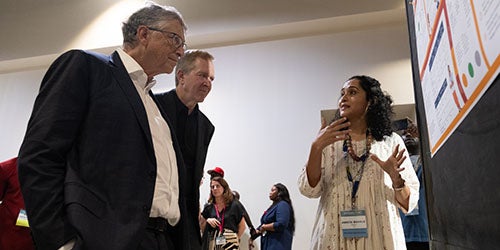
In the fall, I traveled to Senegal to meet with some of the incredible researchers doing this work and to celebrate the 20th anniversary of the foundation’s Grand Challenges initiative.
When we first launched Grand Challenges the Gates Foundation’s flagship innovation program it had a single goal: Identify the biggest problems in health and give grants to local researchers who might solve them.
We asked innovators from developing countries how they would address health challenges in their communities, and then we gave them the support to make it happen.
Many of the people I met in Senegal were taking on the first-ever AI Grand Challenge.
The foundation didn’t have AI projects in mind when we first set that goal back in 2003, but I’m always inspired by how brilliant scientists are able to take advantage of the latest technology to tackle big problems.
It was great to learn from Amrita Mahale about how the team at ARMMAN is developing an AI chatbot to improve health outcomes for pregnant women.
Much of their work is in the earliest stages of development there’s a good chance we won’t see any of them used widely in 2024 or even 2025.
Some might not even pan out at all. The work that will be done over the next year is setting the stage for a massive technology boom later this decade.
Still, it’s impressive to see how much creativity is being brought to the table. Here is a small sample of some of the most ambitious questions currently being explored:
Can AI combat antibiotic resistance? Antibiotics are magical in their ability to end infection, but if you use them too often, pathogens can learn how to ignore them. This is called antimicrobial resistance, or AMR, and it is a huge issue around the world especially in Africa, which has the highest mortality rates from AMR. Nana Kofi Quakyi from the Aurum Institute in Ghana is working on an AI-powered tool that helps health workers prescribe antibiotics without contributing to AMR. The tool will comb through all the available information including local clinical guidelines and health surveillance data about which pathogens are currently at risk of developing resistance in the area—and make suggestions for the best drug, dosage, and duration.
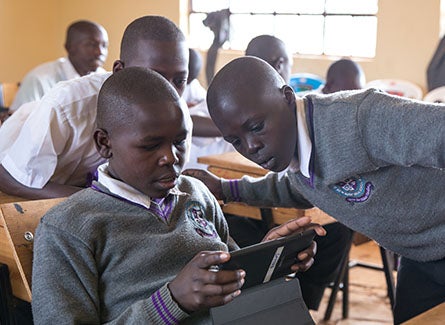
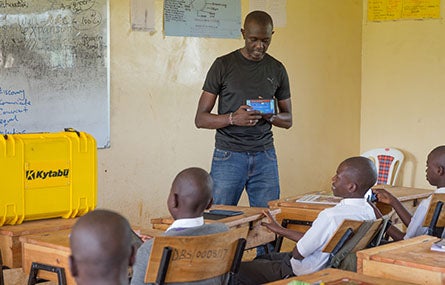
Can AI bring personalized tutors to every student? The AI education tools being piloted today are mind-blowing because they are tailored to each individual learner. Some of them like Khanmigo and MATHia are already remarkable, and they’ll only get better in the years ahead. One of the things that excites me the most about this type of technology is the possibility of localizing it to every student, no matter where they live. For example, a team in Nairobi is working on Somanasi, an AI-based tutor that aligns with the curriculum in Kenya. The name means “learn together” in Swahili, and the tutor has been designed with the cultural context in mind so it feels familiar to the students who use it.
Students interact with an AI tutor in a classroom in Nairobi, Kenya.
Can AI help treat high-risk pregnancies? A woman dies in childbirth every two minutes. That’s a horrifying statistic, but I’m hopeful that AI can help. Last year, I wrote about how AI-powered ultrasounds could help identify pregnancy risks. This year, I was excited to meet some of the researchers at ARMMAN, who hope to use artificial intelligence to improve the odds for new mothers in India. Their large language model will one day act as a copilot for health workers treating high-risk pregnancies. It can be used in both English and Telugu, and the coolest part is that it automatically adjusts to the experience level of the person using it whether you’re a brand-new nurse or a midwife with decades of experience.
Can AI help people assess their risk for HIV? For many people, talking to a doctor or nurse about their sexual history can be uncomfortable. But this information is super important for assessing risk for diseases like HIV and prescribing preventive treatments. A new South African chatbot aims to make HIV risk assessment a lot easier. It acts like an unbiased and nonjudgmental counselor who can provide around-the-clock advice. Sophie Pascoe and her team are developing it specifically with marginalized and vulnerable populations in mind—populations that often face stigma and discrimination when seeking preventive care. Their findings suggest that this innovative approach may help more women understand their own risk and take action to protect themselves.
Could AI make medical information easier to access for every health worker? When you’re treating a critical patient, you need quick access to their medical records to know if they’re allergic to a certain drug or have a history of heart problems. In places like Pakistan, where many people don’t have any documented medical history, this is a huge problem. Maryam Mustafa’s team is working on a voice-enabled mobile app that would make it a lot easier for maternal health workers in Pakistan to create medical records. It asks a series of prompts about a patient and uses the responses to fill out a standard medical record. Arming health workers with more data will hopefully improve the country’s pregnancy outcomes, which are among the worst in the world.
Tonee Ndungu whose team is developing Somanasi shows off the latest version of their personalized education tutor.
We can learn a lot from global health about how to make AI more equitable.
The main lesson is that the product must be tailored to the people who will use it.
The medical information app I mentioned is a great example: It’s common for people in Pakistan to send voice notes to one another instead of sending a text or email.
So, it makes sense to create an app that relies on voice commands rather than typing out long queries.
And the project is being designed in Urdu, which means there won’t be any translation issues.
If we make smart investments now, AI can make the world a more equitable place.
It can reduce or even eliminate the lag time between when the rich world gets an innovation and when the poor world does.
Zimbabwe | 61-year-old Esther is a married grandmother of two young grandchildren (Rudo and Munashe), and also looks after two nieces (Faith and Nicole). She struggles to feed her family and worries a great deal about where she will find food to feed them all. She has very little food supplies left, and her granddaughter Rudo needs to go out and collect termites for their family to eat. She makes a living supervising other farmers’ livestock, and is usually paid in food. | John Hewat/CARE International
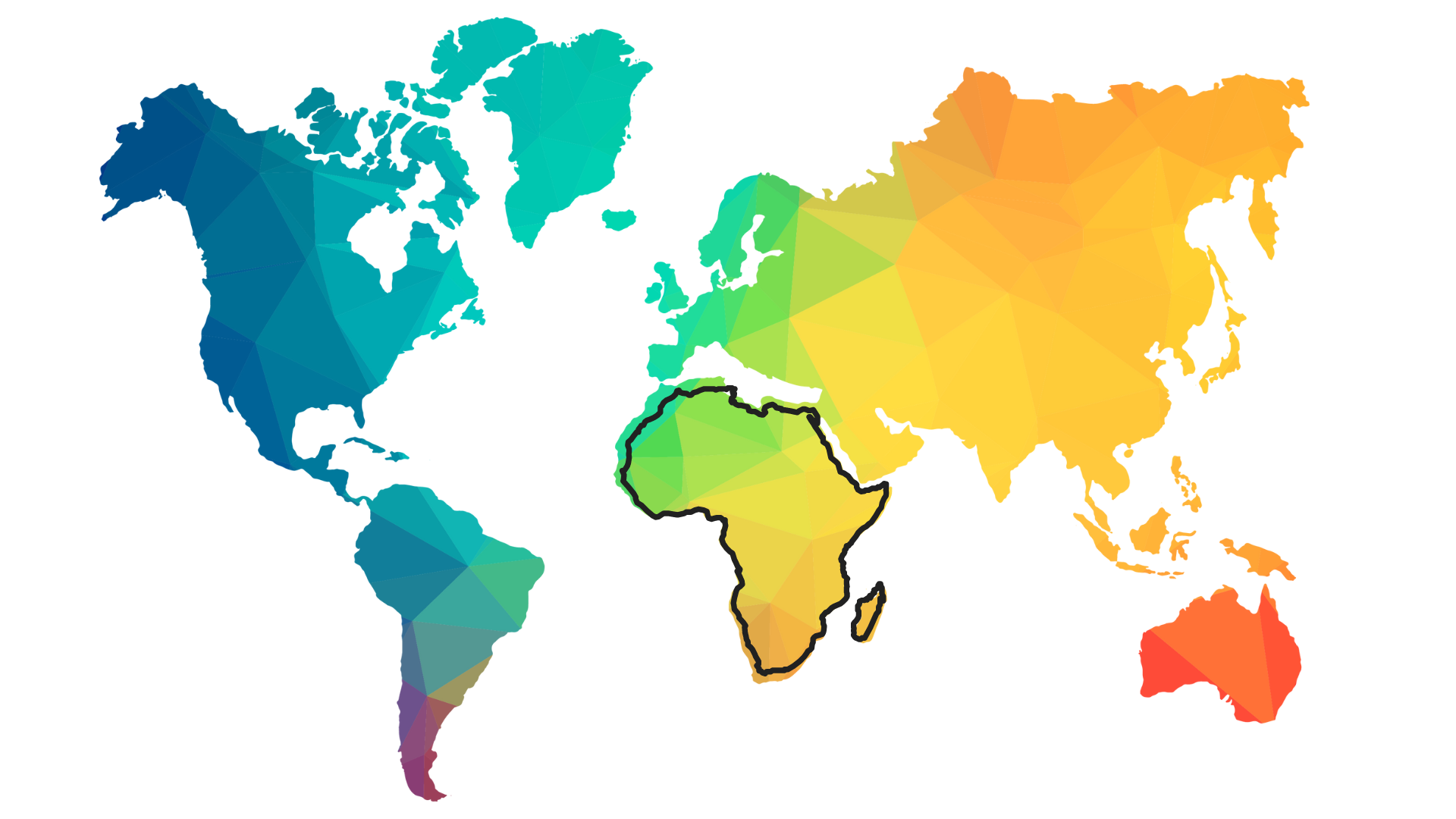
Picture the map of the world. If you’re having trouble remembering the details, we’ll provide a visual aid. Have a look at this map of the world.
Graphic by Darnelle Fortune.
Situated right in the center, and taking up the second-most amount of space is Africa.
It’s a continent that, when you consider it next to the others, is almost impossible to overlook.
You’d have to be trying really hard not to see the continent at all. But that is what happens, isn’t it?
Africa and her issues go unseen by so much of the world and a major reason for this is mainstream media not creating the space to cover Africa and her crises.
At the beginning of every year, the humanitarian organization CARE International releases a report that lists 10 of the world’s most underreported crises from the previous year.
This is not to say that other continents and the countries within them don’t have crises, or that one crisis is more harmful than another, it’s to highlight that there is a great deal of need that is going unnoticed and the longer need goes unnoticed, the longer it takes to resolve.
21’s birthday was on Friday, and he celebrated with a major Freaknik-themed bash in the ATL. You might’ve seen the awesome fire red pickup truck Thug gifted to his homey — but what you didn’t know, until now, is the whip cost $150k!!!
Young Thug is about that big spender lifestyle — especially when it comes to his pal 21 Savage … who just hit 29, and YT went all out for his very pricey gift … some very expensive wheels.
Roadshow International — a luxury car dealership in Atlanta — tells TMZ … the truck itself is a Dodge Hellcat TRX, new models of which can range anywhere from $60k to $72k right off the lot.
“It also has a “21” emblazoned across the door”
TRISTANJAMESJR
But, watch this video showing all the truck’s features and you’ll see why Thug paid way more than that.
Not just that, but the interior bears 21 Savage’s face too … a rendering of himself is stitched right into the upholstery of some of the seats — so there’s no question whose ride this is.
Herm, who owns Roadshow Int’l, says he had 3 days to work on the truck, and sure enough … he got it done in time for the big birthday party. Talk about a good friend, and talk about some nice nice things.
Where to start is to download the e-Naira app from google store place or apple.
Note that after requesting the app, you may be asked to verify your identity by entering your passcode or by using Touch ID or Face ID.
From the Home screen, tap the App store. If the e-Naira Speed Wallet app isn’t available on your home screen, swipe left to access the App Library.
“33 banks fully integrated and live on the platform”
CBN
To install apps, you must sign in with your Apple ID or create one.
To browse the App Store, tap Apps. To search for apps by name, tap search (at the bottom) then type e-Naira Speed Wallet’s app.
When the app appears, tap the app. Tap GET, then tap INSTALL. Once successful downloaded, launch the e-Naira Speed Wallet.
“Over 120 merchants successfully registered”
CBN
Click on “Signup” to originate the onboarding process. Select your Relationship bank/e-Naira Partner. Enter mobile number and create password.
Enter the following: First name, Surname, Date of birth, State of Origin, Account number tied to your Bank, and BVN.
On successful validation, of the above details, a wallet activation mail is sent to the email address tied to your BVN.
“Tax base’ll increase as more businesses move to formal sector, Buhari enthuses”
INSIDERNOTES
Go to registered mailbox and confirm receipt of email. Click on “Active Wallet” to confirm your email and activate your speed e-Naira Wallet.
Enter your surname and password to login to the e-Naira Speed Wallet. To Fund the e-Naira Wallet, log in to your bank Mobile/Internet Banking platform and initiate the transfer to your wallet.
And your wallet will be credited with the amount requested from your account to your wallet.
However, Luno disclosed that the withdrawal and depositing of funds for Nigerian users will be done through a third-party platform.
“We believe that this is the safest and easiest-to-use solution currently available to our customers in Nigeria and look forward to you experiencing it for yourselves.”
INSIDERNOTES
Luno warns users that it “does not set the price of bitcoin or any cryptocurrencies, we only facilitate transactions between customers.
The return of Naira deposits and withdrawals may cause significant price volatility, with the release of pent-up customer demand to buy and sell cryptocurrency causing unusual market behaviour that could last for several weeks,” Luno said.
You will be able to deposit and withdraw funds to and from the Luno platform using vouchers purchased and redeemed through a trusted third party provider.
“Representation of cryptocurrency Bitcoin is placed on PC motherboard in this illustration taken, June 29, 2021. Representation of cryptocurrency Bitcoin is placed on PC motherboard in this illustration taken, June 29, 2021.”








 45'MEDIA