the unbearable notice is; that you've to make up your mind to be the difference and not the other way round else people will misjudge you even though you're not that person.
Women in various Indigenous communities across the Amazon have kept up the fight against the injustices that face their lands for decades.
In the early 2000s some of these women united in yearly marches known as Marchas das Margaridas, in honour of the late Margarida Maria Alves, which focused on advocating for women’s rights, education, and land reform and this movement is still alive today.
More recent movements such as Mujeres Amazónicas have taken significant steps against governmental and corporate efforts to threaten their ancestral land.
Indigenous women’s leadership has led to successful landmark court rulings that have helped safeguard ancestral territories from oil extractions, such as the women from The Kichwa People of Srayaku, who in 2003 successfully expelled oil industries from their sacred lands.
“Across the Amazon rainforest, the legacy of Indigenous women as fierce protectors of the environment has shaped a powerful movement against exploitation and climate threats”
InsiderNotes
As guardians of the Amazon, Indigenous women cultivate a profound relationship with the land, nurturing medicinal plants, collecting seeds for reforestation efforts, patrolling their lands against illegal mining, and so much more.
Their efforts have helped to enhance biodiversity, increase carbon storage, and foster resilience to climate change in the rainforests they manage.
Today, Indigenous women activists of the Amazon are continuing this legacy, making their voices heard in South and Latin America, and globally.
Here are six Indigenous women activists you should know.
1. Zaya Guarani
Zaya Guarani is a world-renowned Indigenous Brazilian model, activist, speaker and actor who is making strides in the fight to protect the Amazon in the fashion industry and beyond.
Growing up in Rondônia, Brazil, near the Madeira River in the Amazon, Guarani experienced first-hand the devastating impacts of climate change and illegal industrial activities on her community.
Her home state is now included in the Amazonian Arc of Deforestation, an area where tropical forests are vanishing quickly due to logging and mining activities, which forced her family to often move from one area to another.
While currently living in New York City, far from Brazil, Guarani remains vocal about her Indigenous Brazilian roots, advocating for her community and fighting against deforestation in the Amazon.
Throughout her career she has used her platformer to champion Indigenous rights and climate justice.
Guarani joined forces with Indigenous activist Dayana Molina to create Indigenous Creatives Latin America, a collective that champions Indigenous representation in the fashion industry in Brazil and South America.
As an advisor for The Slow Factory and the UN Spotlight Programme, she is intentional when it comes to collaborating with brands and organisations that share her commitment to a socially and environmentally responsible future.
Guarani, understands the important role Indigenous peoples and their cultural teachings play in combating climate change, even as they face its impacts.
“As indigenous people, we serve as guardians of an entire ecosystem, yet some still seek to exploit our land livelihoods.”
In a 2024 interview with Atmos, she said:
2. Helena Gualinga
Helena Gualinga is a passionate Ecuadorian environmental and human rights activist from the Kichwa Sarayuku community in Pastaza, Ecuador.
Coming from a long line of women in her family who were advocates for Indigenous women’s rights and land defenders in the Amazon, Gualinga witnessed the struggles her community faced against oil companies encroaching on their land without consent.At just 10 years old, her journey into activism began when her community achieved a significant victory in 2012, winning a landmark case at the inter-American Court of Human Rights that affirmed Indigenous rights to free, informed consent regarding resource extraction.
At just 10 years old, her journey into activism began when her community achieved a significant victory in 2012, winning a landmark case at the inter-American Court of Human Rights that affirmed Indigenous rights to free, informed consent regarding resource extraction.
Since then, she has emerged as a dynamic spokesperson for her community and co-founded Polluters Out an International youth-led coalition, focused on kicking the fossil fuel industry out of every aspect of society.
At 17 years old she made her mark at the COP25 Climate conference in Madrid, when she called out the Ecuadorian government for continuing to allow oil extraction on Indigenous lands.
Her activism has been recognised in various publications and her inspiring story was captured in the documentary Helena Sarayaku Manta.
Now 23 at the time of publishing, she carries forward her family’s legacy of advocacy, inspiring youth globally to join the fight for the Amazon and our planet’s future.
3. Vanda Witoto
Vanda Oregta Witoto is an Indigenous woman from the Witoto tribe.
She is a nurse, climate activist, and Indigenous community leader from Manaus, Brazil.
For years, she has been advocating for her community’s rights and well-being in Parque das Tribos, also known as Tribes Park which is the first recognized Indigenous neighbourhood in Manaus and has faced historical neglect.
Witoto has worked to address critical issues impacting her neighbourhood of 700 Indigenous families from 35 ethnic groups.
These issues include poor sewage systems and waste management, both of which threaten local health and the Amazon River.
As a nurse working during the peak of the COVID-19 pandemic in 2020, she personally drove sick neighbors to hospitals when ambulances refused to respond, and with the help of her mother volunteered to distribute handmade masks to the community.
Witoto was also among the first to receive the COVID-19 vaccine, which helped to dispel misinformation in Indigenous communities.
Driven by her neighborhood’s struggles and the poor official response to COVID-19, Witoto ran for federal deputy in 2022, at the age of 35.
Her campaign advocated for Indigenous rights, improved education and healthcare, support for underrepresented groups, women’s economic empowerment, and sustainable development in the Amazon.
Though she did not win, she contributed to a historic wave of Indigenous women seeking political representation.
The now 37-year-old continues to advocate for the fundamental rights of Indigenous people and nature through her women-led organisation, The Witoto Institute.
She has also attended international climate summits including the COP27 conference in Egypt, where she spoke about the challenges forcing Indigenous people to leave their ancestral homes and their familes for urban areas in search of work, food, and safe water due to economic and environmental pressures.
4. Nina Gualinga
Nina Gualinga is a prominent activist and leader from the Kichwa community of Sarayaku in the Ecuadorian Amazon.
At 31, she has spent most of her life working to protect the rainforest and its inhabitants against the threats posed by oil and mining companies.
Her activism journey began at just eight years old when she witnessed an oil company’s attempt to exploit her community’s land without their consent.
Inspired by the local women in her community who refused the selling of their land, Gualinga committed to advocating for environmental justice and Indigenous rights.
In 2018, her activism was crucial when she and five hundred Indigenous women from the Indigenous women-led organization Mujeres Amazónicas, also known as Amazon Women, presented a mandate to Ecuadorian President Lenin Moreno.
This mandate included 22 demands addressing land rights, gender-based violence against Indigenous women, and climate change.
This moment was monumental, despite the threats and attacks the activists faced for speaking up.
5. Nemonte Nenquimo
Nemonte Nenquimo is Indigenous Waorani woman dedicated to protecting her ancestral territory, ecosystem, culture, economy, and way of life.
For generations, the Waorani people from the Ecuadorian Amazon rainforest have stood resolutely against outside forces threatening their ancestral land.
In 2015, Nenquimo co-founded the Ceibo Alliance an Indigenous organization, aimed at protecting Indigenous lands from the threats of planned oil concessions.
In 2018, she was elected as the first female president of the Coordinating Council of the Waorani Nationality of Ecuador-Pastaza, an organization that represents the Waorani of the Pastaza province.
Her advocacy work over the years has not gone unnoticed.
Nenquimo has won numerous awards for her activism, including the prestigious Goldman environmental prize.
She has been recognized as one of Time Magazine’s 100 most influential people in the world in 2020, and has been named a United Nations Champion of the Earth.
In a groundbreaking 2019 court case, Nenquimo successfully challenged the Ecuadorian government, which resulted in the protection of 500,000 acres of Amazonian rainforest and Waorani territory from oil extraction.
In 2023, she campaigned in a successful referendum to protect the country’s Yasuní National Park from oil drilling.
6. Txai Suruí
At just 28, Txai Suruí is a notable Brazilian environmental activist known worldwide.
A member of the Paiter Suruí Indigenous community in Brazil, she founded the Indigenous Youth Movement of Rondônia and leads the Associação de Defesa Etnoambiental Kanindé, a community organization that has worked with Indigenous people for over 30 years.
Suruí hails from a family of activists her father is Chief Almir Suruí and her mother is the legendary activist Ivaneide Suruí, both known for their work in combating deforestation in the Amazon.
Following in their footsteps, Suruí has carved her own path as defender of the environment and advocate for Indigenous rights.
Her activism can be seen in governmental halls and climate summits around the world, but also on the ground with Indigenous communities, and on social media where she advocates for her community.
As the first woman in her community to earn a law degree, she used this, along with the support of her peers, to successfully sue the Brazilian government for changing its 2005 carbon baseline to fulfill the Paris Climate Agreement’s carbon reduction objectives.
In her powerful COP26 summit speech addressing world leaders, she said, “Indigenous people are at the forefront of the climate emergency and must be at the center of decision-making.
We have solutions to postpone the end of the world; let’s stop spreading lies and false promises.”
Dun forget to subscribe for the latest upfront updates (24/7 Active)
Contact for paid ads : “9150859095 WhatsApp only! Email@_likehoj.direct@gmail.com
About 2/3 of the world’s population consumes potatoes as its staple food and nearly 50% of potatoes are used as the household staple food or vegetable.
#Potatoes provide accessible and nutritious food and improved livelihoods in rural and other areas where natural resources, especially arable land and water are limited and inputs are opulent.
The crop’s versatility and ability to grow in a variety of conditions make it an advantageous crop choice. Potatoes are also a climate friendly crop, as they produce low levels of greenhouse gas emissions in comparison to other crops.
Potatoes are also a climate friendly crop, as they produce low levels of greenhouse gas emissions in comparison to other crops.
In the past decade, the global production of potatoes has increased by 10%, leading to growth in employment and income, but more work still needs to be done to harness the full potential of the crop to end hunger and malnutrition globally.
There are over 5,000 improved varieties of potatoes many of which are unique to their original location in Latin America
The 150 wild relatives of the cultivated potato show a wide genetic variation with a range of traits, including the ability to adapt to different production environments, resistance to pests and diseases, and different tuber characteristics.
Drop a 🥔, If potato is your favourite vegetable.
Watch this movie and let’s have your opinion expecting all ya’ feedback👍
Watch this another amazing skit coming from one of the OG’s in the industry.
U.S. Secretary of State Marco Rubio delivers remarks alongside Democratic Republic of the Congo Foreign Minister Thérèse Kayikwamba Wagner (L) and Rwandan Foreign Minister Olivier Nduhungirehe during a Declaration of Principles signing ceremony at the State Department in Washington on April 25. Kevin Dietsch/Getty Images
Of the three Gulf states that U.S. President Donald Trump visited last week, the United Arab Emirates struck some of the most spectacular deals.
Pledges between the two countries amounted to more than $200 billion, and following restrictions under former President Joe Biden the UAE will enjoy expanded access to advanced U.S. artificial intelligence chips.
Lifting these controls is a dangerous error, Alasdair Phillips Robins and Sam Winter Levy warn: Without them, the United States is
“placing the most important technology of the 21st century at the whims of autocratic regimes with sophisticated surveillance systems [and] expanding ties to China.”
InsiderNotes
The nexus between China and the UAE is especially apparent in Africa, where Emirati businesses are making green energy investments using Chinese technology and minerals.
The United States, meanwhile, looks set to retreat from the continent, with cuts to the U.S. Agency for International Development and Trump’s tariffs pushing African nations to form new alliances.
Through the transactional lens that Trump is fond of,
Curtis Bell and Christopher Faulkner, of the U.S. Naval War College, write.
But the authors argue that U.S. Africa policy can still prioritize tangible returns through investments that build enduring partnerships, not through quick exits or one-sided gains.
Trump will have the chance to follow that advice as he meets with South African President Cyril Ramaphosa in Washington on May 21.
South Africa is the United States’ largest trading partner in a region that is an important strategic gateway into Africa, yet Ramaphosa and Trump have not gotten off to a good start.
In fact, the diplomaticrelationship between the United States and South Africa has reached its lowest point since the latter’s transition to democracy in 1994, Imraan Buccus, a senior research associate at South Africa’s Auwal Socio Economic Research Institute, writes.
Much of the blame can be attributed to a Feb. 7 executive order awarding refugee status to Afrikaners that South Africa’s foreign ministry described as based on a “campaign of misinformation and propaganda.”
Ramaphosa has said that his country would not be “bullied” by Trump, but as he looks to reset relations and strike a much needed trade deal, the stakes for his meeting at the White House this week are high.
A host of ceremonies and events both local and international, has been on going since the elected Governor’s Wife Chioma Uzodimma has fundalized the necessity and importance for women to be involved in the politics of the nation.
This weekend inside Imo government house we’ve variety of occasions that you might like to bibe with as you seek relaxation and family time, (for what is family without distribution of information?), so we’ve got you covered.
Share with them as we’ve got avalanche of ceremonies and events to spice up your weekend!
First let’s start with the most recent;
Following the successful seminar Organization of Islamic Cooperation (OIC) High-Level Cancer Awareness Program, Her Excellency Senator Oluremi Tinubu CON, the First Lady of Nigeria, graciously hosted a special dinner at the Congress Hall, Transcorp Hilton, Abuja, in honour of visiting First Ladies and other dignitaries.
During the event, the Minister of State for Health and Social Welfare, Hon. Dr. Tunji Alausa, delivered a welcoming address.
Guests were treated to captivating live band performances during the event, adding to the festive atmosphere of the evening.
In their remarks, the visiting First Ladies commended the First Lady, HE Sen. Oluremi Tinubu for her nurturing persona and role as a mentor to them, expressing their admiration and gratitude towards her.
It was an enriching experience to have esteemed guests such as the wife of the Vice President of Nigeria HE Hajiya Nana Shettima, First Ladies of Turkey, Sierra Leone, Gambia, Mauritius, Mozambique, Uganda, members of the Nigeria Governors’ Spouses Forum, wives of government functionaries as well as top Government officials in attendance.
It was an absolute delight to join First Ladies from across Africa in Abuja on May 16, 2024 for the crucial Regional Seminar on Cancer Awareness, hosted by HE Senator Oluremi Tinubu CON, the First Lady of Nigeria.
The seminar, themed “Innovative Approaches to Cancer Prevention and Early Detection,” aimed to address the devastating impact of cancer, particularly breast and cervical cancer among women.
In her opening address, The First Lady emphasized the critical need for early detection and treatment, citing alarming statistics that highlight the urgent necessity for action.
With 127,763 new cancer cases and 79,542 deaths reported in a single year, the imperative for collective action has never been clearer.
The seminar provided a platform for First Ladies to share insights and experiences in cancer management.
Notable speakers, including the First Lady of Turkey, Emine Erdogan, advocated for holistic approaches such as dietary improvements and leveraging medicinal resources.
A significant highlight of the event was the unveiling of the Abuja Declaration, where attending First Ladies committed to prioritizing cancer prevention and treatment efforts.
Key resolutions included improved funding, intensified advocacy, and enhanced collaboration among member states.
The Declaration, signed by HE Sen. Oluremi Tinubu, CON and her counterparts, marks a crucial step forward in Africa’s fight against cancer.
Together, we can create a cancer-aware and supportive community for all, promoting a future where cancer is no longer a life-threatening disease.
#ChiomaUzodimma Chief Barr. (Mrs.) Chioma Uzodimma First Lady of Imo State, Founder of GoodHope Flourish Foundation, and Secretary of Renewed Hope Initiative
Music Star and Canadian Rapper, DAX has expressed his feeling for his parents after they decided to immigrate to Canada over 36yrs ago.
The coupled attested to move on with their family over to Canada because of their high taste for excellence and what crave they would’ve wished for their children to grow in, both parent are from the Eastern part of Nigeria a place known for high prioritized culture and Morales.
They’ve now been together for 38 years.
This was the proudest moment of my life.
The day they saw me GRADUATE COLLEGE after going to 3 different universities in 4 and a half years.
DAX
They were both born in NIGERIA…🇳🇬
“My mother was born in Aba and is IGBO and my Father was born in Lagos and is also IGBO but speaks YORUBA as well.
They immigrated to St, Johhn’s, Newfoundland, Canada 🇨🇦 36 Years ago and the rest is history.”
Anyone who has Nigerian parents or just African parents, or just immigrant parents in general knows the expectation they have for their children is very high especially educational wise and occupational wise.
My parents were never excited with my initial decisions to play basketball and then make music but left me alone once they saw how focused I was and that I wasn’t going to quit.
In African culture it’s the child’s responsibility to repay their parents for bringing you into this world. We come in, they take care of us, and as they get older we take care of them.
“NO QUESTIONS ASKED“
That’s always been one of my BIGGEST motivations everyday I wake up and I plan to continue to voice that as a priority for the youth coming up in this generation.
It’s the circle of life.
What they gave me wasn’t a dollar amount and I’m happy and appreciate the struggle and tough times we went through growing up.
“They set an example of how to work hard and expect nothing from anyone”
DAX
Tough times create strong people.
“I went to 3 schools in 4 years and got my degree in 4 and 1/2. I led the league in scoring my senior year and turned down overseas contracts after I found my passion for poetry and motivational speaking.
I jumped in head first. I had no ties or connections to anyone in entertainment so I then built my platform from scratch by myself.”
Thank you Mom and Dad for your sacrifices.
“I love you”❤
And shoutout to all the parents in the world you are doing amazing job tryna raise us up to the standard of top classical despite the surrounded difficult challenges.
The YOUTH are the FUTURE and it’s going to be harder than ever in this social media generation to lead them in the right direction.
As for me,
“I will do my part by continuing to create thought provoking music”
A Global Citizen from Nigeria, Jeremiah, reminisced on how the $Twitter crackdown impacted the community:
“The sudden ban of Twitter, now referred to as X, several years ago sent shockwaves through communities, significantly affecting not only individuals’ ability to connect and share but also disrupting businesses and revenue streams dependent on the platform.”
He added: “It highlighted the interconnectedness of individuals and businesses in the digital realm, where disruptions to online platforms can have far-reaching consequences on livelihoods.”
In 2024 Senegal is experiencing Nigeria’s history, as civil society organizations are taking the Senegalese government to the ECOWAS court regarding internet shutdowns that took place in June, July, and August 2023 as presidential elections were meant to be en route and popular opposition leader (and fierce critic of President Macky Sall) Ousmane Sonk was criminally charged and held in custody.
The blackouts not only limited the right to access information and the freedom of expression of everyday citizens, but it also limited the work of journalists on the ground.
Speaking to Global Citizen on the internet blackout in Senegal, the African head of the International Federation of Journalists, Louis Thomasi said: “Political interference is really putting a dent in qualitative journalism.
If you look at what’s happening in Africa all over, it is now a norm that during election periods, the internet will be cut off.
Even yesterday again [13 Feb. 2024] in Dakar, in Senegal, the internet was cut off.”
“It’s a deliberate attempt to suppress freedom of expression and media freedom in general,”
Louis Thomasi/African head of the International Federation of Journalists
Internet shutdowns and crimes against humanity
We’ve already mentioned that there’s an ongoing war in Sudan and the country has had its internet cut off several times in the face of the civil war.
Sudanese Global Citizen, Mazen, explains what having online access means to them: “Nowadays, the Internet means life.
It makes you aware and connected with the world.”
Internet blackouts in the country have heavily impacted people’s lives, but their impacts are a lot worse than you can imagine.
The loss of the internet has also meant that conflict-related atrocities can continue without being reported.
Advocacy organization, Access Now, has consistently kept tabs on the violent impacts of shutdowns in Sudan.
The organization noted that in 2021, the day before a pro-democracy protest was to take place, the internet was cut off along with phone and SMS services.
The protest continued regardless.
With citizens having no ability to transmit information inside or outside of Sudan, authorities took the opportunity to crack down physically on protesters.
At least 17 people were killed, and 250 people were injured as a result.
“The internet blackouts are doing their job and providing cover for the military’s violent takeover and hijacking of a possible democratic future for Sudan,”
“I have experienced natural disasters such as earthquakes, social unrest causing violent protests, terrorist attacks, all sorts of events that caused or forced involuntary internet shutdowns,”
“The one thing I missed the most in any of those instances was critical services and the ability to connect with my loved ones. This is what the internet means to me.”
Rwandan Global Citizen Gabriel
It’s futile to deny the importance of online access to people across the continent.
However, for as long as the internet exists, there will be ways to exploit it for the use of harm towards everyday citizens in African countries, and around the world.
Since 2011, the United Nations has called for universal internet access as a human right, however, this has not been implemented across countries despite the growing call for it
Right now what Global Citizens can do is remain informed about internet shutdowns and their impacts on communities, and spread the word about them so that their impacts do not go unnoticed and underreported.
As Sudan experiences a civil war where one of the most severe hunger crises of 2023 (and 2024 so far) is ongoing, access to humanitarian aid is both dire and scarce, and innocent lives are being scraped off the planet every day authorities added insult to injury by shutting the internet down when citizens needed it most.
It was mid-February 2024, almost a year into the ongoing violence, when Sudan’s internet would be disrupted for around 10 days.
While the current civil war has been ongoing for over a year, violence and conflict have clung to Sudan’s back on and off for years, and throughout, internet shutdowns have been the norm.
“Because of the internet shutdown, we are unable to communicate with our volunteers, we are unable to buy food, medicine and deliver these services to those in need.
Most of our soup kitchens in the greater Khartoum are cut off and therefore not working.”
A civilian expressed: “Due to war, using online banking apps for transactions has gained popularity given the lack of liquidity.
Now, however, we are almost starving because of this shutdown, as we can’t even buy food and medicine.
All my interactions, including business and online courses, have come to a stop too.”
Whether or not access to the internet should be considered a human right is no longer up for debate: it should be.
The internet has become a vital part of the engine that propels the world forward, and to block someone’s access to it is to block someone’s access to their already existing human rights.
Access to education, food, employment, health, and humanitarian aid, are all within the Universal Declaration of Human Rights and because the internet has overwhelmingly become the means by which we access these rights, it should suffice that access to the internet itself should be a human right.
So when an entire region or nation has been denied the right to access the internet due to political agendas that are not always in the best interest of the people, we should be worried as a global society.
Internet shutdowns across the African continent are not only frustrating, but they are increasingly harmful.
Here’s what more you should know:
What are internet shutdowns?
We’re not talking about an outage here.
An outage is when an error or accident occurs and the internet goes off as a result, for instance in times of extreme weather where infrastructure is destroyed, or in the case of maintenance repairs.
A shutdown, on the other hand, is the deliberate turning off of the internet to control a population or the information flow surrounding a situation, and is often orchestrated by some form of authority.
Egypt’s authorities at the time caught on to the fact that demonstrators were using the internet to mobilize and multiply the protest movement, and so they shut off the internet directly impacting access to an open civic space for the right to protest and speak freely.
While it wasn’t the first internet shutdown in history, because of the magnitude of the Arab Spring protests, the world opened its eyes to how internet shutdowns can be weaponized.
A similar thing happened in the last African monarchy-state, eSwatini, in 2021, when pro-democracy and anti-police brutality protests erupted, the state shut down the internet citing “security reasons”, depriving children of their education, businesses of their income, and citizens alike of their free speech.
If it’s still not clear why these shutdowns are a bad thing, a Global Citizen from Ghana, who wished to stay anonymous, broke it down for us: “The internet means Information, which means power in the hands of the people.
The reason governments like to impose restrictions is so the information flow can be stagnant, robbing people of their power to be seen and heard.”
They can either rely on what’s called a routing disruption, which is to stop the transmission of information altogether, meaning people using the internet can’t connect to it, and information being sent will not find its destination.
This is largely what we’ve seen across the continent, particularly in the case of Sudan and eSwatini.
Global Citizen
The second is called packet filtering, where parts of the internet or specific sites are shut down, or specific content is targeted, for instance, Nigeria blocking access to Twitter in 2021.
In retaliation (or what the government referred to as protecting the state from “undermining Nigeria’s corporate existence”) the government banned Twitter for the entire country.
At the time, Human Rights Watch and other organizations raised alarm about the impact of freedom of expression and an open civic space, however, these calls were ignored by Buhari’s government.
What’s more is that any use of Twitter, including by journalists and media houses, was deemed “unpatriotic”, and could result in persecution.
We’ll continue the rest of the discussion in our next blog, subscribe to be the first to be notified when it drops.
Exactly six months ago, a new wave of devastation and profound suffering began.
Israeli civilians were targeted and at least 1,139 were killed by Hamas and Palestinian armed groups with hostages being taken and 132 remaining in captivity today.
Palestinians in the Occupied Palestinian Territories came under retaliatory attack and continue to face daily horrors more than 32,000 civilians have been killed in Gaza, and over 2.3 million remain at risk of genocide and famine.
Families are waking up every morning without their loved ones, and with uncertainty for their own lives.
I remain heartbroken — and determined to help.
I know you share my sense of moral responsibility.
While the U.S. government and the international community have failed to put an end to the staggering scale of death and devastation, Amnesty International has been responding since day one:
Our call for a permanent ceasefire, unimpeded humanitarian access to Gaza, and the release of remaining civilian hostages has mobilized more than 1 million signatures from 167 countries1;
Our investigations have exposed numerous human rights violations and war crimes by all parties — including unlawful attacks by Israeli forces in which U.S.-made weapons were identified2;
Our experts are meeting with U.S. leaders and lawmakers, who are referencing and uplifting our research on the national stage3;
For over six decades4, we have been documenting how Israeli forces have committed grave human rights violations against Palestinians with impunity.
Amnesty is on the ground ensuring violations do not go unchecked all thanks to dedicated people like you and we need your help to continue our lifesaving work.
Tristan: this crisis is devastating but we must not give into despair or assume someone else will come to the rescue.
Behind the stories you read about Israeli and Palestinian civilians being killed in ruthless attacks, we are there, collecting evidence and interviewing survivors so we can seek justice.
Behind the historic number of Palestinians being displaced, we are there, documenting their plight so we can show people in power why a permanent ceasefire is so urgently needed.
And behind Amnesty, there’s YOU. With your help, we can ramp up efforts to protect human rights and demand accountability for the human rights crimes being committed around the world.
Your support will mean more investigations to uncover war crimes, more pressure for a ceasefire, humanitarian access, and hostage release, and more action to shine a light on injustice.
We have no intention of slowing any of this work. Help us maintain the resources needed to continue responding.
Thank you for powering our movement,
Paul O’Brien Executive Director Amnesty International USA
P.S. Not ready to make a donation? Use our simple tool to send a message to your members of Congress calling for an immediate ceasefire, which would help put an end to unlawful attacks, allow for lifesaving humanitarian aid, and negotiate the release of hostages.
As Earth Day approaches, it’s crucial to reflect on the environmental challenges we face and the actions we can take to protect our beautiful planet.
This year the Earth Day theme is Planet vs. Plastics, looking at the impact both on our health and the environment.
FossilFuel🚫
In this special Earth Day edition, we delve into the three main reasons why plastic is harming our planet and share actionable steps we can all take to make a difference.
The production of plastic is heavily reliant on fossil fuels
Most plastics can take hundreds of years to decompose in landfills
Plastic pollution poses a severe threat to nature, especially in our waterways.
Global Citizen
So, what can we do about it?
It can often feel like we don’t have a lot of control over the amount of plastic in the world, and that governments or companies should be the ones making the changes.
But change needs to come from everyone.
We all have an area of influence and control over our own decisions when it comes to things like shopping, or our homes.
And laws are changing! In March at the UN Environment Assembly, #175 nations agreed to develop a legally binding agreement on plastic pollution by the end of this year.
This hugely important resolution addresses the full lifecycle of plastic, including its production, design and disposal.
CustomerRights
Plus, lots of companies are making changes to the amount of plastic in their products, due to increasing public demand. So don’t underestimate what a difference consumer pressure can make!
Things we can do today
Step 1 – Reduce We’ve all heard the phrase ‘reduce, re-use, recycle’, but these are not all of equal importance.
The most important thing we can do is REDUCE the amount of plastic we use.
Synthetic fibres in clothing account for 10% of all plastic usage.
Step 3 – Recycle Finally, when we must buy or use plastic, we should RECYCLE it.
The reason this is the 3rd step is because, whilst recycling is preferable to incineration or landfill, plastic cannot be recycled forever (unlike metal).
So, recycling delays, rather than avoids, landfill.
What happens to our plastic waste?
When we act together, we can accomplish things that seem impossible to achieve alone.
A Nigerian slay mama has taken the bull slung to speak up on how a Nigerian singer popularly known as Majeed lured her and thereafter sl*pt with her for a one million naira volunteer.
The Thrail began;
“he only said you’ll go home happy o”
INSIDERNOTES
As a concerned fellow nigerian expressed deep tech of his perspective of the matter.
Another said; when you noticed you wasn’t happy why did you go home? The thrail caught so many attentions on social media leading to several misjudging and conceptual considerations, as some suggested that the said Slay mama had only gotten what she was assured of.
Here’s the story digest;
The fact that I’ve kept my cool for this long doesn’t mean that I’m stupid, Dude send me my fxck*ng money as the Ikebecious Nigerian slay buzzer took to her #Instagram Status to express her deep pain as regard to the said lucky offender “majeed” who ostentatiously cut off entirely immediately after chewing his cake.
Anyone that knows majeed of #dreamempiremusic should better call him to order.
And now is very obvious that she no longer felt ashamed of disclosing such vicarious matter to the public especially while knowing the full implicit of her cord actions.
She went further reporting to the management of #dreamempiremusic of this very issue on the other hand the management has anonymously detached themselves as being part of this by standing neutral.
If you think I’ll be ashamed to speak up then, you’ve been seriously misled, even your manager is saying ‘it’s not his business’ now is go””n be everyone’s business.
Call your artist to order or else you’ll see the d*rty side of me, as she drops some proven ev*dence of screenshots from their conversation on #WhatsApp before they met somewhere “as a hookup date” pictures below.
Screenshots 3
The story is going viral on all over social media and as well drawing much more concerns as more concerned individuals throw more insights.
Like & Fellow our page for more hot gist and stories at your fingertip.
Reacting to today’s passing of a bill in Greece recognizing same-sex marriage and, as a result, allowing same-sex couples to adopt, Amnesty International Greece’s Campaigns Coordinator, Despina Paraskeva-Veloudogianni, said:
“This law represents an important milestone in the fight against homophobia and transphobia and a hard-won victory for those who have led that fight”
INSIDER
It gives same-sex couples and their children the visibility and rights that they have long been denied.
While the law will bring very significant changes, it stops short of allowing full equality for non-biological parents and does not recognize identities beyond the gender binary.
“Greece has today become the 21st European country to introduce same-sex marriage”
INSIDER
It fails to facilitate access to assisted reproductive technology for same-sex couples, single men, transgender and intersex persons.
It also fails to amend a provision that prevents changing the name and gender of a transgender person in their children’s birth certificate.
The Greek authorities must not only take steps to ensure the swift and effective implementation of the new legislation but should also introduce further legislative changes to guarantee full equality for LGBTQI+ people and families.
Background
The law was adopted with a majority following an intense debate in Parliament and beyond and against a backdrop of very public homophobic and transphobic speech.
254 MPs voted and out of those 176 voted in favour of the law.
Despite repeated calls by civil society groups advocating for LGBTQI+ persons’ rights, the failure of the authorities to introduce certain amendments on the “presumption of paternity”, civil partnerships, medically assisted reproduction and legislation on legal gender recognition perpetuates multiple forms of discrimination against LGBTQI+ persons.
Love & Desire pushes Julian to become a mastermind planner on how to eat your cake and have it back, but, nemesis like swirl sweeps back and front. Watch this interesting movie “You Got Served” a RJ Picture TV Production. Ft Bryan Emmanuel/Frank Tana/Ugo Onebunne and many others.
A new way to launch apps and certain iOS features is hidden right behind your screen.
Quickly: Try to turn on your iPhone’s flashlight. If it took you longer than two seconds, you’re probably missing out on one of the iPhone’s best hidden features.
Though the iPhone’s Settings menus harbor many hidden gems, including one that can protect it from thieves, they’re so numerous and buried you’d be forgiven for mostly ignoring them.
Still, those who wish to turn their phone into the fastest flasher in the West needn’t look too hard.
Open Settings, scroll down to “Accessibility,” find “Touch,”
Scroll all the way down and tap “Back Tap.”
You’ll see two options: “Double Tap” and “Triple Tap.”
Each lets you tell your phone to do something when you tap its back twice or three times.
I use the trick for my flashlight, so I can quickly find things in the dark closet under my stairs, but you can customize the taps to do tasks like launch the camera, take a screenshot or mute your ringer.
If you have found uses for Siri beyond reeling off the population of Belgium, you can tap for the voice assistant too.
INSIDERNOTES
You can do even more powerful things with the help of Apple’s “Shortcuts” app.
It lets you create custom automations that you can trigger with the taps.
Open the app, tap the plus arrow to create a new shortcut, then add as many steps as you want.
When you return to your “Back Tap” settings, you’ll see all your saved automations as options.
“My favorite customization allows me to use Shazam, the app that helps identify any song you encounter while walking around, by just triple tapping the back of my phone”
a trick that lets you turn the back of your phone into an app launchpad
I’ve also made one that just starts playing the most recent episode of my favorite podcast and one that tells me the next event I have scheduled in my calendar.
Really, the possibilities are endless.
One small limit: Since you can only tap two ways, you can only use this feature to do two things.
And whatever you build, make sure you practice getting the tap to work before trying it in the wild.
Ensuring it consistently triggers requires finesse.
If you don’t have a case on your phone (you animal!) you can likely get it to work with just a gentle touch.
Those with thick cases might need to tap harder I’ve found it helps to use your fingernail.
A young man by the name AKPA JEREMIAH has disclosed how the economic hardship in his country turned him into Professional Content creator.
Initially, he was into graphics and cinematography, directing sessions of shootings and coverages.
When asked of how he had made the decision on budging from what seemed like a stagnation into a whole new life and to this exquisite experience through a fostering career he said
“No one except God knows what we have sacrificed together for the sake of success in life”
Akpa Jeremiah
Mr. Akpa Jeremiah also stated that all went alright until he felt something like a weight was behind dragging him backward and that made him really felt stagnated despite all his competency.
It’s probably not fair to characterize what happened to him as life handing him a lemon.
“However, the one good thing about being stuck in bed is that you’ve got plenty of time on your hands”
Tristan James Jr.
He went further stressing that;
"It is unfortunate that we have not gotten there even after our sincere services but we still believe in God and the future is bright."
And when asked about his financial status quo as to whether it was part (played a huge role) of his ambitions that made him go scrambling and a pursuer of many odigie on humanitarian efforts turned into a career.
That has been the order of work in today’s world people thriving so hard tryna bring in a good value and endless decisionmaking assistance sprouting to the societal life, and it should’ve been easier that way.
“We decided not to do Ev!| To make money rather we work hard with sincererity” He continues…
JTF
How it all started
I started content creation in the earliest dwindles of 2020 without any help or advice or encouragement either.
Since then, I have struggled and faced many challenges along the line (with few of non lesser successes) and, God has never failed me and I have never given up on anything that patches the tires of mine running wheels.
“I have not made money from my Contents but consistently working hard and believing I will get there soon”
INSIDERNOTES
The digital world today, has generated a common value and leverage to the masses who had nothing to borrow for.
We tried to delve more deeper as to what had birthed this sensational urge to succeed in to a different field.
“What inspired me to start content creation is that I found out it is the easiest way I could express my feelings/rights to the world and equally teach them”
Akpa Jeremiah quoted;
And also exposing how people think, react, behave, and some of the things that could happen in the future or have already happened in the past.
You just had a total of 150K viewers and above now on YouTube being one of the greatest medium for developers especially in this erring age, how does it feel like knowing that you’re on the right path to achieving success?
YouTube Achievements for Akpa Jeremiah
On YouTube after just a short while of beginning this journey.
Well, let me start first by thanking each and everyone of you who is supporting me in one way or the other.
Often the road towards achieving success are filled with many obstacles hindrances and distractions but, one must be ready to overcome those columns of difficulties ignoring their lustful appetites of failures which are seen as distractions and staying focused.
I appreciate your comments, likes, views & shares, it all makes sense and is the reason that am here where I’m today.
I wouldn’t have gotten here if it weren’t for you people, I cannot do this without you, and also, don’t give up on me and please continue to support and share my Contents.
UMB
God bless you all forever amen!
Contact Us via Social Media;
Prime:Comedy, Modelling & DOP
Youtube:@Akpa Jeremiah
Facebook:@Akpa Jeremiah
IG:@Akpa_Jeremiah1
WhatsApp:@+2348116765809
The world’s single train refinery, the Dangote Refinery, has made an essential move by issuing tenders to sell its first two fuel cargoes for export in Nigeria.
The development is an essential step for the newly launched refinery, which has generated a buzz in the industry.
A Reuters report quotes three sources saying that the first cargo of 94,000 metric tons of sulphur straight run fuel oil, which Dangote has awarded to Nigeria, is due to load at the end of this week. Before 25th February 2024.
The second tender is for about 70,000 tons of naphtha, which three other sources told Reuters, with the tender started on February 05, 2024.
The development comes after reports emerged that the refinery was preparing to deliver its first fuel cargoes to the domestic market in early weeks today.
“Significant oil marketers in Nigeria had registered with Dangote Refinery to lift and distribute petroleum products from the $20 billion facility”
INSIDERNOTES
The Petroleum Products Outlets Owners Association of Nigeria said that PETROAN has been in talks with the refinery management holding on a conclusion to supply products from the facility as soon as possible.
The report outlined the seven significant marketers, including 11 Plc, Conoil Plc, AA Rano, Ardova Plc, MRS Oil Nigeria Plc, OVH Energy Marketing Limited, Total Nigeria Plc and NNPC Retail.
Adeola Yusuf, Energy Policy expert and Lead of Platforms Africa said the development is good and did say that the move will affect local pricing positive.
In another report the Port Harcourt refinery is set to begin operations after receiving 745,000 barrels of crude oil from #Shell Petroleum Development Company Limited.
The crude oil supply is the first to be made in the past few years due to the poor state of the plant, which called for rehabilitation and testing to ensure readiness for sustainable operations.
Port Harcourt refinery begins production after years of neglect Shell stated that the recommencement of crude oil supply from the BOGT to Port Harcourt Refinery is a significant achievement and a game changer for the industry and Nigeria.
The intensive preparations, partnerships, and dedication of both teams involved were responsible for overcoming challenges and ensuring safe and efficient supply operations.
According to Shell, the move will support the government’s plan of a steady supply of petroleum products to the downstream market and other associated benefits to Nigeria’s economy like the #150naira sale back from October, 7th, 2023.
FG gives oil firms in Nigeria strict orders on Dangote, other refineries as reported that the Nigerian Upstream Petroleum Regulatory Commission (NUPRC) has ordered oil companies in Nigeria to supply about 934,000 barrels of crude oil daily to local refineries for the next seven months beginning from January, 1st, 2024.
The initiative is part of Nigeria’s efforts to ensure regular supply to local refiners for domestic consumption.
About 12 local refineries are expected to begin production in the coming weeks, including the 960,000 capacity Dangote refinery and Nigeria’s four refineries in Port Harcourt, 2 in Warri, and 3 in Kaduna.
The economic hardship in Nigeria has proven on over time that “while the seething nectar we drink inn harms no one else but ourselves” every institution from every sector is detrimental to this scourgerous failure.
There’s no shortage of situations to overthink in today’s work world.
Whether it’s fretting over the implications of a new market trend, agonizing about the tone of an email to a major client, or losing sleep over an employee’s reaction to feedback, the opportunities for leaders to get trapped in their own heads are endless.
As we have access to more information and higher demands than ever before, it’s no surprise that half to nearly three quarters of adults confess to thinking too much.
After coaching professionals at some of the world’s top companies for over a decade, I’ve observed a common pattern:
Some people who appear outwardly successful tend to overcomplicate everything, layering unnecessary complexity into their decisions, and deliberating far longer than needed.
This tendency is particularly pronounced among a group I refer to as Sensitive Strivers those who are hardwired to process the world around them more deeply and are often their own toughest critics.
Constantly churning thoughts can be exhausting, and if left unchecked, overthinking can contribute to anxiety and burnout.
There’s far-reaching consequences for organizations, too. When individuals or entire teams habitually overthink, it creates a bottleneck. Decision-making slows, opportunities are missed, and a culture of risk-aversion can take hold, stifling business growth.
Clearly, there’s a pressing need for more effective solutions to overcome overthinking in the workplace.
But to truly tackle this issue, it’s important to first acknowledge and understand that there are actually three forms of overthinking: rumination, future tripping, and overanalyzing.
Armed with this knowledge, it’s possible to develop targeted strategies that lead to meaningful and lasting change for workers and the organizations that employ them.
Here’s how to spot and handle each of the three types of overthinking.
Rumination
Rumination is best described as a mental loop where you dwell on past events, particularly negative or distressing ones.
Those who ruminate are often caught in a whirlpool of regret, guilt, and “woulda, shoulda, coulda” scenarios.
They review what went wrong, often blaming themselves.
A key aspect of rumination is its orientation towards the past and getting stuck there.
Signs to watch out for:
You fixate on negative feedback.
You often bring up past failures, setbacks, or slip-ups in conversation with others.
You’re overly cautious, perhaps double or triple-checking your work, because you want to avoid mistakes.
How to address it:
Counterintuitively, it can be helpful to schedule “worry time.”
Instead of letting rumination overrun your entire day, confine it to a manageable slot usually no more than 15 to 30 minutes.
Choose a time of day that works for you (just not right before bed) and pick a specific place for your worry time.
It could be a particular chair, room, or even a spot in a park.
Divide your worries into two categories: those you can control and those you cannot.
For worries within your control, brainstorm possible actions or solutions.
For example, if you’re worried about meeting a deadline, your action steps could include saying no to another commitment.
Each time an uncontrollable worry arises, try visualization.
Imagine placing the worry in a balloon and releasing it into the sky.
By setting aside a designated time to address these thoughts, you’re not in a constant battle to push them away. You’re simply postponing them to a more convenient time.
If rumination crops up outside your designated worry time, gently remind yourself, “Not now, I’ll tackle this later,” which helps bring greater awareness and control to your thought patterns.
Future tripping
Instead of being trapped in the past, those who are future tripping are concerned about what lies ahead.
While some degree of anticipation is beneficial, future tripping can escalate to the point where it holds you back.
The uncertainty of what might happen, the potential for failure, and the fear of the unknown can make it a challenging form of overthinking.
Signs to watch out for:
You spend excessive energy planning for every possible scenario to feel prepared for any eventuality.
You find it hard to celebrate your successes because you’re always thinking about what’s next.
You often feel restless or agitated, driven by thoughts of outstanding to-do items.
How to address it:
Use your ability to look forward to your advantage.
Mentally projecting yourself into the future, beyond the point of your current worries.
For example, Caelin, a marketing manager, is overwhelmed with the launch of a new product.
The deadline is tight, expectations are high, and his team is under significant pressure.
He’s concerned about the campaign strategy, the team’s workload, and potential customer reactions.
Caelin finds a quiet conference room during his lunch break.
He closes his eyes and pictures himself five years from now. He’s in a more senior role, reflecting on his career path.
From this future perspective, Caelin realizes that the product launch was just one of many projects he handled. He’s able to put it in perspective.
While it’s important, it’s not a defining moment of his career.
He recalls how some aspects didn’t go as planned, but also how the team adapted and learned from the experience.
This strategy, known as temporal distancing, can reduce the immediacy and intensity of your concerns, helping you focus on the present with a calmer, more balanced mindset.
You can also choose to practice “selective ignorance” by reducing your exposure to unnecessary stressors.
Be intentional about the information you consume, especially from news sources and social media.
Identify triggers that escalate your future-tripping, such as updates about constant market fluctuations and industry predictions or constantly checking KPI dashboards or financial accounts.
If certain updates or data do not impact your day to day work or decision-making, they might not be necessary.
Prioritize information that you can act upon.
Overanalyzing
While rumination and future tripping are bound by time one looking back and the other looking forward overanalyzing is centered on depth.
It involves diving incredibly deep into a topic, thought, or situation, often to the point of excess.
While this can sometimes lead to profound insights, more often than not, it results in getting bogged down in details that might not be particularly relevant.
Signs to watch out for:
You procrastinate or delay taking action to research further.
You have difficulty distinguishing between high-priority and low-priority tasks, leading to a backlog of decisions.
How to address it:
Instead of striving for the perfect choice, aim for one that is “good enough” with an approach known as satisficing.
Once a decision meets your established criteria and is satisfactory, you should go ahead with it, even if a potentially better option might exist.
Compare this to maximizers, who examine every option and keep searching for better alternatives, deals, or outcomes to their own detriment.
Of the two decision making types, maximizers are more prone to overanalyzing, less likely to feel happy with the results of their decisions, and more likely to negatively compare themselves to others.
Key decision criteria principles, guidelines, or requirements help you prioritize the most important variables weighing into a decision.
Your decision criteria can be professional or personal.
For example, let’s say you’re trapped in analysis paralysis around whether or not to offer a new feature for your product or service.
Your decision criteria could include: cost, profitability, effort, risk level, or impact.
Now let’s say, you’re trying to make a personal decision, like whether to move for a new job.
You might consider criteria like how well the role fits your strengths, the salary, or whether the role aligns with your future aspirations.
Select three criteria at most, with one that outranks the others.
If you’re in a group decision making situation, have everyone brainstorm and agree on the criteria together.
It’s important to remember that the goal is not to eliminate all deep thinking, but rather to prevent it from spiraling into the unproductive kind.
Identifying the type of overthinking you or your team is dealing with is the first step in breaking free from its grasp and more crucial than ever when the demand for quick yet thoughtful decision-making is high.
There’s no shortage of situations to overthink in today’s work world.
Whether it’s fretting over the implications of a new market trend, agonizing about the tone of an email to a major client, or losing sleep over an employee’s reaction to feedback, the opportunities for leaders to get trapped in their own heads are endless.
As we have access to more information and higher demands than ever before, it’s no surprise that half to nearly three quarters of adults confess to thinking too much.
After coaching professionals at some of the world’s top companies for over a decade, I’ve observed a common pattern:
Some people who appear outwardly successful tend to overcomplicate everything, layering unnecessary complexity into their decisions, and deliberating far longer than needed.
This tendency is particularly pronounced among a group I refer to as Sensitive Strivers those who are hardwired to process the world around them more deeply and are often their own toughest critics.
Constantly churning thoughts can be exhausting, and if left unchecked, overthinking can contribute to anxiety and burnout.
There’s far-reaching consequences for organizations, too. When individuals or entire teams habitually overthink, it creates a bottleneck. Decision-making slows, opportunities are missed, and a culture of risk-aversion can take hold, stifling business growth.
Clearly, there’s a pressing need for more effective solutions to overcome overthinking in the workplace.
But to truly tackle this issue, it’s important to first acknowledge and understand that there are actually three forms of overthinking: rumination, future tripping, and overanalyzing.
Armed with this knowledge, it’s possible to develop targeted strategies that lead to meaningful and lasting change for workers and the organizations that employ them.
Here’s how to spot and handle each of the three types of overthinking.
Rumination
Rumination is best described as a mental loop where you dwell on past events, particularly negative or distressing ones.
Those who ruminate are often caught in a whirlpool of regret, guilt, and “woulda, shoulda, coulda” scenarios.
They review what went wrong, often blaming themselves.
A key aspect of rumination is its orientation towards the past and getting stuck there.
Signs to watch out for:
You fixate on negative feedback.
You often bring up past failures, setbacks, or slip-ups in conversation with others.
You’re overly cautious, perhaps double or triple-checking your work, because you want to avoid mistakes.
How to address it:
Counterintuitively, it can be helpful to schedule “worry time.”
Instead of letting rumination overrun your entire day, confine it to a manageable slot usually no more than 15 to 30 minutes.
Choose a time of day that works for you (just not right before bed) and pick a specific place for your worry time.
It could be a particular chair, room, or even a spot in a park.
Divide your worries into two categories: those you can control and those you cannot.
For worries within your control, brainstorm possible actions or solutions.
For example, if you’re worried about meeting a deadline, your action steps could include saying no to another commitment.
Each time an uncontrollable worry arises, try visualization.
Imagine placing the worry in a balloon and releasing it into the sky.
By setting aside a designated time to address these thoughts, you’re not in a constant battle to push them away. You’re simply postponing them to a more convenient time.
If rumination crops up outside your designated worry time, gently remind yourself, “Not now, I’ll tackle this later,” which helps bring greater awareness and control to your thought patterns.
Future tripping
Instead of being trapped in the past, those who are future tripping are concerned about what lies ahead.
While some degree of anticipation is beneficial, future tripping can escalate to the point where it holds you back.
The uncertainty of what might happen, the potential for failure, and the fear of the unknown can make it a challenging form of overthinking.
Signs to watch out for:
You spend excessive energy planning for every possible scenario to feel prepared for any eventuality.
You find it hard to celebrate your successes because you’re always thinking about what’s next.
You often feel restless or agitated, driven by thoughts of outstanding to-do items.
How to address it:
Use your ability to look forward to your advantage.
Mentally projecting yourself into the future, beyond the point of your current worries.
For example, Caelin, a marketing manager, is overwhelmed with the launch of a new product.
The deadline is tight, expectations are high, and his team is under significant pressure.
He’s concerned about the campaign strategy, the team’s workload, and potential customer reactions.
Caelin finds a quiet conference room during his lunch break.
He closes his eyes and pictures himself five years from now. He’s in a more senior role, reflecting on his career path.
From this future perspective, Caelin realizes that the product launch was just one of many projects he handled. He’s able to put it in perspective.
While it’s important, it’s not a defining moment of his career.
He recalls how some aspects didn’t go as planned, but also how the team adapted and learned from the experience.
This strategy, known as temporal distancing, can reduce the immediacy and intensity of your concerns, helping you focus on the present with a calmer, more balanced mindset.
You can also choose to practice “selective ignorance” by reducing your exposure to unnecessary stressors.
Be intentional about the information you consume, especially from news sources and social media.
Identify triggers that escalate your future-tripping, such as updates about constant market fluctuations and industry predictions or constantly checking KPI dashboards or financial accounts.
If certain updates or data do not impact your day to day work or decision-making, they might not be necessary.
Prioritize information that you can act upon.
Overanalyzing
While rumination and future tripping are bound by time one looking back and the other looking forward overanalyzing is centered on depth.
It involves diving incredibly deep into a topic, thought, or situation, often to the point of excess.
While this can sometimes lead to profound insights, more often than not, it results in getting bogged down in details that might not be particularly relevant.
Signs to watch out for:
You procrastinate or delay taking action to research further.
You have difficulty distinguishing between high-priority and low-priority tasks, leading to a backlog of decisions.
How to address it:
Instead of striving for the perfect choice, aim for one that is “good enough” with an approach known as satisficing.
Once a decision meets your established criteria and is satisfactory, you should go ahead with it, even if a potentially better option might exist.
Compare this to maximizers, who examine every option and keep searching for better alternatives, deals, or outcomes to their own detriment.
Of the two decision making types, maximizers are more prone to overanalyzing, less likely to feel happy with the results of their decisions, and more likely to negatively compare themselves to others.
Key decision criteria principles, guidelines, or requirements help you prioritize the most important variables weighing into a decision.
Your decision criteria can be professional or personal.
For example, let’s say you’re trapped in analysis paralysis around whether or not to offer a new feature for your product or service.
Your decision criteria could include: cost, profitability, effort, risk level, or impact.
Now let’s say, you’re trying to make a personal decision, like whether to move for a new job.
You might consider criteria like how well the role fits your strengths, the salary, or whether the role aligns with your future aspirations.
Select three criteria at most, with one that outranks the others.
If you’re in a group decision making situation, have everyone brainstorm and agree on the criteria together.
It’s important to remember that the goal is not to eliminate all deep thinking, but rather to prevent it from spiraling into the unproductive kind.
Identifying the type of overthinking you or your team is dealing with is the first step in breaking free from its grasp and more crucial than ever when the demand for quick yet thoughtful decision-making is high.
It’s been an uphill battle over centuries for women to have the right to say and do as they please, and to make decisions over their own bodies, lives, and futures.
When it comes to gender equality, one thing the whole world can agree on is that we’ve not yet achieved it and not one country in the world has reached the milestone of viewing and treating women equally, and acknowledging them as autonomous beings who have a say over their decisions, movements, and bodies.
Few things in this world have been fought over as extensively as women’s bodies.
You’d think by now, in 2023, women would be free to make choices over their bodies and their futures; that we’d have reached a collective understanding that all human beings have the right to do what they want with their own bodies.
Alas, we’re not there yet instead, women’s sexual and reproductive health, their safety, and their rights are at risk the world over.
But to map out our journey to an equitable future, it’s important to know how far we’ve come.
Here are some of the most pivotal moments in recent history that have shaped the fight for women’s bodily autonomy.
This was a huge win after women had fought for it for decades, and scientists had to work around laws that prohibited contraceptive research at the time.
“The ability for women to control their reproductive cycle ushered in a transformation in women’s engagement in society, the economy, and politics in the US”
INSIDERNOTES
1969
The United Nations Population Fund (UNFPA) is created.
The UN’s sexual and reproductive health agency has been hard at work for 50 years building knowledge, awareness, and capacity on the importance of bodily autonomy, reproductive health and family planning, and to promote strategies and solutions for developing countries that are based on gender equality and human rights.
1984
The US institutes the “global gag rule”.
A.k.a. the Mexico City Policy, this dangerous policy prevents US aid and support for international organizations and partners whose work involves abortion.
These organizations are often prohibited from sourcing funding elsewhere for this purpose.
Between 1984 and 2022, the rule has been enacted and reversed by Republican and Democratic administrations respectively.
1993-1995
World leaders met at pivotal human rights conferences during this time, in Vienna, Beijing, and Cairo.
Recognizing the world was falling behind on progress towards gender equality, leaders united different agencies and offices to create a new organ of the UN system focused exclusively on gender equality and the empowerment of women.
Over the last decade, UN Women has made sure women’s rights stay on world leader’s agenda while supporting feminist movements and women leaders around the world.
Roe v. Wade was implemented in 1973 to safeguard the constitutional right to abortion across the US.
In 2022, the US Supreme Court overturned this 50 year decision, putting the question of women’s bodily autonomy and rights up for debate once again and putting millions of women’s lives, health, and futures in the balance.
When it was overturned, women in the country and around the world united in protest. The fight continues.
A question for you: have you heard about Zambia’s escalating HIV crisis? No?
Well what about Angola experiencing one of the most intense droughts in its history, have you heard anything about that?
If not, it’s not surprising, because nor have a lot of people.
Despite the world having this wonderful access to information technology where news and stories can be shared globally with just the click of a button, some of the most crucial stories and events are going overlooked.
lobal media attention can be both fickle and fleeting and, often depending on where a crisis is happening or who the people are being impacted, the threat to lives and the urgent action needed can often go unnoticed or underreported.
This in turn, can affect the political and humanitarian attention that each crisis receives.
Humanitarian agency CARE International released a report this month called,
The report dives into the crises that are impacting millions of people yet received the least media coverage of the past year they found that all of them are on the African continent
CARE’s research compares the coverage of these crises to the coverage of major pop culture moments, and the results are… revealing.
In Malawi, for instance, 5.4 million people are facing an acute hunger crisis as a result of tropical storms such as Cyclone Ana with 2,330 articles written about the crisis.
That might sound like quite a lot — until you compare it with the 217,529 articles written about the Chris Rock/Will Smith incident at last year’s Oscars.
That’s almost 93 times more articles than the hunger crisis in Malawi.
According to CARE, the main reason these humanitarian crises don’t get more attention is because they often don’t suit the criteria of being compelling enough news, which, according to experts CARE consulted for the report,
“prioritize dramatic, timely, familiar, unambiguous, and easy to explain stories, which are assumed to resonate with their target audiences.”
InsiderNotes
But now more than ever, as the climate crisis wreaks havoc, the refugee and displacement crisis is the worst it’s been in decades, the global food crisis leaves millions going hungry every day, and conflict is raging across countries and continents we can all play a part in making sure all crises get the attention they need.
And how do we do that? We asked Emily Janoch, Senior Director for Thought Leadership, Knowledge Management, and learning at CARE USA.
“As an individual, diversify your news sources.
Look at what you consume, click on, and share.
If that hasn’t covered one of these crises, start thinking about why, and who might be covering those issues,” she said.
“Also look at who is telling the story,” she added. “Is it someone who is impacted by the crisis?
Does it show the people involved as humans who can act and who deserve better? Or does it only treat them (especially women) as victims?”
This is a result of rising temperatures, with CARE reporting that there’s potential for these droughts to be more frequent due to climate change.
The droughts are causing climate migration, and have impacted food insecurity resulting in 3.8 million people not having enough to eat.
It also doesn’t help that Angola is also one of the countries with the highest food price increases as a result of the war in Ukraine.
2. Malawi: Cyclones, Cholera & Hunger
Health workers treat cholera patients at the Bwaila Hospital in Lilongwe central Malawi on Jan. 11, 2023.
Malawi’s cholera outbreak has now claimed more than 1,000 lives by Tuesday, Jan. 25, 2023 according to the country’s health minister, who warned that some cultural beliefs and hostility towards health workers are slowing down response efforts.
We’ve mentioned that 5.4 million people in Malawi are experiencing an acute hunger crisis as a result of damaging cyclones.
We also need to mention that Malawi’s health care system is under strain due to rising HIV cases and intense cholera outbreaks, seen as a result of not enough access to clean drinking water.
3. Central African Republic: Conflict & Climate Change
One in two people in the Central African Republic don’t have enough to eat.
The changing weather conditions have impacted the soil that the country’s food grows from, while storms and floods have destroyed thousands of homes and left 10,000 children without schools to attend.
The country has also experienced unceasing conflict since 2013, which has resulted in a severe refugee crisis with over 740,000 people seeking refuge across the borders and 500,000 people experiencing internal displacement.
4. Zambia: Increased Poverty, HIV & GBV
More than half the Zambian population lives in extreme poverty — meaning living on less than $1.90 a day and the country is experiencing some of the worst malnutrition rates in the world as a result of economic instability and the climate crisis affecting agriculture.
Meanwhile, more than 10% of people have recently been infected with HIV and, in 2021, around 19,000 people died of AIDS in the country.
Gender-based violence is also highly prevalent in the country, particularly following the #COVID19 pandemic and lockdowns that also saw economic hardship increase across the country.
5. Chad: Unrest & Floods
A top view of one of the biggest camp for people displaced by Islamist extremists in Maiduguri, Nigeria on Aug. 28, 2016.
Droughts, flooding and a shrinking Lake Chad caused in part by climate change is fueling conflict and migration in the region and needs to better addressed, a report said Thursday, Jan. 19, 2023.
Armed conflicts and insurgency have remained a major issue in the Sahel region of North Africa for several years, and right now, 6.1 million people in the region are in need of humanitarian aid as a result.
Over 70% of Burundi’s people live below the poverty line, and 1.8 million people are in need of humanitarian assistance due to the lack of safe drinking water and inadequate access to health care.
Climate migration has also been a major issue, with 85,000 people being forced to leave their homes following extreme flooding.
6. Burundi: Economic Crisis & Natural Disaster
Over 70% of Burundi’s people live below the poverty line, and 1.8 million people are in need of humanitarian assistance due to the lack of safe drinking water and inadequate access to health care.
Climate migration has also been a major issue, with 85,000 people being forced to leave their homes following extreme flooding.
A vendor counts her money after making a sale in Harare, Thursday ,June, 2, 2022. Rampant inflation is making it increasingly difficult for people in Zimbabwe to make ends meet.
Since the start of Russia’s war in Ukraine, official statistics show that Zimbabwe’s inflation rate has shot up from 66% to more than 130%.
The country’s finance minister says the impact of the Ukraine war is heaping problems on the already fragile economy.
High inflation and economic instability mean more than half the Zimbabwean population is living in extreme poverty.
The climate crisis, including intense drought periods followed by heavy rainfall, have impacted food production and food security, resulting in food shortages and insecurity across the country.
8. Mali: Conflict & Climate Crisis
Ongoing violence and two coups in 2020 and 2021 have led to citizens fleeing the country in large numbers resulting in 2.5 million children dropping out of school, and exposing women and girls to the threat of sexual violence.
The climate crisis has also hit Mali hard, with floods and droughts contributing to crop failure and increasing malnutrition and hunger in the country.
Cameroon has faced crisis after crisis over the last decade, and currently 3.9 million people are in need of emergency humanitarian assistance that’s around 14% of the country.
There has been ongoing conflict and political unrest since 2016, resulting in 3,000 schools closing down, and citizens becoming internally displaced this despite the fact that there is already a large influx of refugees entering Cameroon to escape violence in the neighboring Central African Republic.
Water and sanitation is also a major issue, with 1.8 million people unable to access clean water.
10. Niger: Hunger & Lack of Development
“In general, Niger is a country of records: one of the hottest countries, it has the highest fertility rate, and the highest population growth in the world,”
The Report Highlights.
Yet, despite these records, little to no investment has been made into the country’s development and climate adaptation.
Natural disasters such as droughts, together with ongoing conflict and insurgency, have led to food instability 4.4 million people are acutely food insecure, and half the country’s children under the age of 5 are chronically malnourished.
It is a premium smartwatch with exciting set of features including multisport tracker, AI fitness exercise coach, GPS and more.
In this quick smartwatch review, we take a close look at its features:
AmazFit Active smartwatch has a 1.75-inch HD AMOLED display with resolution of 454 * 454 pixels and pixel density of 341 ppi. You get over 100 colorful watch faces to choose from.
It is a lightweight device weighing just 24 grams with aluminium middle frame and silicone straps. The one with Lavender Purple and vegan leather strap weighs 27 grams.
Like other health and fitness trackers, AmazFit Active comes with various trackers. It is capable of tracking 24 * 7 heart rate levels, blood oxygen saturation levels and stress level monitors.
You can sync data with Zepp app and get complete insights about your health metrics.
It also supports over 120 sports modes. It auto detects seven sports.
One of the attractive features of this wearable is that it has built-in GPS.
Thanks to its circularly-polarized antenna, it is capable of tracking every twist and turn with exceptional accuracy.
The smartwatch calculates a unique Readiness score based on heart rate, sleep breathing activity and temperature to provide insights about overall well-being.
“It also has pre-installed Amazon Alexa as your smart assistant”
INSIDER
Battery Life and Bluetooth Calling
In terms of battery life, it runs for up to two weeks on a single charge with typical usage and with continuous GPS usage, it is rated to run for about 16 hours.
“With battery saver, it runs for up to a month”
INSIDER ACCORDING TO USERS EXPERIENCE
Thanks to the Bluetooth connectivity, you can easily make and receive phone calls. It also supports music storage for phone-free playback.
Price and Availability
AmazFit Active smartwatch comes in Lavender Purple, Midnight Black and Petal Link colors.
It is priced at ₹12,999/- in India and is available for purchase at Amazon and the Amazfit website.
We know Flutter devs love a good challenge, so just in time for the new year to really get going, we’re super excited to announce the next Flutter challenge!
The Global Gamers Challenge is an 8-week contest to design, build, and publish sustainable games, sponsored by Flutter and Global Citizen. Inspired by the mission of the United Nations-facilitated Playing for the Planet Alliance, which Google joined in 2023, international advocacy organization Global Citizen and Flutter, Google’s open-source framework for building multi-platform applications are partnering to host the Global Gamers Challenge.
What are sustainable games?
Sustainable games use the power of play to inspire positive environmental action. Imagine Candy Crush, but instead of crushing candies, you’re crushing plastic pollution! Or picture a game like Super Dash, but instead of collecting acorns, you’re turning off lights left on. Here are some more ideas inspired by Global Citizen campaigns running right now!
Encourage a reduction in home energy use
Data shows that American homes use an average 3x more kwh than the average home across the rest of the globe. Can you build a game that helps to reduce people’s reliance on inefficient energy sources?
Encourage a reduction in use of single-use plastics
Southeast Asia has some of the highest levels of plastic pollution in the world. Consider building a game that encourages players to make swaps to reduce reliance on single-use plastics.
Encourage use of public transportation and overland options for longer distances
Europe is home to many of the world’s greatest public transportation systems. Effective games can encourage people to use public transit rather than overland transport, like taking the train rather than flying for longer distances.
Just like Global Citizens do every day, we’re confident that games can encourage players to take small actions for the environment that when done collectively, lead to a large impact.
Tips on Getting Started!
SUPER DASH
Play Super Dash, a game we built to inspire you for this challenge. Help Dash capture the golden feather and watch nature be restored as she avoids enemies!
PRIZES
Winners will receive a trip to NYC in September 2024 to meet the Flutter team for a day of workshops and mentorship followed by the opportunity to celebrate their achievements with up to 60,000 other Global Citizens at Global Citizen Festival 2024!
GOOGLE WALLET CHALLENGE
If you’re up for extra credit, we’ve partnered with Google Wallet to offer an additional challenge to deploy an innovative integration of the Google Wallet API in your game. For eligible apps that feature Google Wallet, you will have a chance to win up to $30,000!
Whether you’re a Flutter developer who’s new to games, a game developer who is new to Flutter, or new to both game development and Flutter, you’re bound to learn something new while creating a positive impact on the world!


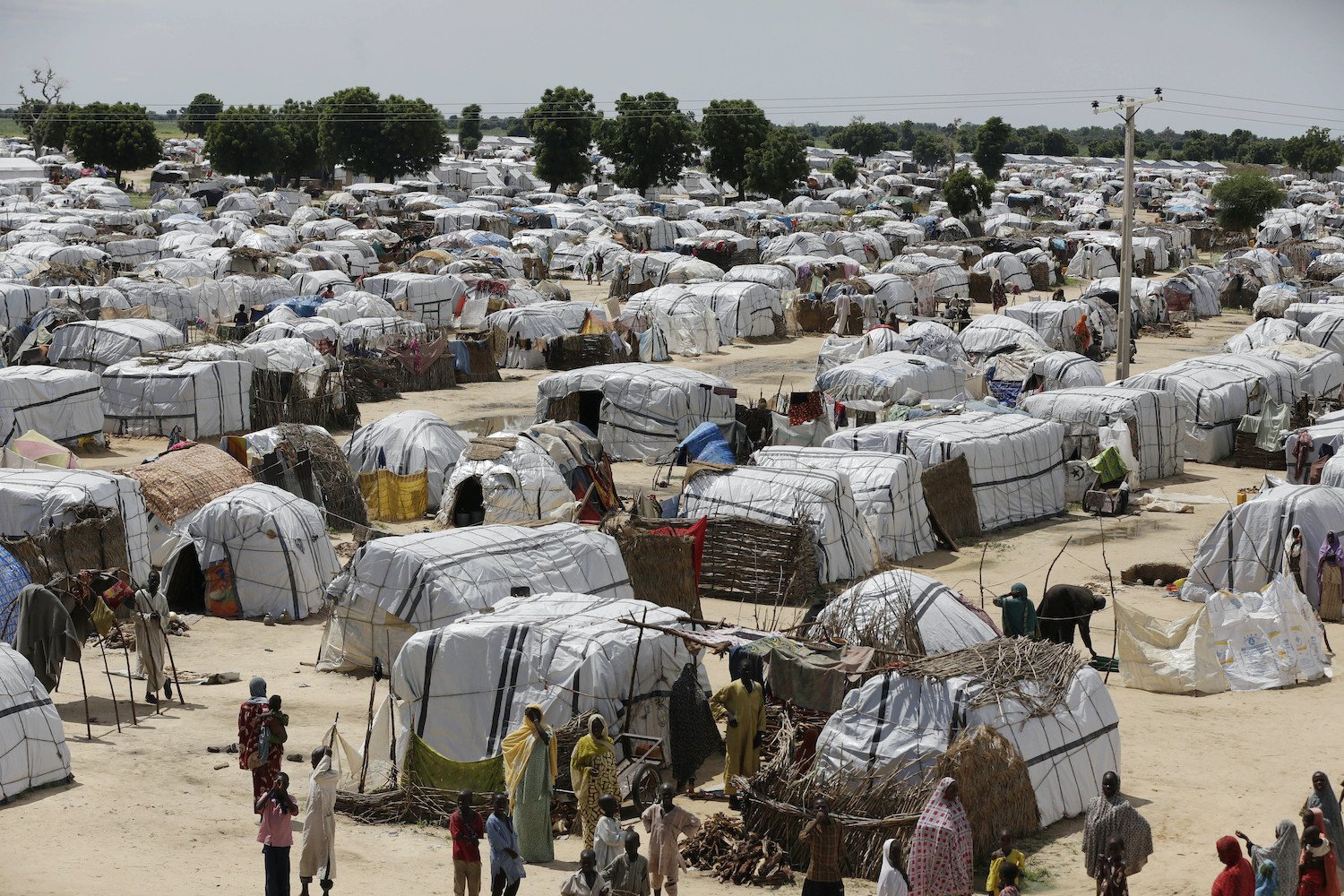


 45'MEDIA